Yellowed Toilet Seat Restoration - Polymer Whitening and Care
📑 Table of Contents
Yellowed Toilet Seat Restoration, A Hygiene-First Polymer Guide
Section titled “Yellowed Toilet Seat Restoration, A Hygiene-First Polymer Guide”A toilet seat that has turned yellow can look unsanitary even when it is microbiologically clean. From a materials science perspective, this discoloration comes from two very different mechanisms, and confusing them leads to wasted effort or permanent damage. This guide is written to diagnose the cause in under a minute, then apply the correct fix without compromising polymer integrity or bathroom safety.
The restoration methods here focus on toilet-seat specific risks, including hinge hardware, soft-close dampers, mixed materials, and repeated chemical exposure. Many plastic whitening articles ignore these constraints, which is why bleach damage and uneven results are so common in bathrooms.
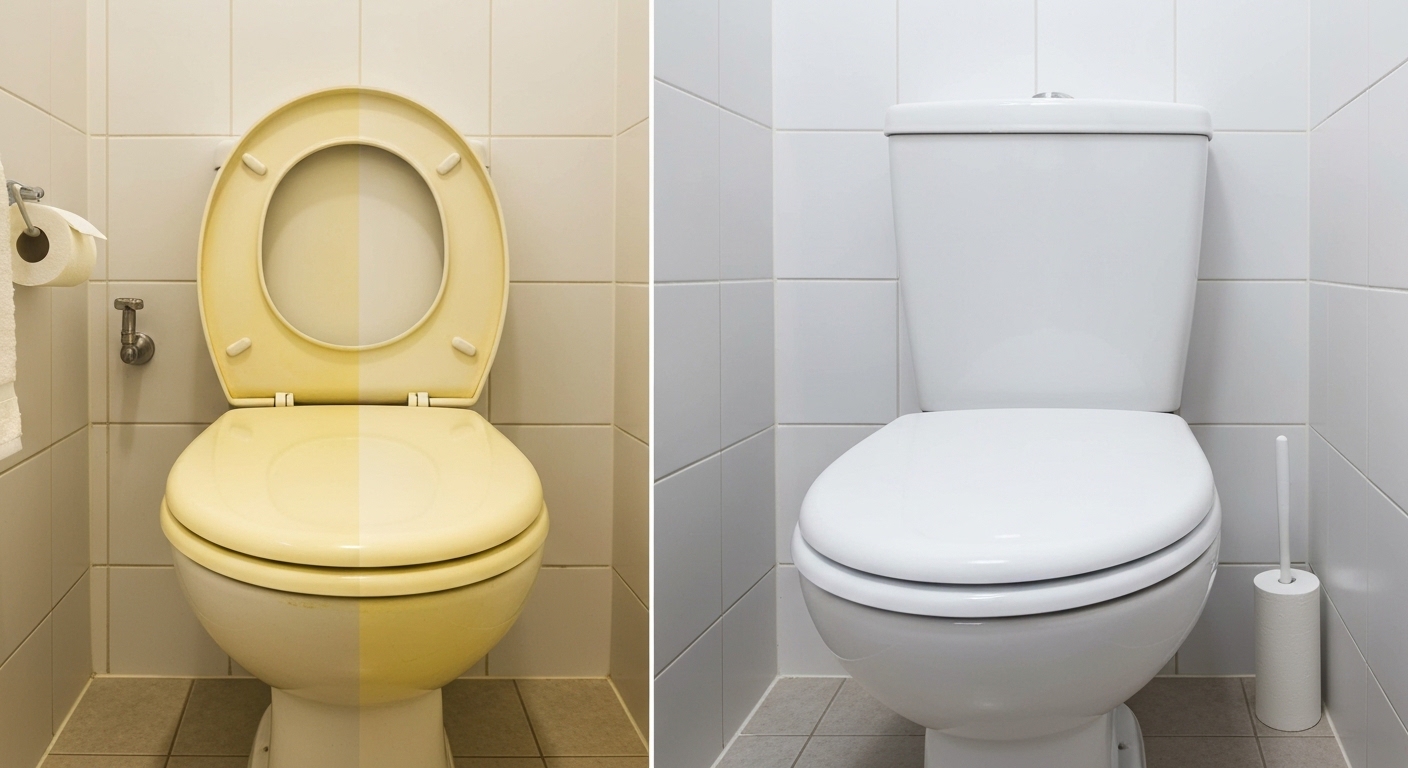
Quick Diagnosis, Stain vs Polymer Yellowing
Section titled “Quick Diagnosis, Stain vs Polymer Yellowing”Before choosing any whitening method, identify whether you are dealing with contamination or polymer degradation. The distinction determines whether gentle cleaning or true chemical restoration is appropriate.
Urine, mineral, and organic stains tend to localize in splash zones, undersides, and hinge-adjacent areas. They often carry odor before cleaning and usually respond at least partially to enzymatic cleaners or mild acids.
Polymer yellowing from bleach, UV exposure, or age is usually uniform, odorless, and appears even on surfaces that never contact waste. If thorough cleaning leaves the color unchanged, the polymer itself has chemically changed.
A practical test is to clean one small area with an enzymatic bathroom cleaner, rinse, and dry completely. If the yellow color remains identical, proceed as polymer yellowing rather than staining.
Common Toilet Seat Materials and What They Tolerate
Section titled “Common Toilet Seat Materials and What They Tolerate”Material type strongly controls both yellowing behavior and restoration limits. Toilet seats are not chemically interchangeable plastics.
| Material | How to Identify | Typical Yellowing Cause | Restoration Viability | Red Flags |
|---|---|---|---|---|
| Polypropylene (PP) | Light, slightly flexible, dull tap sound | UV exposure, age | Good with peroxide, limited polishing | Smearing during sanding |
| Urea-Formaldehyde (UF, Duroplast) | Heavy, rigid, ceramic-like tap | Bleach oxidation | Excellent polishing, moderate peroxide | Crazing cracks |
| Coated wood core | Warm feel, visible seams | Moisture intrusion | Poor, usually replace | Bubbling or swelling |
If your seat has a wood core with a plastic coating, avoid sanding and aggressive chemicals. Once the coating is breached, moisture damage progresses rapidly and restoration is not viable.
How to Whiten a Yellowed Toilet Seat, Decision Flow
Section titled “How to Whiten a Yellowed Toilet Seat, Decision Flow”Use the following condensed workflow to choose the correct method and avoid unnecessary damage.
- Clean thoroughly with mild detergent and rinse completely.
- Diagnose staining versus polymer yellowing using location and odor cues.
- Use 3 percent hydrogen peroxide for confirmed stains, with 2 to 12 hours contact.
- Use 6 to 12 percent peroxide developer cream with UV exposure for polymer yellowing.
- Rinse, dry, and evaluate uniformity before repeating any treatment.
- Escalate to sanding and polishing only for solid plastic seats with deep degradation.
Peroxide Options Explained, One Chemistry, Two Uses
Section titled “Peroxide Options Explained, One Chemistry, Two Uses”Hydrogen peroxide works by oxidizing chromophores, the molecular structures that absorb visible light and produce yellow coloration. The concentration and delivery determine whether you are cleaning contamination or reversing polymer discoloration.
Method 1, 3 Percent Peroxide Deep Clean for Stains
Section titled “Method 1, 3 Percent Peroxide Deep Clean for Stains”Standard pharmacy-grade 3 percent hydrogen peroxide is appropriate when yellowing is caused by organic residue rather than polymer damage. At this concentration, peroxide targets biological chromophores without meaningfully attacking the plastic substrate.
Apply generously to clean, dry surfaces and keep wet for at least two hours. For heavy staining, overnight contact is acceptable if the surface remains moist. Rinse thoroughly and dry before judging results, since wet plastic can mask residual color.
This method is safe for both PP and UF seats and does not require UV activation; if there is no visible improvement, understanding ABS plastic yellowing and retrobrighting chemistry helps justify escalation to polymer whitening.
Method 2, 6 to 12 Percent Developer Cream Retrobright for Polymer Yellowing
Section titled “Method 2, 6 to 12 Percent Developer Cream Retrobright for Polymer Yellowing”For true polymer yellowing, higher concentration peroxide is required to break down oxidation products within the surface layer. Cream hair developer in the 6 to 12 percent range provides controlled contact without running or pooling.
Apply an even, opaque layer to a fully cleaned and dried seat, then cover loosely with clear plastic to prevent drying. UV exposure activates the reaction, either from direct sunlight or a UV-A lamp positioned close but not heating the surface.
Typical exposure time is 4 to 8 hours, with visual checks every hour for streaking or drying. Rinse thoroughly once the yellow tone has receded. Expect gradual re-yellowing over 12 to 24 months, depending on material and cleaning habits.
Strict safety practices are mandatory. Wear gloves and eye protection, ventilate the area, keep peroxide away from metal hinges and soft-close dampers, and understand when plastic yellowing indicates material degradation before proceeding.
Bleach and Toilet Seats, One Definitive Answer
Section titled “Bleach and Toilet Seats, One Definitive Answer”Chlorine bleach yellows toilet seats because sodium hypochlorite oxidizes the polymer backbone itself, especially in urea-formaldehyde and some polypropylene blends. This reaction creates new chromophores inside the plastic, making the discoloration permanent rather than removable.
Repeated bleach exposure accelerates degradation, leading to yellowing, surface embrittlement, and eventual cracking. Antibacterial wipes containing chlorine or quaternary ammonium compounds can contribute similar damage over time.
Use mild dish soap, vinegar solutions, or bleach-free bathroom cleaners instead. These options remove contamination without altering polymer chemistry or shortening service life.
Restoration Products Compared, What to Buy and Why
Section titled “Restoration Products Compared, What to Buy and Why”Choosing the correct product prevents overprocessing and uneven results.
| Product | Typical Strength | Best Use | Key Risks |
|---|---|---|---|
| Liquid peroxide | 3 percent | Organic stains | Drying during contact |
| Developer cream | 6 to 12 percent | Polymer yellowing | Streaking if uneven |
| High-volume cream | 20 to 40 vol | Severe aging | Brittleness risk |
| Oxygen bleach | Low | Odor control | Minimal whitening |
| Plastic polish | Fine abrasive | Post-sanding gloss | Overheating |
| Headlight kit | Multi-step | UF polishing | Edge thinning |
For toilet seats, moderate developer strengths outperform extreme concentrations with fewer long-term risks.
Visual Step-by-Step, Two Restoration Paths
Section titled “Visual Step-by-Step, Two Restoration Paths”Follow this photo-friendly sequence, stopping when acceptable results are achieved.
- Remove the seat if possible and clean with mild detergent, then dry completely.
- Apply 3 percent peroxide if stains are suspected, or developer cream if polymer yellowing is confirmed.
- Maintain moisture and, for developer cream, provide UV exposure while monitoring hourly.
- Rinse thoroughly, dry, and evaluate color uniformity under neutral lighting.
- Repeat chemical treatment once if improvement is ongoing but incomplete.
- Proceed to sanding and polishing only for solid plastic seats with persistent discoloration.
Sanding and Polishing, Controlled Mechanical Restoration
Section titled “Sanding and Polishing, Controlled Mechanical Restoration”Sanding removes the degraded surface layer entirely, revealing intact material beneath. This is effective but irreversible and should be used only when chemical methods fail.
Begin wet sanding with 600 grit paper using light, even pressure. Keep the surface flooded with water to prevent heat buildup and uneven removal. Yellow slurry indicates successful removal of degraded polymer.
Progress sequentially through 1000, 1500, and 2000 grit, fully removing the previous scratch pattern before advancing. Avoid edges, hinge holes, and thin sections where material loss compromises strength.
Finish with a dedicated plastic polishing compound, applied by hand or low-speed buffer. Urea-formaldehyde polishes to a high gloss, while polypropylene reaches a satin finish due to its softer morphology.
Mini Case Studies, What Worked and How Long It Lasted
Section titled “Mini Case Studies, What Worked and How Long It Lasted”A polypropylene soft-close seat yellowed uniformly from window UV exposure responded well to 9 percent developer cream and sunlight, a process similar to restoring yellowed white plastic surfaces. Whitening lasted approximately 18 months with bleach-free cleaning.
A urea-formaldehyde seat damaged by repeated bleach use showed minimal response to peroxide but restored fully after sanding and polishing. Gloss and color stability persisted beyond two years.
A coated wood seat with yellowing and bubbling failed all restoration attempts and was replaced. Chemical treatment accelerated coating delamination.
Preventing Future Yellowing
Section titled “Preventing Future Yellowing”Long-term color stability depends more on prevention than repeated restoration. Use bleach-free cleaners, avoid abrasive pads, and keep seats out of direct sunlight when possible.
Clean weekly with mild detergent and water, then dry. Perform deeper cleaning monthly using vinegar or peroxide rather than chlorine-based products. Keep lids closed in bright bathrooms to reduce UV exposure.
FAQ, Yellow Toilet Seat Whitening and Safety
Section titled “FAQ, Yellow Toilet Seat Whitening and Safety”Does bleach yellow plastic toilet seats? Yes. Bleach oxidizes the polymer itself, creating permanent yellow chromophores.
Can Retrobright weaken a toilet seat? Moderate concentrations used intermittently do not measurably weaken PP or UF seats, but excessive strength or repeated treatments can reduce impact resistance.
Is yellowing a hygiene risk? Color alone is cosmetic. Cracks, pits, and roughness are the real sanitation concerns.
Will vinegar whiten a yellowed seat? Vinegar removes mineral deposits but does not reverse polymer oxidation.
Can I use these methods on soft-close seats? Yes, but keep chemicals away from hinge dampers and avoid soaking hardware.
Why does yellowing come back? The underlying polymer remains oxidized and continues to age, especially under UV and harsh cleaning.
When Replacement Is the Safer Choice
Section titled “When Replacement Is the Safer Choice”Replace the seat if there are cracks, crazing, deep pitting, hinge fractures, or a breached wood core. These conditions compromise cleanability and structural safety regardless of color.
For basic seats, replacement is often more economical than multi-hour restoration. For premium seats with expensive hardware, restoration can be justified if the material remains structurally intact.
References
Section titled “References”- Society of Plastics Engineers, Photo-Oxidative Degradation of Polymer Materials.
- American Chemical Society, Oxidation Chemistry of Polymer Surfaces.
- ASTM International, Standard Test Methods for Polymer Discoloration.
- Journal of Applied Polymer Science, Chromophore Formation in Aged Polymer Materials.