Removing Sticker Residue from Walls - The Damage-Free Sticker Removal
📑 Table of Contents
Removing sticker residue from walls needs a different mindset than cleaning general plastic surfaces. Walls have coatings, porosity, and installation layers that change how adhesives bond and how finishes react to heat, oil, or solvents. This guide is focused on wall-finish–specific adhesive removal, while general polymer surface guidance lives in adhesive removal on plastic.
I approach wall residue with a cleaner’s eye for long-term damage and a sustainability lens that favors the least aggressive option first. Many walls can be cleaned safely with patience and simple tools, but some finishes reach a point where repainting causes less harm than continued chemical treatment.
Vinyl-Coated Walls vs. Painted Plastic
Section titled “Vinyl-Coated Walls vs. Painted Plastic”Vinyl-coated walls use a thin PVC or vinyl film over drywall or composite panels. This layer is water resistant but unevenly absorbs solvents, which can cause staining or softening if products sit too long.
Painted plastic panels, common in kitchens and bathrooms, usually have latex, acrylic, or alkyd paint applied over a plastic substrate. The paint layer is the weak point, not the panel underneath, and sheen level matters more than base material.
Semi-gloss and gloss paints resist oil and mild solvents better than matte finishes. Flat and matte paints absorb oils quickly and can darken permanently even after cleaning.
Before touching visible residue, test your chosen method in a low-visibility corner. Wait at least ten minutes after testing to check for sheen change or color shift.
Adhesive Removal Method Comparison Table
Section titled “Adhesive Removal Method Comparison Table”| Method | Best Wall Finishes | Effectiveness | Risk Level | Key Caution |
|---|---|---|---|---|
| Hairdryer heat | Vinyl wallcovering, semi-gloss paint | Medium to high | Low | Overheating can blister paint or soften vinyl |
| Cooking oil | Semi-gloss paint, acrylic panels | Medium | Medium | Avoid on matte or porous paint |
| Isopropyl alcohol | Gloss paint, acrylic panels | High for residue | Medium | Can dull sheen if overused |
| Commercial removers | Durable vinyl only | High | High | Solvent staining and softening |
This table helps narrow options, but timing and restraint matter more than product strength. Slower methods preserve finishes and reduce waste from repairs.
Wall Finish Decision Guide
Section titled “Wall Finish Decision Guide”If your wall is vinyl wallcovering, start with heat and gentle lifting, then stop if the vinyl feels soft or stretchy. Solvents should only be dabbed briefly and wiped immediately.
If your wall is an acrylic or plastic panel with paint, check the paint type. Acrylic and latex tolerate alcohol better than oil, while alkyd paints tolerate oil but can haze with alcohol.
For semi-gloss painted drywall, heat followed by minimal oil works in many homes. For matte paint, heat and mechanical lifting are usually the safest stopping point.
When the adhesive does not release after two careful cycles, reassess rather than escalating force. Walls do not heal like solid plastic.
Best Way to Remove Sticker Residue from Walls (Quick Steps)
Section titled “Best Way to Remove Sticker Residue from Walls (Quick Steps)”- Warm the adhesive with a hairdryer held 6 to 8 inches away for 30 to 60 seconds.
- Gently lift with a plastic scraper or fingernail while the adhesive is warm.
- If residue remains, apply a drop of cooking oil or alcohol based on finish type, wait two to five minutes, then wipe.
- Clean the area with mild soap and water, then dry and inspect for sheen change.
This hierarchy keeps damage risk low and avoids unnecessary chemicals.
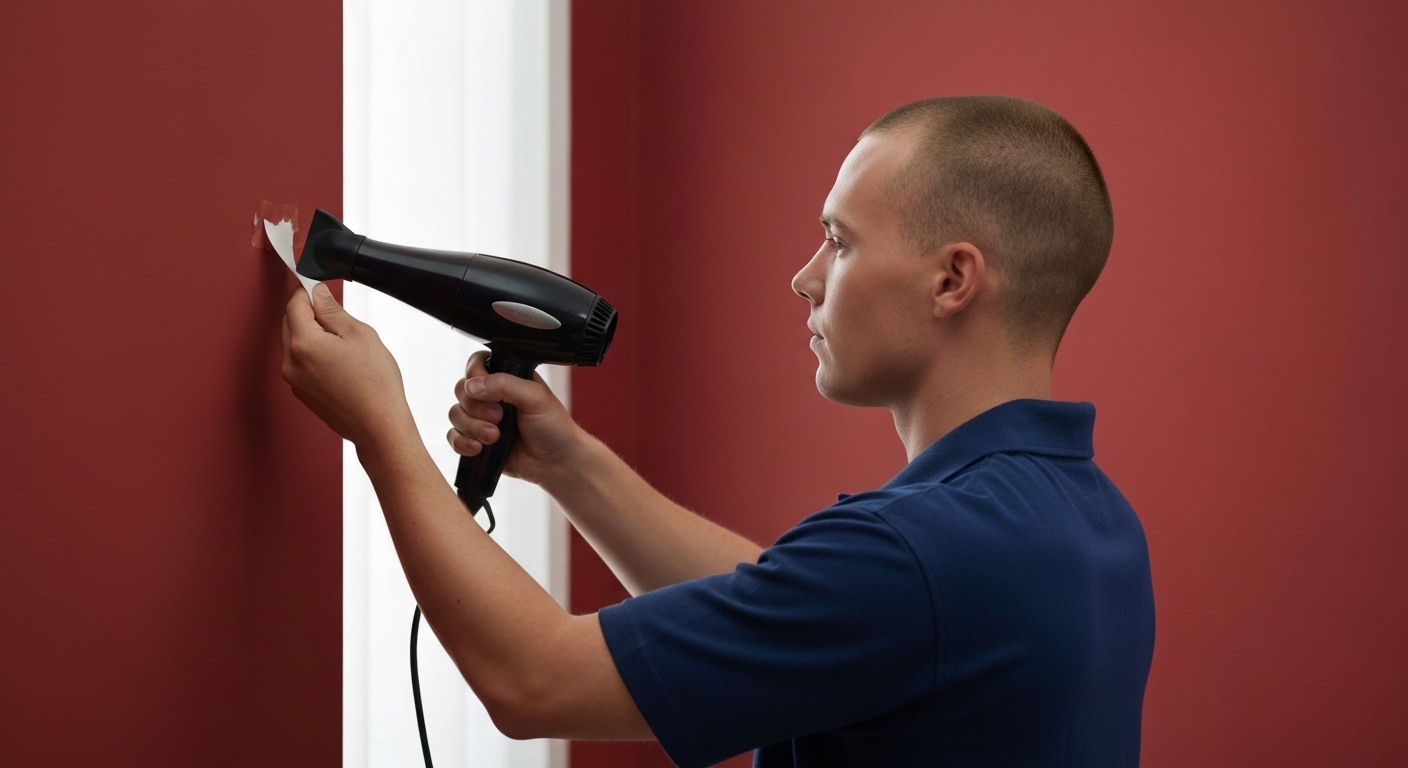
The Hairdryer Release Method
Section titled “The Hairdryer Release Method”Heat softens pressure-sensitive adhesives by increasing molecular movement. On walls, controlled heat is safer than scraping alone.
Set the dryer to medium heat and keep it moving to avoid hot spots. Vinyl begins to soften around 140°F, so never concentrate heat in one place.
Once the adhesive feels tacky, lift slowly. If resistance increases, reheat rather than pulling harder.
Stop immediately if paint bubbles or vinyl feels elastic. That is the signal to let the surface cool.
Using Cooking Oil to Dissolve Adhesive
Section titled “Using Cooking Oil to Dissolve Adhesive”Cooking oils work by penetrating and lubricating adhesive polymers. Neutral oils like vegetable, canola, or sunflower oil are easiest to clean afterward.
Apply a small amount with a cotton pad and let it sit for two to five minutes on semi-gloss paint. Older adhesive may need up to ten minutes, but longer soaking increases staining risk.
Oil should not be used on matte paint, chalky finishes, or porous walls. These surfaces absorb oil and darken permanently.
After removal, wash the area with dish soap and warm water to prevent dust attraction and future discoloration.
Why Goo Gone Can Stain the Surface
Section titled “Why Goo Gone Can Stain the Surface”Many commercial removers rely on d-limonene and petroleum distillates. These solvents dissolve adhesive quickly but can also dissolve plasticizers in vinyl and soften paint binders.
On vinyl wallcoverings, solvents may migrate under the film, creating dark halos that cannot be washed out. Painted walls can lose sheen or develop sticky patches.
If a commercial remover is your only option, apply it to a cloth rather than directly to the wall and wipe briefly. Immediate rinsing reduces absorption.
For lower-risk alternatives, heat and alcohol used sparingly are usually safer by finish type.
The Plastic Razor Scrape
Section titled “The Plastic Razor Scrape”Plastic scrapers and razor blades remove residue mechanically without cutting into coatings. They are far safer than metal tools, which can permanently scratch walls.
When removing sticker residue from plastic, hold the scraper nearly flat and use light pressure; multiple gentle passes remove more adhesive than one forceful scrape.
Scraping works best after heat or oil has softened the residue. Dry scraping increases the chance of surface burnishing.
Method: The Tape-Dab Using Stickiness to Pull Stickiness
Section titled “Method: The Tape-Dab Using Stickiness to Pull Stickiness”Fresh tape can lift old adhesive by bonding more strongly than the residue bonds to the wall. Packing tape works better than painter’s tape for this task.
Press, peel, and repeat with fresh sections. This method is especially helpful for gummy clumps left by old labels.
Avoid this method on delicate vinyl or flaking paint, where pulling force can lift the finish itself.
Removing Command Strip Residue
Section titled “Removing Command Strip Residue”Command strips fail when the stretch tab breaks or when the strip has aged in heat. Once the foam layer is gone, the remaining adhesive behaves like any other pressure-sensitive residue.
Warm the area thoroughly before attempting removal. Slow, steady lifting reduces paint pull compared to quick jerks.
Remaining residue usually responds to minimal oil on semi-gloss paint or alcohol on acrylic panels. Always finish with soap and water.
Why Old Tape Bonds Permanently
Section titled “Why Old Tape Bonds Permanently”As adhesives age, oxygen and heat trigger cross-linking that increases bond strength. Rubber-based adhesives are especially prone to this change.
Paper-backed tapes degrade over time, leaving adhesive behind when the paper lifts away. This is common with masking and painter’s tape left for years.
Early removal is the most effective prevention and reduces chemical use later.
Cleaning the Ghost Stain after Removal
Section titled “Cleaning the Ghost Stain after Removal”Ghost stains come from uneven dirt exposure or from adhesive oils migrating into the finish. Dirt-based shadows usually lighten with gentle whole-wall cleaning.
Start by washing a larger blended area with mild soap and water. Cleaning only the sticker outline can make contrast worse.
Oxidative stains from adhesive absorption do not wash out fully. If color remains after drying, further cleaning risks finish damage.
The Alcohol Wipe Finish
Section titled “The Alcohol Wipe Finish”Isopropyl alcohol dissolves thin residue films and evaporates quickly. It works best as a final step rather than a primary remover.
Dampen a cloth and wipe lightly. Prolonged rubbing can dull sheen, especially on latex paint.
Always test first, even on gloss finishes.
Identifying Finish Stripping
Section titled “Identifying Finish Stripping”Sheen loss, color shift, or texture change indicate coating damage. When these signs appear, stop active removal.
A faint shadow is often less noticeable than a damaged patch that requires repair. Knowing when to stop is part of damage-free cleaning.
When Residue Means Repainting Is the Safer Option
Section titled “When Residue Means Repainting Is the Safer Option”If adhesive has chemically bonded into matte paint or caused visible stripping, repainting is often the least damaging solution. Continued solvent use can enlarge the damaged area.
Repainting becomes the better option when the affected area exceeds a hand-sized patch or when sheen cannot be restored evenly.
Spot priming with a stain-blocking primer prevents ghosting through new paint and reduces repeat work.
Common Mistakes That Permanently Damage Walls
Section titled “Common Mistakes That Permanently Damage Walls”- Over-soaking oil on matte or porous paint, which causes irreversible dark spots.
- Using melamine sponges that microscopically sand paint and vinyl.
- Scraping with metal blades that cut through coatings.
- Leaving commercial solvents on vinyl long enough to absorb.
Avoiding these mistakes saves material, time, and waste.
Preventing Adhesive Aging
Section titled “Preventing Adhesive Aging”Remove temporary adhesives within weeks rather than years. Heat and humidity speed aging, especially in kitchens and bathrooms, so it also helps to follow best practices for cleaning vinyl wall coverings without damage to prevent residue from setting in.
Choose removable products for temporary displays and follow manufacturer removal instructions exactly.
Proper timing is the most eco-friendly adhesive strategy because it prevents damage and repair materials.
FAQ: Sticker Residue on Walls
Section titled “FAQ: Sticker Residue on Walls”Does Goo Gone damage walls? It can. On vinyl and matte paint, solvents may stain or soften the surface. Brief, tested use on durable finishes lowers risk.
Is oil safe on painted walls? Oil is usually safe on semi-gloss or gloss paint if cleaned promptly. It is not safe on matte or porous finishes.
How do you remove old Command strip residue? Warm the area with a hairdryer, lift gently, then remove remaining adhesive with minimal oil or alcohol based on the paint sheen.
References
Section titled “References”- 3M Company. Adhesive Removal Guide.
- American Coatings Association. Surface Care Guide.
- Consumer Reports. Home Cleaning Guide.
- Extension Services. Home Maintenance Guide.
- American Cleaning Institute. Surface Cleaning.