Why Plastic Planters Crack in Winter
📑 Table of Contents
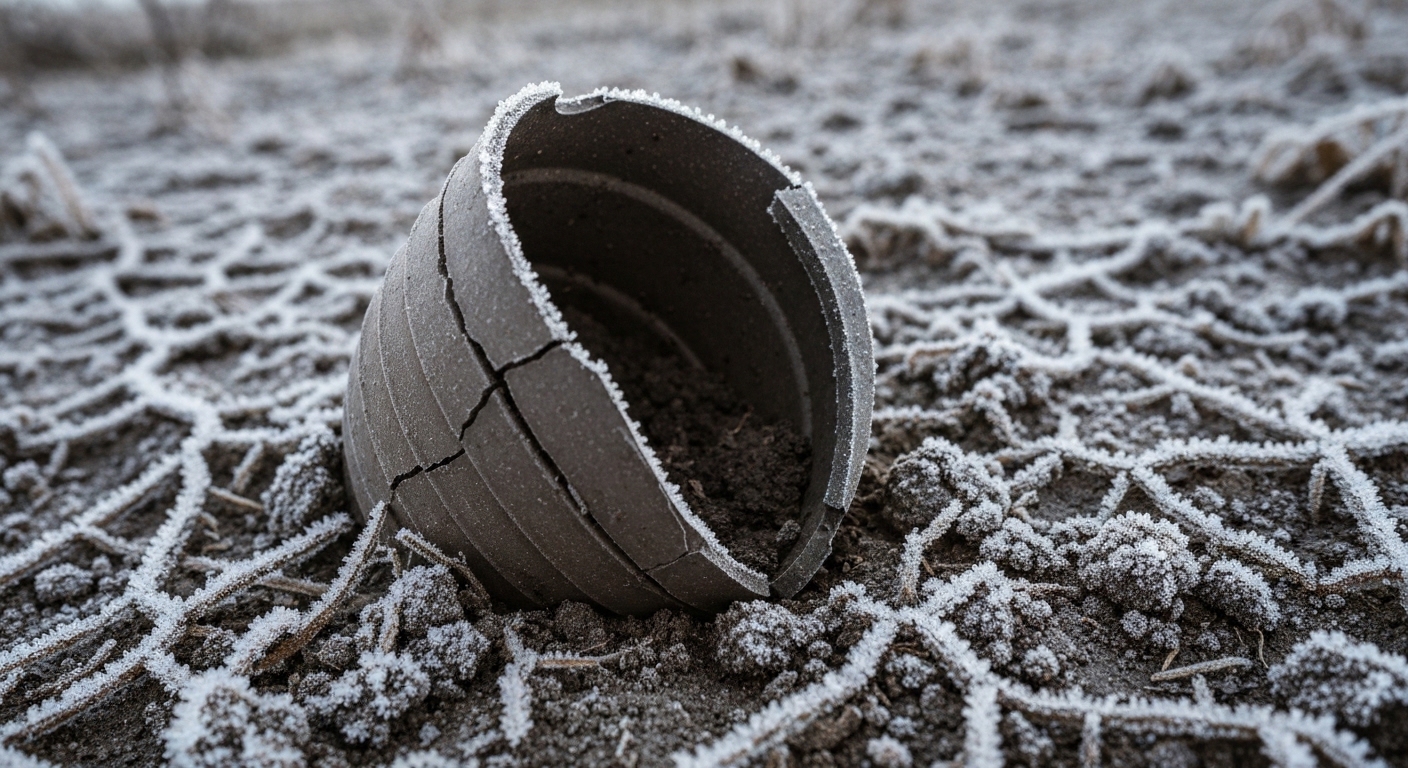
Why plastic planters crack in winter: Water in soil expands by about 9 percent when it freezes, and brittle plastics cannot flex enough to absorb that pressure. Repeated freeze thaw cycles force cracks to grow until the pot fails.
How to Prevent Plastic Planters from Cracking in Winter
Section titled “How to Prevent Plastic Planters from Cracking in Winter”- Choose flexible plastics like LLDPE that can bow outward under ice pressure.
- Keep drainage holes completely clear and lift pots off frozen surfaces.
- Reduce rapid temperature swings with light insulation or winter placement.
- Retire pots that show white stress lines or deep cracks before replanting.
Plastic planters fail in winter for practical reasons, not bad luck. As a cleaner and sustainability consultant, I see the same pattern each spring, brittle pots, hidden stress marks, and cracks that formed months earlier. This guide focuses on cold weather failure so you can decide when to protect, repair, or repot without wasting money or materials.
Polyethylene vs. Terracotta-Look Plastics
Section titled “Polyethylene vs. Terracotta-Look Plastics”Walk through a garden center in autumn and you will spot “frost proof” labels on some planters. The difference comes down to the plastic recipe and how it handles water and movement.
Flexible plastics like polyethylene and LLDPE behave a bit like rubber. When soil freezes and expands, the walls stretch and then relax when temperatures rise. Rigid plastics like polystyrene, fiber clay, and many fiberglass resin blends are stiff, so the same pressure creates fractures instead of flex.
Fiber reinforced and terracotta look composites fail for an extra reason. Many contain porous fillers that absorb water, which freezes inside the material and causes internal delamination, a problem that often leads gardeners to consider options like painting plastic pots for winter durability instead. A quick consumer test helps: squeeze the rim on a warm day; if it flexes slightly it is likely polyethylene, if it feels hard and chalky it is probably a brittle composite.
Plastic Planter Materials Compared
Section titled “Plastic Planter Materials Compared”| Material | Flexibility | Freeze Resistance | UV Stability | Typical Cost |
|---|---|---|---|---|
| LLDPE | Very high | Excellent | Good with stabilizers | $$ |
| HDPE | Moderate | Good | Moderate | $$ |
| Polypropylene (PP) | Low to moderate | Fair | Moderate | $ |
| Polystyrene (PS) | Very low | Poor | Poor | $ |
| Fiber clay | Very low | Poor | Fair | $$$ |
| Fiberglass | Low | Fair | Good | $$$ |
Material data aligns with manufacturer specifications and polymer testing summaries from sources like the Plastics Industry Association and planter warranties published by Crescent Garden and Veradek.
The Freeze Thaw Cycle in Soil
Section titled “The Freeze Thaw Cycle in Soil”Water expands by roughly 9 percent when it freezes, according to engineering data from the U.S. Geological Survey, which helps explain why frozen water can split containers and lead many gardeners to look into ways to repair cracked plastic watering cans. In a large container, that expansion pushes outward in all directions at once.
The most damaging phase is not the deepest cold; it is the repeated thaw during mild days followed by refreezing at night. Meltwater seeps into tiny flaws, freezes again, and acts like a slow hydraulic jack that widens cracks over time, a process that often necessitates repairing plastic cracks caused by freeze-thaw cycles.
Why Drainage Holes Matter More Than You Think
Section titled “Why Drainage Holes Matter More Than You Think”A pot with blocked drainage freezes into a solid mass at the base. This ice puck presses sideways against tapered walls and splits the bottom first.
Before winter sets in, tip or lift pots and clear every drainage hole. Elevating containers on bricks or pot feet keeps water from freezing shut against patios or soil.
Insulating Pots to Slow Temperature Shock
Section titled “Insulating Pots to Slow Temperature Shock”Wrapping a vulnerable planter with several layers of bubble wrap does not make it warm. It slows how quickly temperatures change.
That slower shift matters because winter sun on dark plastic causes rapid thawing, followed by sharp nighttime freezes. Insulation evens out those swings and reduces stress on the walls.
Identifying Stress Marks Before They Fail
Section titled “Identifying Stress Marks Before They Fail”Inspect pots in early spring before planting. White lines, cloudy patches, or surface crazing show where polymer chains stretched close to breaking.
These marks mean the pot already yielded last winter. Reuse it only for lightweight nursery duty, or recycle it if the plastic type is accepted locally.
Injection Molded vs. Rotomolded Planters
Section titled “Injection Molded vs. Rotomolded Planters”Injection molded pots are made in two halves and often show a vertical seam. That seam is thinner and acts as a built in tear line under pressure.
Rotomolded planters are spun in an oven and form one continuous shell with even wall thickness. For large containers that stay outside year round, rotomolded polyethylene lasts far longer in cold climates.
Repairing Cracks, Hot Glue or Epoxy
Section titled “Repairing Cracks, Hot Glue or Epoxy”Whether a repair holds depends on how the plastic moves in cold weather. Epoxy cures rigid, while hot glue stays slightly flexible.
On brittle pots, epoxy can bridge a crack if the surface is roughened and fully dry, but the repair remains a weak point. On flexible polyethylene, epoxy often pops off during the next freeze, while high temperature hot glue can stretch with the pot. Adhesive performance in cold conditions is explained well in polymer bonding studies published by 3M and Loctite.
Any repair should be treated as temporary. Repaired containers are best used for annuals rather than trees or shrubs.
The Internal Liner Method for Large Pots
Section titled “The Internal Liner Method for Large Pots”For oversized planters that cannot be moved, lining the interior with EPDM pond liner or rubber roofing creates a flexible inner bag. When soil freezes, the liner stretches and shields the rigid outer shell from pressure.
This approach extends the life of decorative containers while reducing waste, especially for pots that would otherwise be discarded.
How Summer UV Leads to Winter Cracks
Section titled “How Summer UV Leads to Winter Cracks”Sun exposure does quiet damage long before frost arrives. Ultraviolet radiation breaks down plasticizers that keep polymers flexible.
By late autumn, a pot that sat in full sun all summer can be far more brittle than it was in spring. Using a UV protectant spray in midsummer helps maintain flexibility and delay embrittlement, as noted in materials guidance from the American Chemistry Council.
Environmental Impact of Cracked Plastic Planters
Section titled “Environmental Impact of Cracked Plastic Planters”Cracked plastic sheds small fragments over time, contributing to microplastic pollution in soil. Reusing intact pots is usually better than recycling, but once a planter splits through the wall it should be retired.
If recycling is available for the plastic type, clean the pot and send it through the proper stream. If not, limiting reuse prevents ongoing shedding and plant damage.
Cleaning Fertilizer Salt Buildup
Section titled “Cleaning Fertilizer Salt Buildup”White crusts around rims come from fertilizer salts and minerals left behind as water evaporates. These deposits can burn plant stems and attract moisture.
A simple vinegar and water solution dissolves the buildup quickly. Rinse well afterward since vinegar residue can harm plants.
Restoring Faded Terracotta Look Pots
Section titled “Restoring Faded Terracotta Look Pots”Chalky, faded plastic can be refreshed with paint. Light coats of a satin terracotta tone look more natural than a heavy spray.
Wiping the surface while the paint is still tacky creates a soft, weathered finish that blends well in the garden.
Storage and Weight Safety Indoors
Section titled “Storage and Weight Safety Indoors”Wet soil is heavy, often over ten pounds per gallon. Cold plastic shelving can bow or fail under that load.
Store heavy containers on the lowest shelf or directly on the floor, and dry empty pots before stacking to prevent them freezing together.
When a Crack Means Time to Repot
Section titled “When a Crack Means Time to Repot”Cracks running from the rim toward the soil line signal structural failure and should not be ignored. The pot will continue opening with every watering.
Small hairline cracks at the base can sometimes be managed if drainage stays clear, but keep expectations realistic. Saving durable containers is smart, but letting go of failed ones avoids bigger losses later.
FAQ: Plastic Planters in Freezing Weather
Section titled “FAQ: Plastic Planters in Freezing Weather”Can cracked plastic pots still be safe for plants? Small surface cracks may hold for a season, but deep or spreading cracks usually worsen and stress roots.
Do frost proof labels really matter? They help, but only when paired with proper drainage and winter care.
Is it better to bring plastic pots indoors for winter? Yes for rigid plastics, especially in USDA Zone 5 and colder.
Can insulation replace buying better pots? Insulation reduces risk, but flexible materials still perform best long term.