Gaming Chair Faux Leather Peeling Fix - Polyurethane Care and Repair
📑 Table of Contents
The Flaky Throne Crisis
Section titled “The Flaky Throne Crisis”I see this weekly in the shop. A gaming chair that started with a few loose specks is now dumping black flakes on the floor and exposing yellow foam. Once the PU skin lets go, it never stops on its own.
Every faux leather gaming chair does this eventually. The timing depends on PU quality, how much heat and sweat it sees, and how thick the coating was sprayed at the factory. What looks like leather is a plastic film with a built-in failure point.
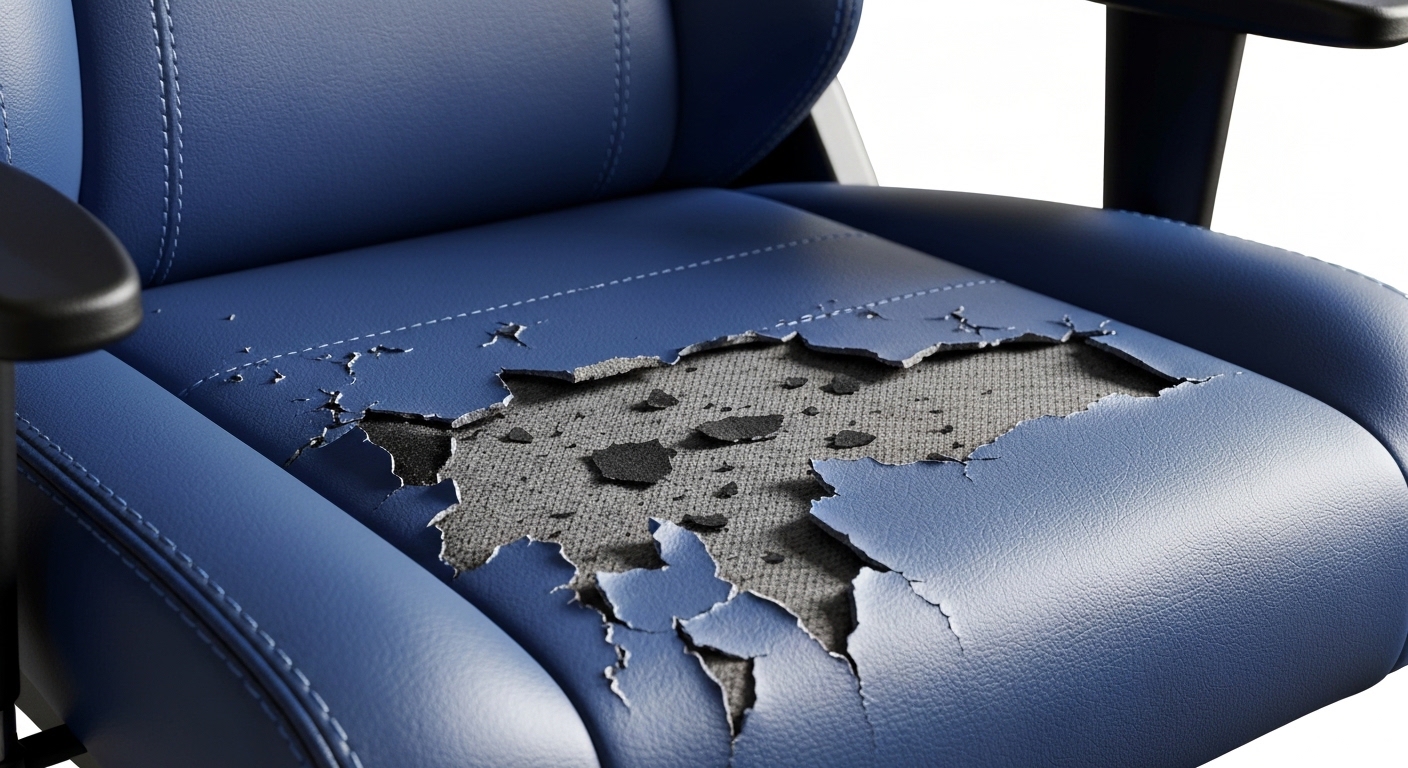
Understanding why the material fails tells you whether repair is worth your time or if replacement is the smarter call. Most fixes buy time, not resurrection.
Polyurethane Leather Science
Section titled “Polyurethane Leather Science”Gaming chair faux leather is a fabric backing with a polyurethane coating bonded on top. The fabric carries the load and the PU provides color, texture, and wipe-down resistance.
Polyurethane stays flexible because of its molecular structure, but that same structure breaks down when exposed to moisture. The urethane bonds slowly react with water vapor and lose strength over time.
Higher quality PU uses longer polymer chains and better stabilizers. Cheap PU uses thinner coatings and faster curing chemistry, which looks fine on day one and collapses a few years later.
Why It Peels Through Hydrolysis
Section titled “Why It Peels Through Hydrolysis”Hydrolysis is the root failure mechanism. Moisture migrates into the PU layer, attacks the polymer chains, and turns a flexible surface into brittle plastic that cracks and releases from the fabric.
The process starts long before you see flakes. By the time peeling is visible, the surrounding area is already chemically compromised and next in line to fail.
Heat and humidity accelerate the reaction. Chairs in warm rooms with poor ventilation fail far faster than identical chairs kept cool and dry.
Seat centers, armrest tops, and headrests fail first because body heat and sweat create ideal degradation conditions exactly where pressure is highest.
Can You Stop the Peel
Section titled “Can You Stop the Peel”Once peeling starts, you cannot stop it completely. The surrounding PU is already breaking down even if it still looks intact.
Surface-only fixes do not solve subsurface degradation. Gluing flakes back down fails because the material underneath continues to fracture.
What you can do is slow progression. Lower humidity, cooler room temperatures, and reduced mechanical abrasion can stretch remaining life.
At advanced stages, the goal shifts from restoration to usability. No consumer product can rebuild degraded polyurethane.
Fabric Patch Repairs
Section titled “Fabric Patch Repairs”Patching works when the goal is function, not factory appearance. A fabric patch isolates the damaged zone and gives you a usable surface again.
All loose PU must be removed down to stable material. I use a plastic scraper followed by isopropyl alcohol to strip oils and dust.
A flexible fabric adhesive bonds best when pressure is maintained during cure. Weight the patch and give it a full cure cycle according to the adhesive spec.
Patch edges matter more than the center. Overlap onto solid PU and burnish the edge so it does not lift under sliding loads.
Liquid Leather Fillers
Section titled “Liquid Leather Fillers”Liquid leather products can hide early cracking before full delamination occurs. These are flexible polymer coatings, not true repairs.
The surface must be clean, dry, and stable. Any loose PU left behind will take the filler with it when it lets go.
Apply thin layers and let each layer dry fully. Thick applications crack faster and telegraph the repair.
These products buy time. When the substrate fails, the filler fails with it.
Sweat Versus PU
Section titled “Sweat Versus PU”Sweat is one of the most aggressive accelerants of PU failure. It delivers moisture, heat, salts, and acids directly into the coating.
Long sessions in warm rooms or sitting shirtless speeds up hydrolysis dramatically. This is why chairs fail exactly where skin contact is highest.
Washable slip covers act as sacrificial barriers. They absorb sweat and keep it off the PU surface.
Leather conditioners marketed for PU offer limited protection. They slow moisture penetration but require frequent reapplication to matter.
Why Cheap Chairs Fail Fast
Section titled “Why Cheap Chairs Fail Fast”Low-cost gaming chairs use economy-grade polyurethane with thin coatings. There is simply less material before failure reaches the fabric.
Inconsistent coating thickness and rushed curing create weak spots. Those spots become the first peel points.
Over several years, replacing multiple budget chairs often costs more than buying one better-built chair up front.
PU vs PVC vs Real Leather
Section titled “PU vs PVC vs Real Leather”PVC vinyl does not hydrolyze the same way PU does, which helps in humid rooms. It is stiffer and less breathable but often lasts longer.
Unlike materials prone to polyurethane degradation and peeling, genuine leather ages instead of disintegrates, developing a rich patina and remaining structurally sound for decades if properly maintained.
Fabric and mesh avoid chemical coating failure entirely. From a durability standpoint, they are often the safest choice.
Cleaning Plastic Armrests
Section titled “Cleaning Plastic Armrests”Most armrests are polypropylene or ABS. Mild soap and water handle routine grime without damaging the surface.
For sticky buildup, isopropyl alcohol cuts skin oils and restores the original feel. Avoid acetone, it can craze ABS.
Scratches can be improved with plastic polish. Deep gouges are cosmetic unless they trap dirt.
Gas Lift Shroud Restoration
Section titled “Gas Lift Shroud Restoration”The gas lift shroud is cosmetic plastic and usually removable. Taking it off allows proper cleaning.
Wash first, then degrease with alcohol. Light polishing improves scuffs but will not make it new.
If the chair sinks or hisses, the cylinder is failing. That is a mechanical repair, not a cosmetic one.
Sanding Sharp Peel Edges
Section titled “Sanding Sharp Peel Edges”Peeling PU leaves jagged edges that catch clothing and skin. Sanding smooths the transition.
I use 220 to 400 grit sandpaper and feather parallel to the edge. The goal is comfort, not invisibility.
After sanding, a colorant or sealant reduces visual contrast and contamination pickup.
Is Peeling PU Toxic
Section titled “Is Peeling PU Toxic”Peeling PU is not considered acutely toxic. The flakes are physical debris, not a chemical hazard.
Some users experience skin irritation from degraded material texture or additives. Covering damaged areas solves that problem.
Normal room ventilation prevents buildup of any released compounds.
Reupholster or Replace
Section titled “Reupholster or Replace”Reupholstering with new PU resets the clock but not the outcome. Reupholstering with leather or fabric eliminates the failure mode.
Costs often exceed the value of budget chairs. Premium frames with good ergonomics may justify the investment.
If the gas lift, casters, and mechanisms are worn out, replacing upholstery alone rarely satisfies.
Tape Fixes
Section titled “Tape Fixes”Tape works as a stopgap only. It covers flakes but looks temporary and wears quickly.
Furniture-grade repair tape outperforms duct tape but still does not equal a bonded patch.
If the chair sees daily use, proper repair or replacement is the only lasting solution.
Final Assessment
Section titled “Final Assessment”Gaming chair faux leather fails because polyurethane hydrolyzes in the presence of heat and moisture. Sweat and pressure accelerate the process exactly where you sit.
Repairs can extend usable life but cannot reverse chemical degradation. Smart prevention and better material choices matter more than any product applied after failure starts.
When deciding between repair and replacement, evaluate the frame, mechanisms, and long-term cost. Plastic leather always expires. Structure and ergonomics determine whether saving the chair makes sense.