Cleaning Pigeon Deterrent Plastic Spikes - Maintaining Bird Deterrents
📑 Table of Contents
Plastic bird spikes do a great job of discouraging perching, but they only work well when they are clean, securely bonded, and not UV-brittle. Pigeon droppings are acidic, potentially infectious when dried, and hard on plastics and adhesives. This guide covers safe cleaning, when to replace instead of clean, and how to keep your installation effective with minimal waste.
Polycarbonate vs. PVC (UV Resistance)
Section titled “Polycarbonate vs. PVC (UV Resistance)”Most plastic spike systems are molded from either polycarbonate (PC) or polyvinyl chloride (PVC). Knowing which you have helps you predict how the spikes will handle scrubbing, disinfectants, heat, and sun exposure.
Polycarbonate is the industry standard because it is rigid, often clear, and naturally more UV-resistant than many low-cost plastics. It generally tolerates firm brushing and common disinfectants without immediate cracking, and it holds up for years in direct sunlight.
PVC spikes are usually opaque and come in white or colored strips. PVC can degrade faster outdoors because plasticizers can migrate out over time, leaving the material chalky and brittle.
Before cleaning, do a quick flexibility check on one spike. If it bends and springs back, it is likely polycarbonate, if it feels dry, cracks easily, or snaps with light pressure, it is likely UV-degraded PVC and cleaning is usually a losing battle.
Why Bird Guano Etches Plastic
Section titled “Why Bird Guano Etches Plastic”Bird droppings are not just cosmetic. They contain uric acid (often around pH 3.0 to 4.5), plus proteins and salts that can cling tightly to polymers.
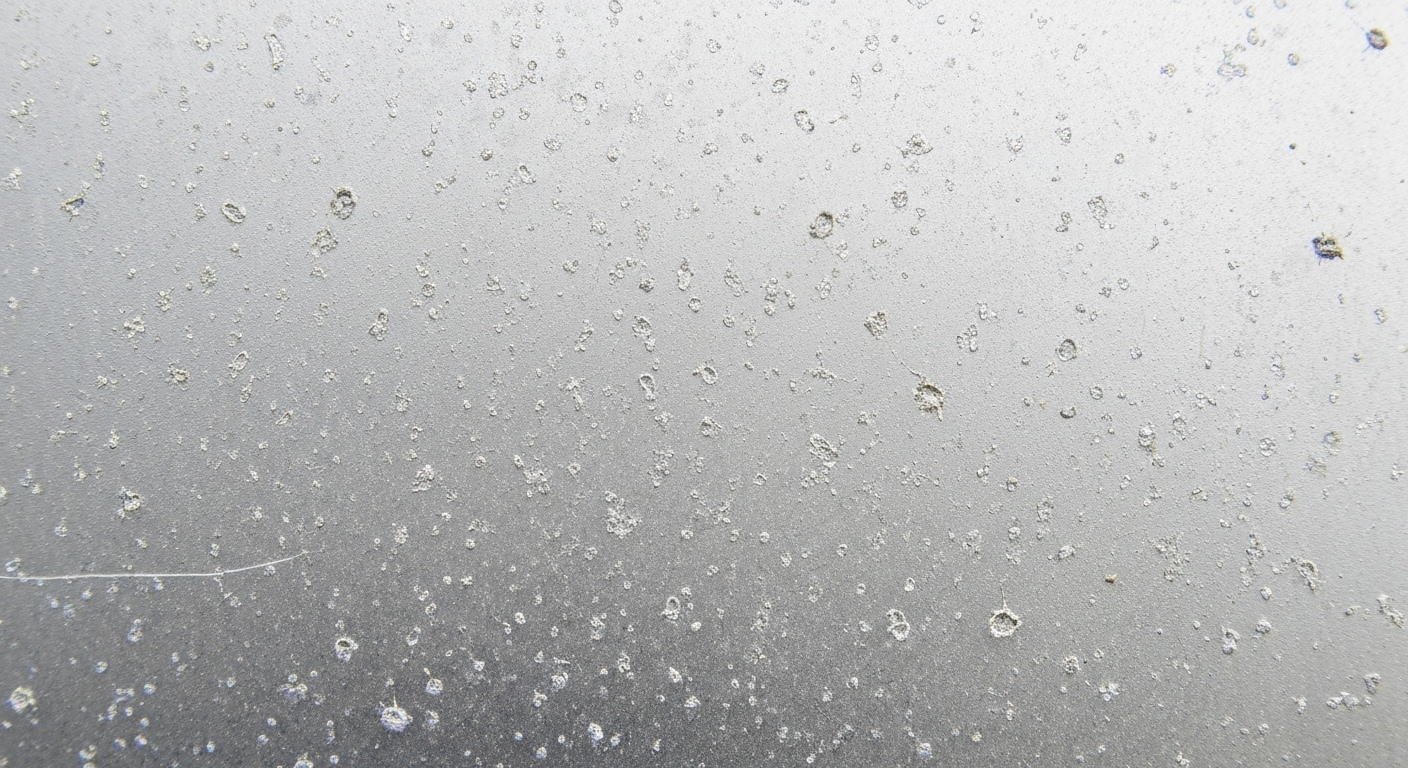
When guano sits for weeks or months, the acid slowly etches the surface, leaving a roughened texture that grabs onto future dirt, moisture, and spores more easily. Once a clear base turns permanently cloudy or white from etching, you cannot restore it to optical clarity, so prevention is the practical goal.
The wet “soak and spray” method (Safety)
Section titled “The wet “soak and spray” method (Safety)”Never dry-scrape pigeon droppings. Dry material can break into fine dust that becomes airborne, and that is the exposure route you want to avoid.
Use wet containment instead by saturating the spikes and surrounding ledge with water plus an enzymatic cleaner. Give it 15 to 20 minutes of dwell time so dried material rehydrates and loosens, then rinse gently with a garden hose on low pressure so the waste stays in the liquid runoff instead of turning into dust.
Enzymatic cleaners: the low-scrub option
Section titled “Enzymatic cleaners: the low-scrub option”Old droppings are protein-rich and can “glue” themselves to the plastic, which is why dish soap often disappoints. Bio-enzymatic cleaners labeled for organic waste or pet stains work better because enzymes and bacteria break down proteins and uric acid crystals.
This approach reduces the need for aggressive scrubbing, which matters because heavy scrubbing can shift spike strips and weaken the adhesive bond. Let chemistry do the heavy lifting, then use a stiff nylon brush only where needed.
Why pressure washers snap plastic and pop adhesive
Section titled “Why pressure washers snap plastic and pop adhesive”High-pressure washers can exceed 2000 PSI, which is more than enough to turn water into a cutting tool. That force can shear the adhesive bond under the strip (blowing whole sections off), and it can shatter UV-aged plastic into sharp fragments.
Stick to a standard hose nozzle or a pump sprayer, and increase cleaner dwell time rather than increasing pressure. If rinsing is not working, the issue is usually chemistry and time, not “power.”
Disinfection with bleach (ratio and contact time)
Section titled “Disinfection with bleach (ratio and contact time)”Once the visible waste is removed, disinfection reduces the risk from lingering microbes and fungal spores (including Histoplasma). Household bleach (sodium hypochlorite) is a widely used disinfectant, but it needs correct dilution and contact time.
Use a 1:9 mix of bleach to water (a 10% solution) on the cleaned spikes and ledge, keep the surface wet for at least 10 minutes, then rinse thoroughly with fresh water. Bleach can also lighten staining on the base, but do not rely on “whitening” as proof of sanitization, contact time is what counts.
When to remove spikes for deep cleaning
Section titled “When to remove spikes for deep cleaning”If birds have packed nesting material into the strip or droppings have built up under and around the bases, you may need to remove the deterrent to clean properly. A stiff putty knife can help separate a silicone-bonded strip from the ledge, but work slowly so you do not gouge masonry or flashing.
For salvageable strips, soaking overnight in your diluted bleach solution can help penetrate crevices. Plan on cleaning off old silicone residue from the ledge and the underside channel of the strip before re-installation, otherwise new adhesive bonds poorly.
UV degradation: signs it is time to replace
Section titled “UV degradation: signs it is time to replace”All plastics age in sunlight, and once the base or spikes become brittle, cleaning can destroy them. Clear polycarbonate can yellow as polymer chains oxidize, and you may also see fine “crazing” cracks on the base or spikes.
If a spike snaps with light touch, the material has failed. In that condition, replacement is the safer, less wasteful option because you avoid repeated patch repairs that still leave you with a fragile deterrent.
Re-gluing loose sections (Silicone and compatible adhesives)
Section titled “Re-gluing loose sections (Silicone and compatible adhesives)”If you find lifted edges or loose track sections, re-secure them promptly so birds do not exploit gaps. Clean and degrease the bonding surface first, isopropyl alcohol on a cloth works well, then let it dry fully.
Use a neutral-cure 100% silicone or a polyurethane construction adhesive (for example, Sikaflex). Avoid acid-cure silicones (they smell like vinegar) on masonry because the acid can be harsh on some substrates.
Apply a thick bead under the base and press firmly so adhesive pushes up through any rivet holes, creating a stronger mechanical lock. Skip solvent-based adhesives that can soften or warp plastic bases.
Safety gear for droppings (Histoplasmosis and splash protection)
Section titled “Safety gear for droppings (Histoplasmosis and splash protection)”Pigeon droppings can carry Histoplasma capsulatum, and the biggest risk is inhaling contaminated dust. A basic surgical mask is not enough for this kind of work.
Use an N95 or P100 respirator, wear disposable nitrile gloves (or heavy rubber gloves), and protect your eyes with sealed goggles rather than open safety glasses. If you are working overhead, cover hair and skin, and change clothes after the job to avoid bringing residue indoors.
Why wire brushes ruin the base
Section titled “Why wire brushes ruin the base”Wire brushes scratch plastic deeply, and those scratches become permanent “dirt traps” that quickly turn dark with algae and grime. Once the surface is gouged, future cleaning gets harder and harsher, and the strip looks dirty again faster.
Use stiff nylon brushes or plastic scouring pads instead. They are usually abrasive enough to lift residue without carving grooves into the base.
Preventing algae under clear bases
Section titled “Preventing algae under clear bases”Clear polycarbonate bases can trap moisture underneath while sunlight warms it, creating a mini greenhouse effect that encourages algae. The best prevention is installation quality, a continuous adhesive seal around the edges helps block water ingress.
If algae is already trapped underneath, bleach can kill it, but it may remain visible because you cannot physically wipe under the strip without removing it. If the appearance matters, removal and re-bonding is the only real fix.
Steam cleaning: lower chemical use, higher heat risk
Section titled “Steam cleaning: lower chemical use, higher heat risk”Steam can sanitize without leaving chemical residue, which is appealing for low-chemical maintenance. The tradeoff is heat control because plastics soften at relatively low temperatures compared to metal.
Polycarbonate softens around 297°F, and PVC softens around 185°F, while many steamers output hotter steam than that at the nozzle. Keep the nozzle moving, stay at least 6 inches back, and stop immediately if you see any curling or warping.
Active nests and legal considerations (Migratory Bird Treaty Act)
Section titled “Active nests and legal considerations (Migratory Bird Treaty Act)”Before removing nests or eggs, identify the species and understand local rules. In the United States and Canada, many birds are protected under the Migratory Bird Treaty Act.
Rock pigeons, house sparrows, and European starlings are commonly treated as non-native pest species and are often exempt, but protected species (such as many doves and swallows) cannot legally be disturbed while actively nesting. When in doubt, pause work and contact local wildlife authorities or a licensed professional.
Disposal of rinse water and waste (eco and legal basics)
Section titled “Disposal of rinse water and waste (eco and legal basics)”Once droppings are wet, they become a contaminated slurry, so think about where that runoff goes. Storm drains often discharge directly to waterways, so do not wash droppings and bleach into them.
When possible, direct runoff to a sanitary sewer cleanout that leads to treatment, and follow good hygiene practices—such as those outlined in bird feeder cleaning safety and Salmonella prevention—to reduce pathogen spread. If you can safely collect bulk solids while wet, bag them in heavy-duty trash bags for regular disposal, then use rinsing only for the thin residue you cannot pick up.
Bio-safety cleaning protocol (quick checklist)
Section titled “Bio-safety cleaning protocol (quick checklist)”- Check the spike material and condition, if it is brittle, crazed, or snapping, replace instead of cleaning.
- Put on PPE (N95 or P100 respirator, gloves, sealed goggles), then fully wet the area and use an enzymatic cleaner with 15 to 20 minutes of dwell time.
- Rinse gently with low pressure, disinfect with 10% bleach for 10 minutes of wet contact time, rinse again, then re-glue any loose sections with compatible adhesive.
References
Section titled “References”- Centers for Disease Control (CDC). “Histoplasmosis: Protecting Workers at Risk.” Occupational Health Guidelines.
- Bird-B-Gone. “Spike Installation and Care Guide.” Manufacturer Technical Data.
- Occupational Safety and Health Administration (OSHA). “Avian Waste Removal.” Hazard Communication.
- Plastics Industry Association. “UV Stability of Polycarbonate and PVC.” Material Science Reports.
- Journal of Hospital Infection. “Efficacy of Sodium Hypochlorite on Fungal Spores.” Disinfection Research.
- U.S. Fish and Wildlife Service. “Migratory Bird Treaty Act.” Federal Wildlife Laws.