Air Fryer Basket Plastic Smell Fix - Outgassing and Safety Guide
📑 Table of Contents
The New Appliance Chemical Smell
Section titled “The New Appliance Chemical Smell”If you have ever powered up a brand new air fryer and caught a sharp plastic or chemical odor, you are not dealing with a defect right out of the box. I see this constantly in shop diagnostics with small appliances, and it spans cheap units and premium brands alike. The smell is a byproduct of how high-temperature plastics behave when they are heated for the first time.
Air fryers pack heating elements, forced convection, and plastic housings into a very tight space. That heat density drives volatile compounds out of plastic far faster than storage or room-temperature use ever could. What you smell is accelerated release, not melting or failure.
Outgassing Explained Like a Technician
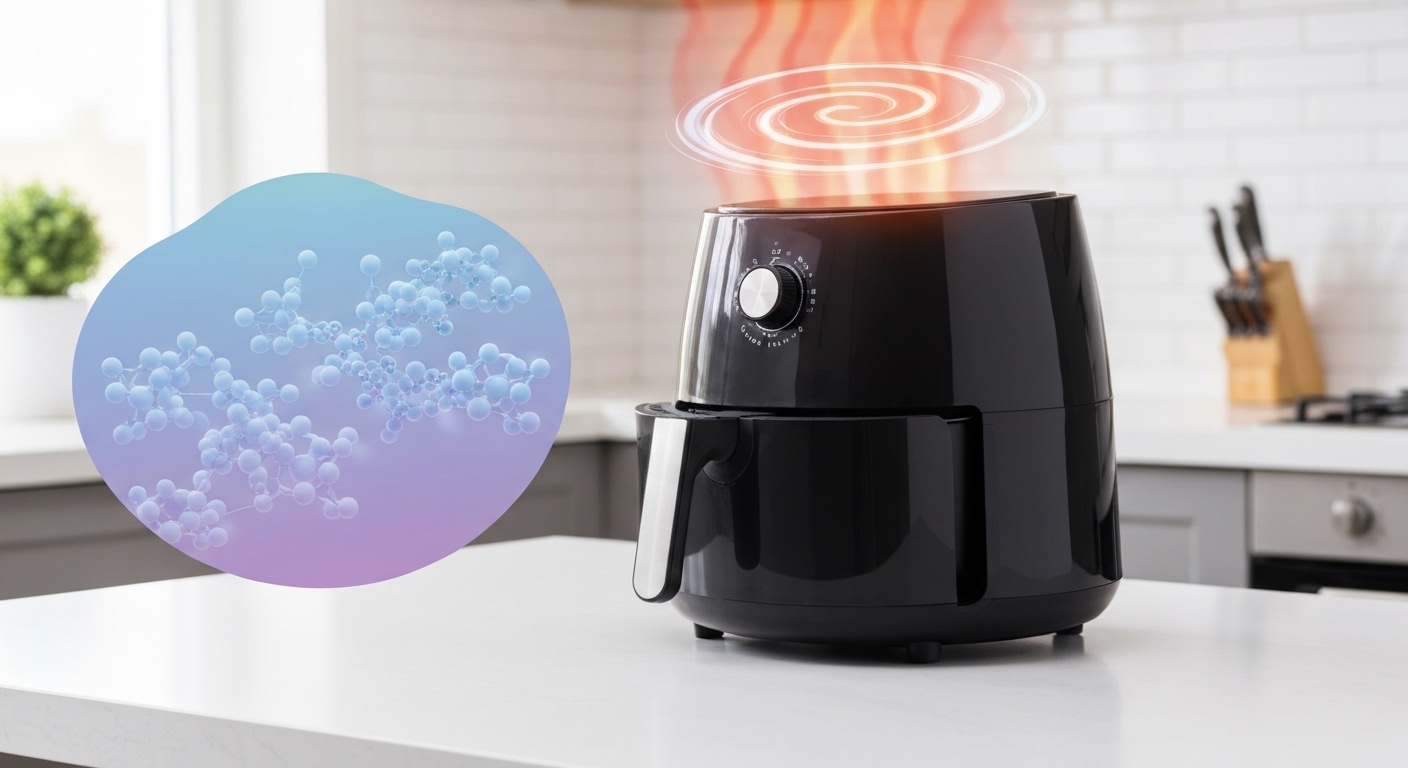
Section titled “Outgassing Explained Like a Technician”The odor comes from outgassing, which is the release of residual manufacturing compounds trapped inside plastic during molding. These include plasticizers, stabilizers, pigments, and mold release agents that are necessary for production. At room temperature they move slowly and stay undetectable.
Once you heat the appliance to 180 to 230 degrees Celsius, molecular mobility spikes. Volatile compounds migrate to the surface and evaporate rapidly. The first heat cycle is always the strongest, and each subsequent cycle releases less material as the near-surface compounds are depleted.
Plastics Used Near Heat
Section titled “Plastics Used Near Heat”Air fryers rely on engineering plastics, not commodity plastics. The two you will encounter most often are polybutylene terephthalate and polyphenylene sulfide, selected for thermal stability and electrical insulation.
Glass-filled PBT is commonly used for housings and structural parts. It remains dimensionally stable into the 150 to 170 degree Celsius range under load, higher in reinforced grades. Initial heating releases faint polyester-related volatiles that register as a generic plastic smell.
PPS is used closer to heating elements where temperatures run higher. It tolerates continuous exposure around 200 degrees Celsius and brief excursions above that. Early heat cycles can produce a slight sulfur note, which is normal for this polymer family and not a safety issue.
| Polymer | Heat Deflection | Key Properties | Typical Odor |
|---|---|---|---|
| Glass-filled PBT | 150–170°C | Rigid, electrically stable | Mild chemical plastic |
| PPS | 200°C+ | High-temp, flame resistant | Light sulfur note |
Proper First-Run Burn-Off
Section titled “Proper First-Run Burn-Off”The goal of break-in is to force out volatiles before food ever goes inside. This is standard practice in appliance testing and it works when done correctly.
- Remove all packaging, wash the basket and tray with mild detergent, dry completely, then run the unit empty at maximum temperature for 20 to 30 minutes with strong ventilation.
- Allow it to cool fully, then repeat an empty high-temperature cycle for another 15 to 20 minutes until odor drops sharply.
A faint smell on the first cycle is expected. Visible smoke or strong fumes that do not decline after the second cycle are not.
Vinegar Steam Cleaning
Section titled “Vinegar Steam Cleaning”After burn-off, a light acidic steam cycle removes residue that condensed inside the chamber. Place a cup of water with two tablespoons of white vinegar in a heat-safe dish inside the basket. Run the unit at 160 to 175 degrees Celsius for about 10 minutes.
The steam dissolves surface residues and neutralizes lingering odor compounds. Wipe the interior while warm and let the unit air dry fully. Any vinegar smell dissipates quickly and can be cleared with a short empty heat cycle.
Is Plastic Near the Heater Safe
Section titled “Is Plastic Near the Heater Safe”Air fryer heating elements run hot, but plastic parts are not seeing element temperature. Distance, airflow, and convection cooling keep structural plastics far below their rated limits. In properly designed units, exterior plastic rarely exceeds 80 to 100 degrees Celsius even at maximum settings.
If you want confirmation, an infrared thermometer gives real data. Measure plastic surfaces immediately after a long high-temperature run. Stable readings well under material ratings confirm sound thermal design.
Smell Versus Actual Damage
Section titled “Smell Versus Actual Damage”Normal outgassing smells fade with use and leave no physical change behind. The plastic stays rigid, glossy, and dimensionally stable. The odor becomes weaker each cycle.
True thermal damage looks and smells different. The following signs indicate a real problem that should stop use immediately.
- Visible smoke from the housing, not the food chamber opening.
- Acrid electrical insulation odor, warping, discoloration, or surface texture changes.
Those symptoms point to overheating, wiring issues, or material failure that require manufacturer support.
Chemical Transfer to Food
Section titled “Chemical Transfer to Food”Food does not touch plastic in standard air fryer designs. Cooking surfaces are metal with nonstick coatings, which blocks direct-contact migration. Vapor-phase transfer is also limited because the appliance continuously exhausts hot air during operation.
Units sold through reputable manufacturers comply with FDA and EU food-contact standards. These tests expose materials to elevated temperatures using food simulants that exceed normal use conditions. Persistent inability to provide compliance documentation is a red flag.
Silicone Parts and Lingering Odor
Section titled “Silicone Parts and Lingering Odor”Silicone gaskets and feet can both emit and absorb odors. Silicone readily soaks up volatiles released during early heat cycles and can release them later, which makes smells seem persistent.
Remove silicone parts if possible and wash them separately. For stubborn cases, bake them alone on foil at 100 to 120 degrees Celsius for one to two hours. This drives off absorbed compounds without recontamination from other plastics.
Exterior Cleaning
Section titled “Exterior Cleaning”The outer housing odor is usually surface contamination, not outgassing. Warm water, mild dish soap, and a soft cloth are sufficient. Avoid solvents, abrasives, or degreasers that can craze or stress-crack plastic.
Keep ventilation slots clear using a soft brush or vacuum attachment. Airflow matters for both performance and long-term component temperature control.
BPA-Free Claims
Section titled “BPA-Free Claims”BPA-free labeling sounds reassuring but is largely irrelevant for air fryers. BPA is associated with polycarbonate, which is not used near high heat in these appliances. PBT and PPS are inherently BPA-free by chemistry, not marketing choice, and concerns about odors are better addressed by understanding materials and remedies like an air fryer plastic smell fix rather than focusing on BPA labels.
What matters more is conservative thermal design, material grade selection, and quality control. Established brands tend to perform better here over years of use.
Why Washing Alone Does Not Fix the Smell
Section titled “Why Washing Alone Does Not Fix the Smell”Washing removes surface residues only. The bulk of odor-causing compounds live inside the plastic and require heat-driven diffusion to escape. No amount of soap reaches those molecules.
Repeated heating cycles act like controlled solvent extraction using temperature as the driver. That is why burn-in works and washing alone does not.
Long-Term Durability
Section titled “Long-Term Durability”Engineering plastics tolerate thousands of heat cycles when kept within rating. Failures usually come from poor airflow design, blocked vents, or cost-cut material substitutions, a pattern also seen in issues like air fryer basket plastic outgassing and safety when thermal limits or ventilation are compromised.
Watch for warping, cracking, or loosening around hinges and latches over time. Cosmetic wear is normal and unrelated to safety. Structural changes are not.
Final Take
Section titled “Final Take”A plastic smell from a new air fryer basket is normal outgassing, not melting. Proper ventilation, two high-temperature empty runs, and a light steam clean solve the problem in almost every case.
When the smell fades and the plastic stays unchanged, the appliance is operating as designed. When odor intensifies, smoke appears, or components deform, stop and involve the manufacturer. Knowing the difference keeps you safe and keeps good equipment in service.