Vitamix Container Clouding vs Crazing - Tritan Jar Care and Safety
📑 Table of Contents
The Foggy Blender Mystery
Section titled “The Foggy Blender Mystery”A Vitamix container that used to be crystal clear can turn hazy after a few hundred cycles, especially if you blend ice, nuts, or hot soups. The problem is that “cloudy” can mean three totally different things: mineral haze, surface wear (micro-scratching), or true plastic crazing (internal crack networks). Each one has a different fix, and only one of them is a real safety line in the sand.
This guide stays tight to Vitamix style containers made from Eastman Tritan copolyester, because Tritan behaves differently than generic SAN jars and older polycarbonate. If you have a non-Vitamix blender jar and just want general cleaning options, use the broader guide: cleaning cloudy plastic blender jars.
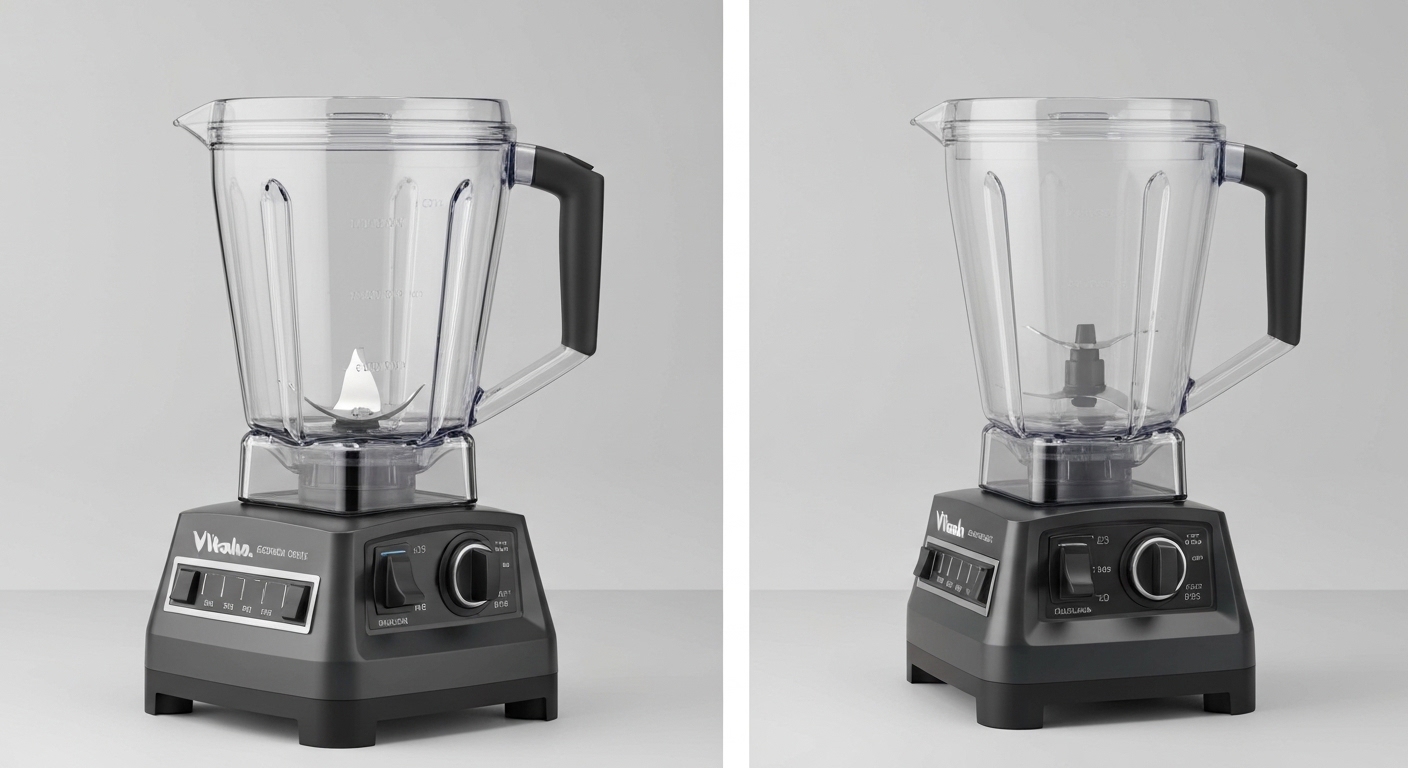
Tritan in Vitamix Containers, What It Resists and What It Does Not
Section titled “Tritan in Vitamix Containers, What It Resists and What It Does Not”Since roughly 2012, many Vitamix containers moved to BPA-free Tritan copolyester. Tritan holds optical clarity and impact strength well, and it tolerates normal food acids and oils better than a lot of clear plastics.
What it does not like is a steady diet of high alkalinity plus heat, or abrasive contact. Automatic dishwasher detergents can run very alkaline, and high cycle temperatures accelerate ester hydrolysis in copolyesters. Add abrasive foods (ice, seeds, nuts) and aggressive scrubbing, and the jar fogs up faster.
Older Vitamix jars made from polycarbonate can show similar haze, but the failure modes and chemical resistance are not identical. This article assumes Tritan unless your jar is clearly marked otherwise.
Clouding vs Crazing, Visual Identification Guide
Section titled “Clouding vs Crazing, Visual Identification Guide”Clouding is a surface optics issue, crazing is structural cracking inside the wall. The fastest way to separate them is to use water, touch, and a flashlight.
Side-by-side, what you are actually seeing
Section titled “Side-by-side, what you are actually seeing”Mineral haze (reversible): looks like a whitish film, often heavier at the water line and around the bottom where rinse water sits. Under a light it reads as a uniform, chalky veil, and it often feels slightly rough.
Micro-scratching (permanent wear): looks like a “frosted” or “smoked” transparency across the blend zone. Under a grazing light you will see directional scuffing, sometimes circular from cleaning, and it usually feels smooth.
True crazing (replacement-level damage): looks like hairline crack networks inside the plastic, not on top of it. Under a flashlight shining through the wall, the lines pop bright like internal lightning, often starting near corners, threads, the base, and thickness transitions.
Photo and diagram callouts to add to your inspection
Section titled “Photo and diagram callouts to add to your inspection”If you are documenting your container, take three shots: one with the jar wet, one dry in normal light, and one in a dark room with a flashlight shining through the side wall. The wet photo makes scratches “disappear” temporarily, the through-light photo makes crazing jump out.
How to Tell if Vitamix Cloudiness Is Reversible
Section titled “How to Tell if Vitamix Cloudiness Is Reversible”- Vinegar test: press a paper towel soaked with white vinegar against the cloudy area for 10 to 15 minutes. If the haze clears or streaks clean, you are mostly dealing with minerals.
- Touch test: minerals often feel rough or powdery, micro-scratches usually feel smooth even when they look bad.
- Flashlight test: shine a bright LED through the wall in a dark room. Surface haze glows diffusely, scratches show directional scuff patterns, crazing shows sharp internal crack lines.
Is a Cloudy Vitamix Container Still Safe?
Section titled “Is a Cloudy Vitamix Container Still Safe?”Cloudy does not automatically mean unsafe. The safety verdict depends on what kind of “cloudy” you actually have.
Mineral haze: generally safe, and usually fixable. The risk is mostly performance and aesthetics, plus mineral scale can trap odors if it gets thick.
Micro-scratching: usually safe for normal cold blending, but it becomes a hygiene problem when the surface is so worn that it holds stains, odors, or residue you cannot remove with normal cleaning. Deep abrasion also increases the chance of microplastic shedding during abrasive blends, especially with ice.
Crazing: stop using it for hot blends immediately. If crazing is visible, I treat the jar as structurally compromised, and for most owners the correct move is replacement rather than “cold-only forever.”
Clear replacement thresholds, my shop rules
Section titled “Clear replacement thresholds, my shop rules”Replace the container (or retire it from service) if any of the following are true: you see internal crack networks (crazing), you have any crack that you can catch with a fingernail, you find a chip at the rim or base that acts as a stress riser, or the jar leaks at the blade base and the sealing surfaces are distorted. If you blend hot soups, a crazed jar is a hard stop.
If the jar is only hazy from minerals or light scuffing, and it cleans fully without holding odors, it is typically serviceable.
Why Vitamix Jars Get Foggy (Tritan-Specific Causes)
Section titled “Why Vitamix Jars Get Foggy (Tritan-Specific Causes)”Most Vitamix haze is a stack-up of three things: hard-water scale, abrasion from ingredients, and cleaning chemistry. The jar is a wear surface, it lives in a high velocity abrasive slurry.
Minerals lay down fastest when you rinse with hard water and let the jar air-dry with a water pool at the bottom. Heat makes it worse because mineral solubility drops as temperature rises, which is why hot soup users see scale faster.
Micro-scratching is normal over time, but it accelerates if you blend lots of ice, seeds, nut butters with grit, or if you scrub with powders. Tritan is tough, but it is still plastic, and plastics take optical damage long before they lose strength.
The Dishwasher Lie for High-End Jars
Section titled “The Dishwasher Lie for High-End Jars”A lot of owners take “dishwasher safe” as “dishwasher proof.” On Tritan, high heat plus high pH detergent is the exact environment that pushes it toward haze and stress cracking.
Automatic dishwasher detergents are commonly strongly alkaline, often around pH 10 to 12 in use solution, because they are built to break fats on ceramic and stainless without hand scrubbing. Hand dish soaps run much closer to neutral pH and rely on surfactants, not caustic alkalinity.
Heat multiplies the damage. Typical dishwash cycles run roughly 55 to 70°C in the wash and can go higher on sanitize, and chemical attack rates climb fast with temperature.
Here is the real-world outcome I see in shops: a jar that is hand-washed can stay clear for years longer than the same jar run through a dishwasher weekly.
| Care method | Typical result over 1 to 3 years | What causes it |
|---|---|---|
| Hand-wash, mild soap, warm water | Slow wear, haze mainly from ingredients | Abrasion only, low chemical stress |
| Dishwasher, heated dry, strong detergent | Rapid uniform fogging, higher crazing risk near stress points | High pH + heat + jet erosion + item contact |
For manufacturer guidance, Vitamix publishes container care recommendations, and Eastman publishes Tritan chemical resistance data. Those two documents together explain why “allowed” is not the same thing as “best practice.”
Vinegar and Dawn Soak (With Hard-Water Variations)
Section titled “Vinegar and Dawn Soak (With Hard-Water Variations)”If your vinegar contact test improved the haze, you are dealing with mineral scale and maybe some greasy film on top of it. This is the lowest-risk fix.
Fill the container halfway with warm water, add 1 cup of white vinegar, then add about 1 tablespoon of Dawn or a comparable grease-cutting dish soap. Swirl, then let it soak 30 to 60 minutes for moderate scale.
For extreme hard water or years of buildup, push the chemistry instead of the time. Use a stronger acid solution (citric acid at roughly 2 to 3 tablespoons per quart of warm water works well), and do two shorter cycles rather than one all-day soak.
Do not soak for long periods with the blade assembly installed if your model has areas where solution can sit against seals or wick into the base, especially overnight. Extended exposure is how you swell gaskets, soften adhesive labels, and create trapped moisture problems that show up later as funk or corrosion around hardware.
After soaking, run the jar at the lowest speed for 30 to 60 seconds to agitate, then dump and rinse 3 to 4 times. Inspect the jar while it is wet and then again after it dries, because wetting temporarily masks micro-scratching.
Baking Soda Scrub Danger (Why It Worsens “Permanent Haze”)
Section titled “Baking Soda Scrub Danger (Why It Worsens “Permanent Haze”)”Baking soda paste is a common tip online, and it is a good way to trade removable haze for permanent scuffing. Even mild abrasives create thousands of micro-scratches that scatter light and make Tritan look frosted.
If you need extra cleaning power for organics, use chemistry, not grit. Enzymatic cleaners for protein and plant residue, surfactants for fats, and acids for minerals all work without mechanically cutting the surface.
What Is Plastic Crazing?
Section titled “What Is Plastic Crazing?”Plastic crazing is a network of microscopic cracks and voids that forms inside a stressed plastic, usually triggered or accelerated by chemical exposure. It is not just “scratches,” it is structural damage in the polymer that can grow over time. In clear Tritan, crazing shows up as fine internal lines, and it can precede sudden cracking.
The Crazing Test (Complete)
Section titled “The Crazing Test (Complete)”Crazing is stress cracking, and on Tritan it is usually a combined failure: mechanical stress plus a chemical trigger. The mechanical side is torque loads at the base, impacts from drops, flexing during use, and residual molding stress locked into corners, thread roots, and thickness transitions.
The chemical side is what tips the part over the edge. Alcohols, certain essential oils, aggressive alkaline cleaners, and some citrus and fragrance compounds can act as stress cracking agents by locally plasticizing or weakening the polymer. If those chemicals sit on a stressed zone, you can get craze initiation, then the crack network grows along the stress field.
How to run the test in 2 minutes
Section titled “How to run the test in 2 minutes”Clean and dry the jar fully, then do the inspection in a dark room. Shine a bright LED flashlight through the side wall and rotate the jar slowly, focusing on the base corners, around the blade housing area, the handle mounts, and the pour spout transition.
Crazing will appear as sharp, bright internal lines that stay visible even when you change viewing angle. Scratches will flash and disappear as the angle changes, and mineral haze will glow diffusely without line structure.
Magnification tips that actually work
Section titled “Magnification tips that actually work”Use a cheap 10x loupe or your phone camera in macro mode, and aim the flashlight through the wall from the opposite side. If it is crazing, you will see the crack network living inside the thickness, not sitting on the surface.
If you see lines on the inside surface that you can catch with a fingernail, that is no longer “crazing,” that is a real crack or gouge. Treat that as immediate replacement territory.
Replacement verdict
Section titled “Replacement verdict”Any visible crazing means the jar is no longer trustworthy for hot blending, period. For cold-only use, you are still running a compromised pressure vessel, and the crack network can propagate from vibration and torque cycles.
My recommendation is replacement if crazing is visible anywhere in the blend zone or near the base. The only time I would keep a mildly crazed jar in service is for low-risk, cold, low-fill blends, with frequent rechecks, and only until a replacement arrives.
Why Crazed Jars Are Unsafe for Soup
Section titled “Why Crazed Jars Are Unsafe for Soup”Hot blending adds thermal expansion stress, softens the polymer slightly, and increases internal pressure from steam and agitation. Those conditions drive crack propagation in already crazed plastic.
If a crazed wall lets go during a hot cycle, you can get scalding liquid release plus shards, and the failure is sudden. That is why a crazed jar is not a “monitor it” situation for soup, it is a retire-it situation.
Quick Decision Tree (60-Second Diagnostic)
Section titled “Quick Decision Tree (60-Second Diagnostic)”Start with a clean, dry jar and a bright flashlight.
If the haze clears with a 10 to 15 minute vinegar contact test, treat it as minerals and descale. If it does not change with vinegar, do the flashlight-through test.
If you see internal crack lines, replace the jar and do not use it for hot blends. If you see only surface scuffing patterns, decide based on hygiene and performance, then consider polishing if you want the looks back.
Polishing Micro-Scratched Tritan (When It Is Worth It)
Section titled “Polishing Micro-Scratched Tritan (When It Is Worth It)”Polishing is controlled abrasion, you remove a thin layer of plastic until shallow scratches are leveled. Use plastic-specific compounds like Novus or Meguiar’s PlastX, plus clean microfiber, and work in small sections with moderate pressure.
Do not chase perfection. You can improve clarity a lot, but you cannot turn a heavily sandblasted jar back into factory optics without removing too much material.
Avoid power tools unless you already know how to control heat and pad pressure on plastics. Heat buildup is how you warp, smear, or haze the surface permanently.
Vitamix Owner Experiences (What Works and What Fails Over Years)
Section titled “Vitamix Owner Experiences (What Works and What Fails Over Years)”Owners who keep jars clear the longest usually do three boring things consistently: rinse immediately, hand-wash with mild soap, and descale with vinegar or citric acid before deposits get thick. They also avoid abrasive powders and avoid the dishwasher heated dry cycle.
Owners who report the fastest fogging usually have one of these patterns: frequent dishwashing with strong detergent, a lot of ice crushing, or routine “scrub it clean” habits with baking soda and stiff brushes. Heavy green blending also shows up often, because plant fibers and pigments cling and people over-scrub to compensate.
A common long-term story is that descaling works for a while, then stops working. That is the point where the jar has transitioned from mineral haze to accumulated micro-scratching, and the realistic choices become live with it, polish it, or replace it.
Preventing Blade-Base Leaks (So You Do Not Mistake Leaks for Cracks)
Section titled “Preventing Blade-Base Leaks (So You Do Not Mistake Leaks for Cracks)”Leaks at the blade base are usually gasket issues, not wall failures or plastic crazing and structural safety risks. The gasket takes compression set over time, and aggressive soaking and heat can accelerate that aging.
If you see moisture after blending, pull the jar, dry it, then run a quick water-only blend and inspect again; while you’re checking the jar, it’s also worth understanding material considerations like Tritan vs polycarbonate plastic safety. If the moisture is coming from the blade housing seam, it is time for gasket service or a new blade assembly, depending on your model.
If you see wall crazing plus a base leak, do not invest in piecemeal repairs. Replace the container assembly.
Can I keep using a cloudy Vitamix container?
Section titled “Can I keep using a cloudy Vitamix container?”If it is mineral haze that responds to vinegar, yes. If it is micro-scratching and it still cleans fully without holding odors or residue, usually yes for cold use.
If it is crazing, stop using it for hot blends immediately, and replacement is the correct move for most households.
Does Vitamix warranty cover clouding or crazing?
Section titled “Does Vitamix warranty cover clouding or crazing?”Warranty coverage depends on the specific container, age, and what Vitamix determines as normal wear versus a defect. In practice, mineral haze and micro-scratching are typically treated as wear, while premature cracking or manufacturing-related failures have a better chance of support.
If you are making a claim, document the issue with clear photos, including flashlight-through shots for crazing.
Why does my jar look clearer when wet?
Section titled “Why does my jar look clearer when wet?”Water fills tiny surface scratches temporarily and reduces light scatter. Once it dries, the air-plastic interface returns and the scratch edges scatter light again.
Is it safe to blend hot soup in Tritan at all?
Section titled “Is it safe to blend hot soup in Tritan at all?”With an intact, non-crazed Tritan Vitamix container, hot blending is part of the design use. The safety problem is not “hot liquid plus Tritan,” it is “hot liquid plus a structurally compromised container.”
References
Section titled “References”-
Eastman Chemical Company. “Tritan Copolyester Chemical Resistance Guide.” Technical documentation for material compatibility assessment.
-
Eastman Chemical Company. “Estrogenic Activity (EA) Testing of Tritan Plastics.” Third-party testing methodology and results.
-
Vitamix Corporation. “Container Care and Maintenance Guidelines.” Official manufacturer recommendations.
-
Society of Plastics Engineers. “Stress Cracking Phenomena in Transparent Polymers.” Technical review of crazing mechanisms.
-
Journal of Food Science. “Microplastic Release from Food Contact Materials Under Various Use Conditions.” Research on particle liberation during typical consumer use.
-
Consumer Reports. “High-Performance Blender Reliability and Maintenance.” Long-term durability testing and consumer feedback compilation, including practical upkeep guidance such as cleaning cloudy plastic blender jars to maintain performance over time.