Repairing Cracked Plastic Skylights - Acrylic and Polycarbonate Dome Repair
📑 Table of Contents
The Crack Overhead Problem
Section titled “The Crack Overhead Problem”A cracked skylight is never cosmetic. Once the dome is breached, water intrusion becomes a certainty, not a possibility, and the longer it leaks the more secondary damage you risk inside the roof cavity.
Plastic skylights made from acrylic (PMMA) or polycarbonate offer impact resistance and lower weight than glass, but both materials degrade under long-term exposure. UV radiation, thermal cycling, hail impact, and building movement all contribute to crack formation, each affecting repair viability.
Because skylights sit at the highest exposure point on a structure, they experience temperature swings and stress loads that wall-mounted plastics never see. Understanding the cause of the crack determines whether repair is worth attempting or if replacement is the only responsible option.
Acrylic vs. Polycarbonate Identification
Section titled “Acrylic vs. Polycarbonate Identification”Correct material identification matters because acrylic and polycarbonate respond very differently to solvents, adhesives, and stress. Using the wrong repair chemistry can turn a small crack into a structural failure.
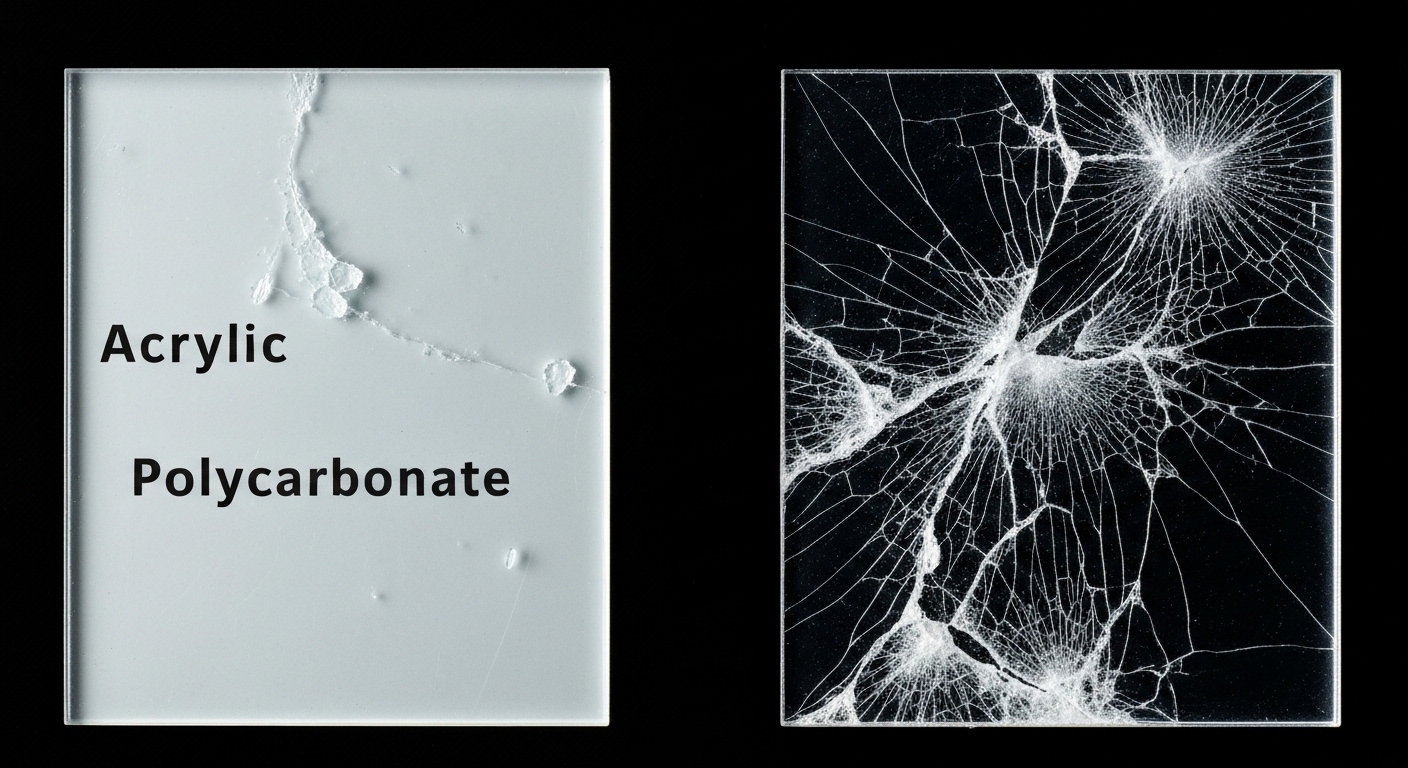
Acrylic skylights have higher optical clarity and can be polished to remove light scratches. With age and UV exposure, acrylic becomes brittle and develops surface crazing, which appears as fine spiderweb cracks.
Polycarbonate resists impact far better than acrylic but yellows more aggressively under UV exposure and does not polish well, which is important to consider when repairing cracked plastic skylights. It tends to fail through embrittlement and discoloration rather than classic crazing.
Solvent testing can confirm material type if done carefully on a hidden edge. Acetone or MEK will soften and dissolve acrylic, while polycarbonate will haze and craze without dissolving.
Installation era and application also provide clues. Older residential skylights are often acrylic, while impact-rated or commercial units are more commonly polycarbonate.
Manufacturer markings on the frame or dome edge provide definitive identification when available.
What this means: Identify the skylight material before choosing repair products. Material mismatch is a common cause of failed repairs.
Why Silicone Does Not Bond to Skylight Plastic
Section titled “Why Silicone Does Not Bond to Skylight Plastic”Silicone caulk is often the first thing people reach for, and it is almost always a mistake on skylight plastics. The bond failure is chemical, not procedural.
Acrylic and polycarbonate both have low surface energy relative to silicone rubber. Silicone relies on surface wetting and weak molecular attraction, neither of which occur reliably on these plastics.
Even when silicone appears sealed at first, thermal movement and vibration cause it to release. Once the bond edge lifts, water tracks underneath and the leak returns.
Proper repairs rely on solvent welding, plastic-specific adhesives, or mechanical sealing methods that do not depend on silicone adhesion.
What this means: Silicone caulk does not form a durable bond to acrylic or polycarbonate. It should not be used for skylight crack repair.
The Eternabond Tape Emergency Fix
Section titled “The Eternabond Tape Emergency Fix”When immediate weatherproofing is required and permanent repair is not possible, microsealant tapes provide a temporary solution. These tapes are designed to adhere to low-energy plastic surfaces.
Surface preparation determines success. Clean thoroughly with isopropyl alcohol and allow the surface to dry completely before application.
The tape must extend well beyond the crack in all directions. Press the tape down firmly with a roller, especially along the edges, to prevent lift.
Multiple layers increase durability in high-exposure locations. UV-resistant tape lasts longer, but even the best tape should be considered a stopgap, not a final repair.
What this means: Specialty repair tape can stop leaks short-term if applied correctly, but it does not restore structural integrity.
Using Capillary Cement for Acrylic Cracks
Section titled “Using Capillary Cement for Acrylic Cracks”Capillary solvent cement is the strongest repair method for clean cracks in acrylic skylights, and it’s commonly recommended among proven acrylic plastic skylight repair techniques. Products like Weld-On 4 chemically fuse the crack faces back into a single structure, restoring strength when the surfaces are properly aligned and clean.
The solvent wicks into the crack by capillary action and dissolves the acrylic at the molecular level. As the solvent evaporates, the material re-solidifies into a bonded joint.
Cracks must be clean and held tightly closed during application. Any debris or gap reduces penetration and final strength.
Allow a full 24 to 48 hours for solvent evaporation before stressing the repair. The crack will remain visible, but strength can approach original material properties.
What this means: Solvent welding is the only true structural repair for cracked acrylic domes when the crack is clean and tight.
Identifying Hail Pitting vs. Crazing
Section titled “Identifying Hail Pitting vs. Crazing”Not all surface damage indicates the same failure mode. Impact damage and material degradation look similar at a glance but have very different implications.
Hail pitting appears as random circular divots or chips and often shows up suddenly after a storm. Crazing forms gradually as a network of fine cracks caused by UV and chemical stress.
Ammonia-based cleaners can cause localized crazing that mimics age-related degradation. Review cleaning history when damage appears uneven or patchy.
Crazing indicates loss of material toughness and usually points toward replacement rather than repair.
What this means: Random impact damage may be repairable. Widespread crazing signals end-of-life material degradation.
Why Heat Causes Skylights to Pop
Section titled “Why Heat Causes Skylights to Pop”Plastic skylights expand far more than their surrounding frames. When that movement is restricted, stress builds until the plastic cracks.
South-facing domes can exceed 150°F in direct sun. If the frame clearance is inadequate or fasteners are over-tightened, expansion stress concentrates at the edges.
Cracks from thermal stress usually start at mounting points or frame edges. Sudden popping sounds often accompany failure after long-term stress accumulation.
What this means: Proper installation clearance is critical. Edge cracks often indicate thermal restraint rather than impact damage.
Cleaning the Outer Dome Safely
Section titled “Cleaning the Outer Dome Safely”Routine cleaning preserves light transmission but improper products can permanently damage skylight plastics. Most damage I see comes from the wrong cleaner, not neglect.
Use mild dish soap and water with a soft cloth or sponge. Rinse thoroughly and allow to air dry or wipe with a clean microfiber towel.
Never use ammonia-based glass cleaners, abrasives, or solvents. These products attack the polymer surface and lead to stress cracking.
What this means: Soap and water are sufficient. Anything stronger risks long-term damage.
The Micro-Crack Leak Diagnostic
Section titled “The Micro-Crack Leak Diagnostic”Leaks do not always originate where water becomes visible. Water can travel along framing before showing up inside the building.
Exterior inspection is essential. Many cracks are invisible from below due to viewing angle and refraction through the dome.
Controlled spray testing with a hose isolates leak zones, a method especially useful when diagnosing issues similar to repairing cracked plastic skylight domes. Frame joints and flashing should be tested separately from the dome to accurately pinpoint the source of water intrusion.
What this means: Confirm the leak source before repairing. The dome is not always the problem.
Restoring Clarity to Yellowed Domes
Section titled “Restoring Clarity to Yellowed Domes”Yellowing reduces light output and signals UV degradation. Restoration potential depends entirely on material type.
Acrylic can sometimes be restored by sanding and polishing to remove oxidized surface layers. Polycarbonate yellowing penetrates the material and cannot be polished out.
Wet sanding from 600 grit through 2000 grit followed by plastic polishing compound can significantly improve acrylic clarity. Apply a protective coating afterward to slow recurrence.
What this means: Acrylic may respond to restoration. Polycarbonate yellowing requires replacement.
Why Ammonia Cleaners Cause Skylight Failure
Section titled “Why Ammonia Cleaners Cause Skylight Failure”Ammonia attacks polymer chains in both acrylic and polycarbonate. The damage is chemical and irreversible.
Stress cracking often appears long after exposure, making the cause difficult to identify. Glass cleaner misuse is one of the most common skylight killers.
Once ammonia damage occurs, the material remains weakened and prone to cracking.
What this means: Never use ammonia-containing cleaners on plastic skylights.
The Expansion Bolt Safety Check
Section titled “The Expansion Bolt Safety Check”Mounting hardware failures can cause leaks or even dome loss in high winds. These issues are often overlooked during inspections.
Thermal cycling loosens fasteners over time. Over-tightening creates stress cracks at flange holes.
Fasteners should be snug, not torqued, and load-spreading washers reduce stress concentration.
What this means: Hardware inspection is part of skylight maintenance, not an afterthought.
Preventing Sealant Rot in the Frame
Section titled “Preventing Sealant Rot in the Frame”Skylight frames often fail before the dome. Sealant breakdown allows water intrusion that mimics dome leaks.
Remove failed sealant completely before reapplication. Use glazing-rated polyurethane or elastomeric sealants for longevity.
Check flashing integration and drainage paths during any inspection.
What this means: Frame maintenance extends skylight life more than dome patching alone.
Why Double-Pane Skylights Fog Up
Section titled “Why Double-Pane Skylights Fog Up”Fogging between layers indicates seal failure. Once moisture enters the sealed airspace, it cannot escape.
Interior deposits accumulate with each condensation cycle. Cleaning is impossible without destroying the unit.
Replacement of the sealed assembly is the standard remedy.
What this means: Internal fogging means the insulated unit has failed.
When a Crack Means Internal Water Damage
Section titled “When a Crack Means Internal Water Damage”Long-term leaks often cause damage beyond visible stains. Mold, insulation collapse, and framing rot are common.
Investigate the cavity around the skylight before cosmetic repairs. Fix the leak first, then address interior damage.
What this means: Repair sequencing matters. Stop water intrusion before remediation.
References
Section titled “References”- American Architectural Manufacturers Association. “Skylight and Sloped Glazing Guidelines.”
- Rohm and Haas Company. “Plexiglas Technical Manual.”
- SABIC Innovative Plastics. “Lexan Polycarbonate Care and Handling Guide.”
- National Roofing Contractors Association. “NRCA Roofing Manual: Steep-slope Roof Systems.”
- Velux America Inc. “Skylight Maintenance and Repair Guide.”