Cleaning Plastic Spice Jars and Labels - Grease Removal and Container Reuse
📑 Table of Contents
The Greasy Residue Problem
Section titled “The Greasy Residue Problem”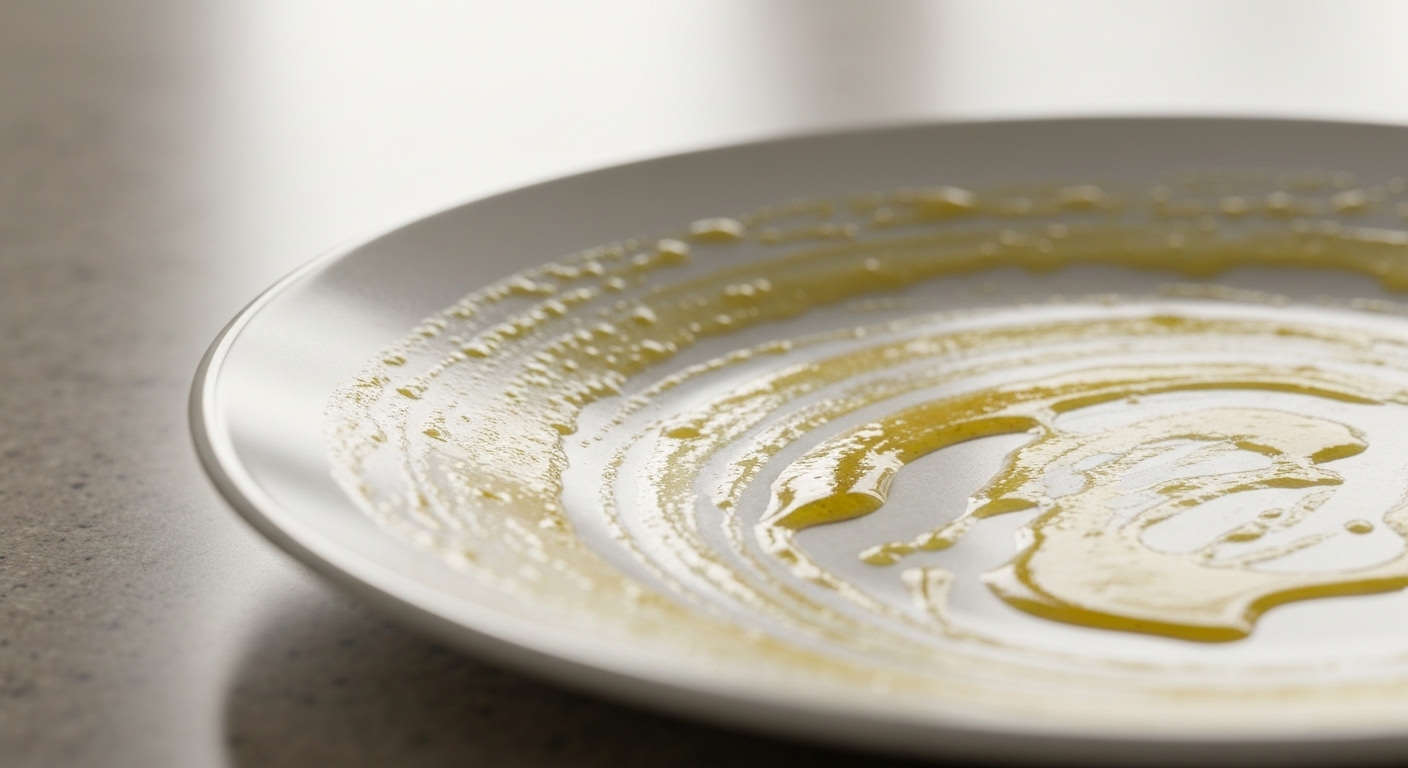
Spice jars kept near the stove collect a mix of airborne cooking grease and fine spice dust. That combo forms a slightly sticky film that grabs more grime every time you cook. If you are trying to reuse containers, this film also traps old odors and makes label removal messier.
This guide focuses on a spice-jar-specific workflow, especially for PET plastic, where heat and harsh abrasives can damage the container. You will clean the grease first, then remove labels and adhesive, then sanitize and dry so the jar is ready for refilling.
Step-by-Step: Clean + De-Grease + De-Label a PET Spice Jar (10 to 20 minutes)
Section titled “Step-by-Step: Clean + De-Grease + De-Label a PET Spice Jar (10 to 20 minutes)”Tools and supplies (most people already have these): dish soap, comfortably warm tap water, microfiber cloth or soft sponge, nylon bottle brush (or soft toothbrush for threads), baking soda, cooking oil (or mineral oil), 70% isopropyl alcohol, a plastic scraper or old gift card, a bowl for soaking, clean towel or drying rack, optional dilute bleach solution for sanitizing.
Water temperature for PET: use comfortably warm tap water, not near-boiling. If the jar feels like it is getting soft or warpy, the water is too hot.
- Soak 10 minutes in warm (not hot) soapy water.
- Scrub with a nylon brush, use baking soda paste for spots.
- For stubborn grease, rub on a few drops of cooking oil, wipe, then rewash with dish soap.
- Remove label, soak 20 to 30 minutes, peel, use oil or 70% isopropyl alcohol for residue, then rewash.
- Sanitize, soak 1 to 2 minutes in 1 Tbsp bleach per quart water, then rinse 2 to 3 times.
- Air-dry 24 hours, then odor-check before refilling.
Stop when clean checklist: the outside feels squeaky-clean (no tack), the threads and lid rim are not greasy, there is no label adhesive smear, the jar smells neutral when fully dry, and all parts are completely dry before adding spices.
PET vs. Glass Jars (Which Cleaning and Reuse Path to Choose)
Section titled “PET vs. Glass Jars (Which Cleaning and Reuse Path to Choose)”Most plastic spice jars are PET (polyethylene terephthalate), the same family used for many beverage bottles. PET is lightweight and shatter-resistant, but it is more sensitive to heat and scratching than glass. Glass is heavier and breakable, yet it tolerates higher heat, stronger cleaning, and tends to stay clearer over time.
How to confirm PET
Section titled “How to confirm PET”Check the recycling triangle on the bottom. A 1 usually indicates PET, and many spice jars use it. If there is no code, look for a clear, slightly flexible feel rather than the cold, rigid feel and clink sound you get with glass.
Decision points (practical, not perfectionist)
Section titled “Decision points (practical, not perfectionist)”PET is a good choice when you are storing dry spices at room temperature and you mostly hand-wash. Glass is a better choice when you want to use a dishwasher, you need higher-heat sanitation, you refill frequently, or you expect to do repeated solvent-based label removal over the life of the container.
Food-contact safety also depends on how you treat the container. PET is generally suitable for room-temperature dry goods, but it is not the material I recommend for hot filling or for exposure to very hot wash water. If you are concerned about plastics and food contact, read the site guide on food-safe plastic storage and leaching considerations.
Best Method for Removing Stove Grease on Spice Jars (Escalation Ladder)
Section titled “Best Method for Removing Stove Grease on Spice Jars (Escalation Ladder)”For spice jars, grease usually builds up most on the lid, shoulder, and label edges where sticky dust collects. The goal is to remove grease without scratching the plastic, because scratches hold odors and make future cleaning harder.
Level 1: Warm water + dish soap (fastest, best first step)
Section titled “Level 1: Warm water + dish soap (fastest, best first step)”Fill a bowl with comfortably warm water and add dish soap. Soak the jar and lid for 10 minutes, then scrub with a microfiber cloth or a soft sponge. Use a nylon bottle brush for the inside and a toothbrush for the lid threads and crevices.
Level 2: Baking soda paste (gentle boost for stubborn spots)
Section titled “Level 2: Baking soda paste (gentle boost for stubborn spots)”If you still feel tacky patches, make a paste with baking soda and a few drops of dish soap plus a little water. Rub lightly with your fingertip or a soft cloth, then rinse well. Skip scouring powders and rough scrub pads on PET because they scratch and haze the surface.
Level 3: Oil pre-treat (for polymerized or baked-on grease)
Section titled “Level 3: Oil pre-treat (for polymerized or baked-on grease)”When grease has “cooked on,” a few drops of cooking oil can soften it so soap can actually lift it. Rub a thin film of oil over the sticky areas, wait 2 to 5 minutes, then wipe with a paper towel or cloth. Immediately rewash with dish soap to remove the oil and whatever it loosened.
Level 4: Spot solvent (only if needed, keep it brief)
Section titled “Level 4: Spot solvent (only if needed, keep it brief)”For greasy adhesive smears or very stubborn residue, use a small amount of 70% isopropyl alcohol on a cloth for a quick wipe. Do not soak PET in alcohol for long periods, and always follow with dish soap and a full rinse so the container is food-ready.
Why Dishwashers Warp Plastic Spice Jars (And How to Avoid It)
Section titled “Why Dishwashers Warp Plastic Spice Jars (And How to Avoid It)”PET softens at temperatures that some dishwashers reach during hot wash and, more often, during heated drying. Even if the jar survives the wash, it can deform late in the cycle when the plastic is warm and unsupported. Thin walls, tall shapes, and tight corners warp more easily, and strong spray jets can push softened plastic out of shape.
Top rack placement is not a guarantee. Some machines still run hot enough up top, and the heated dry setting is the most common culprit. If you must try a dishwasher, skip heated dry, use the coolest cycle, and expect that PET may still cloud or distort over time.
A second issue is labels. Heat and water can turn label adhesive into a gummy layer that spreads instead of peeling, which makes later cleanup harder, especially if you eventually need to remove sticker residue from plastic.
Label Removal Techniques (Plastic-Safe Escalation Ladder)
Section titled “Label Removal Techniques (Plastic-Safe Escalation Ladder)”Label removal goes smoother when you remove grease first, because grease makes adhesives smear. Work in stages, and keep solvent exposure short on PET.
Step 1: Soak and peel
Section titled “Step 1: Soak and peel”Soak the jar in warm soapy water for 20 to 30 minutes so the label backing absorbs water and loosens. Peel slowly from a corner, and use a plastic scraper or old gift card to lift without gouging.
Step 2: Oil for adhesive residue
Section titled “Step 2: Oil for adhesive residue”If you have sticky residue after peeling, apply a small amount of cooking oil and let it sit for 2 to 5 minutes. Wipe away, then wash with dish soap to remove the oily film.
Step 3: Alcohol for “label ghosting” and smeared adhesive
Section titled “Step 3: Alcohol for “label ghosting” and smeared adhesive”Sometimes you get a faint sticky haze or ink shadow where the label was, often called label ghosting. A quick wipe with 70% isopropyl alcohol can lift many adhesive films and some ink transfer. Rinse and rewash with dish soap afterward.
Step 4: Citrus adhesive remover (strongest, use carefully)
Section titled “Step 4: Citrus adhesive remover (strongest, use carefully)”Commercial citrus-based removers (often sold as Goo Gone style products) are effective when oil and alcohol do not cut it, and they’re often discussed in the context of removing odors from plastic containers. Use a small amount, keep contact time short, and avoid prolonged soaking on PET. Wash twice with dish soap afterward and rinse thoroughly, because the citrus oils and solvents can leave a lingering taste or smell if you do not.
Cleaning Product Comparison (What to Use, When, and Why)
Section titled “Cleaning Product Comparison (What to Use, When, and Why)”| Cleaner or solvent | Best for | Safe on PET | Smell level | Rinse needs | Typical time | Cautions |
|---|---|---|---|---|---|---|
| Dish soap | Everyday grease, general washing | Yes | Low | Normal rinse | 5 to 15 min | Avoid very hot water on PET, soap alone may not remove adhesive |
| Baking soda (paste) | Stubborn tacky spots, mild deodorizing, gentle scrub | Yes | None | Extra rinse to remove grit | 2 to 5 min | Can haze if you scrub hard, avoid using it like sandpaper |
| Vinegar (diluted) | Mineral spots, cutting alkaline residue after baking soda | Usually | Medium | Rinse | 1 to 2 min | Not an effective degreaser, do not mix with bleach |
| Isopropyl alcohol (70%) | Adhesive film, label ghosting, quick degrease spot treatment | Usually (short contact) | Medium | Wash with dish soap after | 1 to 3 min | Flammable, can dry plastics over time, do not soak PET |
| Citrus adhesive remover (Goo Gone type) | Stubborn adhesive, sticker residue that smears | Often (short contact) | High | Wash twice with dish soap after | 3 to 10 min | Can leave oily odor, avoid prolonged contact and keep away from food until fully washed |
| Dilute bleach (1 Tbsp per quart) | Sanitizing after cleaning | Yes (brief) | Medium | Rinse 2 to 3 times | 1 to 2 min contact | Never mix with vinegar or other acids, do not use on dirty or greasy surfaces |
Quick pick guide (Cleaner to best-for):
| Cleaner | Best for |
|---|---|
| Dish soap | Most stove grease and routine cleaning |
| Baking soda paste | Tackiness and stuck-on spots without scratching |
| Isopropyl alcohol | Adhesive haze and greasy smears after peeling |
| Citrus remover | Worst-case label residue when other steps fail |
Sanitizing for Reuse (Food vs Low-Risk Uses)
Section titled “Sanitizing for Reuse (Food vs Low-Risk Uses)”For most home spice reuse, a thorough hot-soapy wash plus complete drying is enough because you are storing dry goods. Sanitizing is most useful when jars were stored open, had visible contamination, or you are reorganizing a pantry after a pest or moisture issue.
If you choose to sanitize, use 1 tablespoon of unscented household bleach per 1 quart of water, soak for 1 to 2 minutes, then rinse 2 to 3 times with clean water. Let everything air-dry fully before refilling. Never mix bleach with vinegar, and do not sanitize until the jar is already clean, because bleach works poorly through grease.
Common Mistakes and Troubleshooting
Section titled “Common Mistakes and Troubleshooting”If you are getting frustrating results, it is usually one of a few fixable issues.
Mistake: Using the dishwasher, then the jar warps or the lid no longer fits
Section titled “Mistake: Using the dishwasher, then the jar warps or the lid no longer fits”Warping is usually heat plus time plus shape. Once warped, PET rarely returns to its original form, and a warped lid seal can let moisture into spices. Retire warped pieces from food storage, and consider switching frequently washed jars to glass.
Problem: Adhesive smears instead of rolling off
Section titled “Problem: Adhesive smears instead of rolling off”Smearing happens when heat softens adhesive or when you rub too hard before the label backing is removed. Go back to a soak, peel what you can, then use oil for a short dwell time and wipe gently. Follow with dish soap, because leftover oil can feel like “still sticky” even when adhesive is gone.
Problem: Lingering spice odor (especially garlic, cumin, curry, chili)
Section titled “Problem: Lingering spice odor (especially garlic, cumin, curry, chili)”Odors cling more in scratched plastic and in lid liners. Try a second wash focused on the lid, then let the jar and lid air out separately for 24 to 48 hours. If the odor persists after full drying, reserve the jar for a similar spice, or repurpose it for non-food storage.
Problem: Cloudy or hazy plastic
Section titled “Problem: Cloudy or hazy plastic”Haze can come from micro-scratches, overheated washing, or repeated exposure to strong cleaners. Avoid abrasive pads, keep water only comfortably warm, and use a microfiber cloth rather than a scrubby sponge. If the jar is still functional but looks dull, it is fine for a cabinet, but it will never look truly “new” again.
Problem: Scratched surfaces that seem to get dirty faster
Section titled “Problem: Scratched surfaces that seem to get dirty faster”Scratches trap grease and make future adhesive removal harder. Use nylon brushes and microfiber cloths, and skip steel wool or gritty scouring powders. If a jar is deeply scratched inside, I do not recommend it for food reuse because it is harder to clean thoroughly.
Problem: Warped or cracked lid liners
Section titled “Problem: Warped or cracked lid liners”Some lids have a foam or paper liner that holds odors and can degrade. If the liner is cracked, peeling, or smells after washing, replace the lid if you can, or downgrade the container to non-food use.
Maintenance: Keeping Spice Jars Clean Near the Stove
Section titled “Maintenance: Keeping Spice Jars Clean Near the Stove”Grease film is easier to prevent than to remove. The closer jars are to the stove, the more they get hit with aerosolized oils, steam, and spice dust.
Store everyday spices in a drawer, a closed cabinet, or on a rack that is not directly beside the cooktop. If you love the look of a counter display, keep only a small set out and rotate the rest into a cabinet. A simple tray under the jars also helps, because you can lift and wipe one surface instead of chasing rings under every jar.
Wipe jar exteriors weekly with a damp microfiber cloth and a drop of dish soap, then follow with a clean-water wipe. Once a month, do a quick lid-and-thread wipe, because that is where sticky dust builds up. If you cook with a lot of splatter, increase the monthly degrease to every two weeks.
Reuse and Sustainability: Best Uses for Cleaned Spice Jars (And When to Recycle)
Section titled “Reuse and Sustainability: Best Uses for Cleaned Spice Jars (And When to Recycle)”Reusing spice jars is a great low-waste habit, but it works best when you match the container to the job. PET is light and convenient, yet it has limits with heat, scratching, and odor retention.
Food reuse ideas (best fits)
Section titled “Food reuse ideas (best fits)”Cleaned jars are ideal for dry goods like spices, spice blends, baking soda for cooking, tea bags, drink mixes, and small pantry staples that stay dry. Keep them away from heat sources and avoid using PET for hot-fill, oily foods, or anything you plan to microwave.
Non-food reuse ideas (often the most durable path)
Section titled “Non-food reuse ideas (often the most durable path)”Spice jars are fantastic for hardware (screws, anchors), craft supplies (beads, glitter), travel items (cotton swabs, hair ties), garden seeds, match storage (if fully dry), or small workshop bits. For these uses, minor clouding is not a dealbreaker, and you can keep jars out of the recycling stream longer.
Labeling tips that stay tidy
Section titled “Labeling tips that stay tidy”Use a removable label or a small strip of painter’s tape, and write with a permanent marker. Put labels on the side rather than the shoulder, because shoulder labels catch drips and peel sooner. Date blends if you make your own, since fresh flavor is part of food safety and waste reduction.
When not to reuse (recycle instead)
Section titled “When not to reuse (recycle instead)”Recycle or discard jars that have deep scratches inside, persistent odors after full drying, warped bodies, or lids that no longer seal. Also retire any jar that held non-food chemicals, essential oils, or solvents, because residues can remain in plastic and are not worth the risk for food use.
Are plastic spice jars dishwasher safe?
Section titled “Are plastic spice jars dishwasher safe?”Many PET spice jars are not reliably dishwasher safe. Even on the top rack, hot cycles and heated dry can soften PET and warp the jar or lid. Hand washing in comfortably warm water is the safer choice for keeping the shape and seal.
Is bleach safe for sanitizing PET spice containers?
Section titled “Is bleach safe for sanitizing PET spice containers?”Yes, when diluted and used briefly. Use 1 tablespoon unscented household bleach per quart of water for 1 to 2 minutes, then rinse 2 to 3 times and air-dry completely. Do not mix bleach with vinegar or other acids.
Can I use isopropyl alcohol on PET to remove label residue?
Section titled “Can I use isopropyl alcohol on PET to remove label residue?”Usually, yes for short contact. Wipe with 70% isopropyl alcohol, then wash with dish soap and rinse well. Avoid soaking PET in alcohol, which can stress plastics over time.
Why does my jar still smell like the old spice after washing?
Section titled “Why does my jar still smell like the old spice after washing?”Odors often live in the lid threads, the liner, and any micro-scratches. Wash the lid carefully, then let the jar and lid air-dry separately for 24 to 48 hours and re-test when fully dry. If it still smells, reuse it for a similar spice or switch it to non-food storage.
How do I remove cloudy haze from plastic spice jars?
Section titled “How do I remove cloudy haze from plastic spice jars?”Haze is often permanent if it is from scratches or heat. You can reduce dullness by switching to soft microfiber cleaning and avoiding abrasives going forward. If clarity matters, glass is the better long-term choice for a display shelf.
What is the best way to remove sticky label residue without damaging plastic?
Section titled “What is the best way to remove sticky label residue without damaging plastic?”Start with soaking and peeling, then use a small amount of oil, and rewash with dish soap. If residue remains, a brief alcohol wipe is a good next step, and citrus adhesive remover is a last resort. Keeping contact time short and rewashing after solvents helps protect PET and keeps the jar food-ready.
References
Section titled “References”-
National Restaurant Association. Food storage container sanitation guidance.
-
Society of Plastics Engineers. PET properties and limitations.
-
American Cleaning Institute. Kitchen cleaning guidance for grease removal.
-
FDA. Food contact materials regulatory guidance.
-
Spice Trade Association. Spice storage best practices.