Cleaning Plastic Car Trim Oxidation, Step by Step Verdict: Dye it or Paint it, don't dress it
📑 Table of Contents
Why Black Trim Turns “Grey” (UV Leaching)
Section titled “Why Black Trim Turns “Grey” (UV Leaching)”Automotive cladding is typically made of injection molded Polypropylene (PP) or ABS plastic. Carbon black pigment and UV stabilizers are blended into the resin to give trim its deep factory color.
Over time, sunlight breaks down the surface polymer chains through photodegradation, which explains why plastic dressings fail on UV-faded plastic. The surface turns chalky and porous, scattering light and making the trim look grey. This is not dirt, it is dead plastic sitting on top of the still black material underneath.
Oily trim dressings only wet this chalk layer. Once rain, soap, or evaporation removes the oil, the faded look comes straight back.
The “Pencil Eraser” Trick for Wax Stains
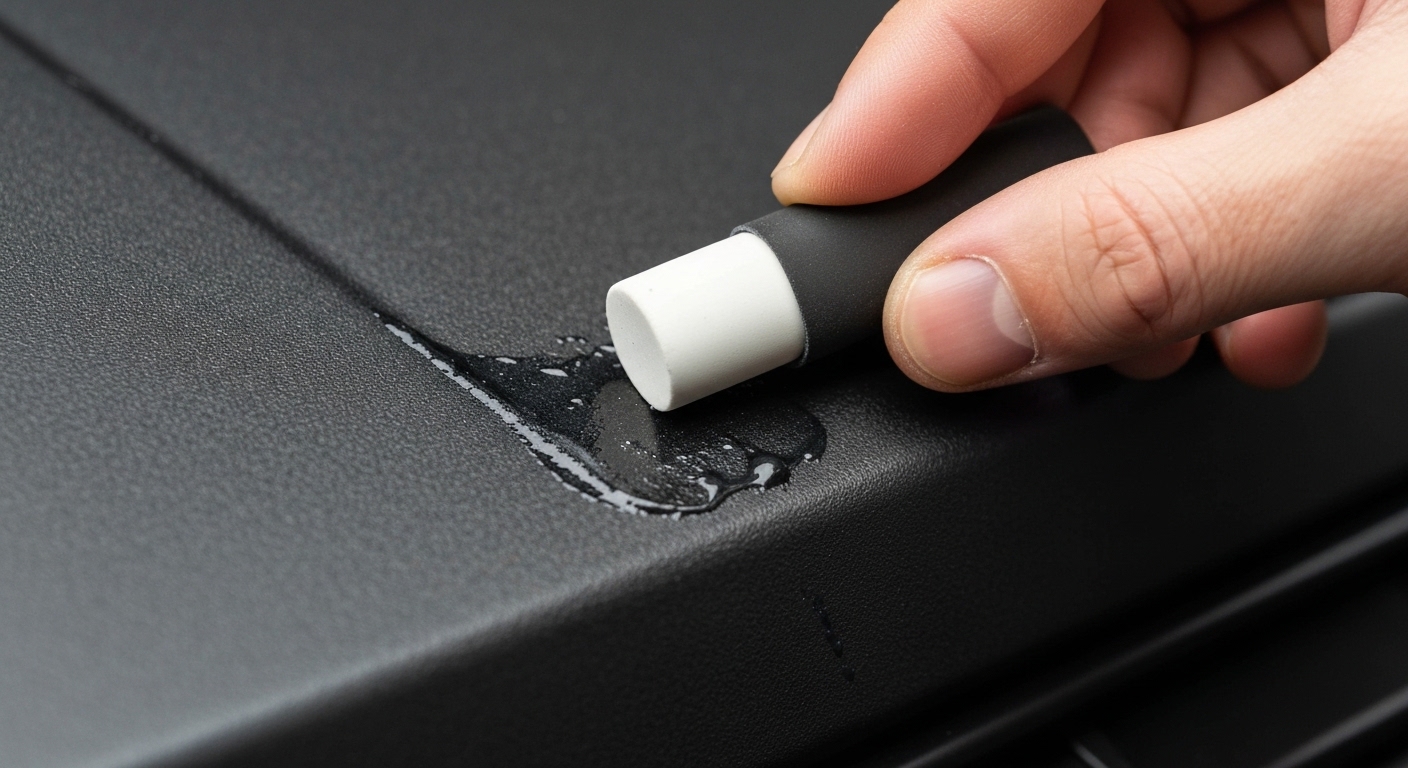
Section titled “The “Pencil Eraser” Trick for Wax Stains”White streaks on trim are usually dried car wax lodged deep in the texture. Solvents smear it around and rarely pull it out.
A plain white pencil eraser works because friction lifts wax particles out of the grain without dissolving them. It is slow but precise, and it does not damage the plastic surface.
Why “Peanut Butter” is a Temporary Myth
Section titled “Why “Peanut Butter” is a Temporary Myth”Peanut butter darkens trim for the same reason any oil does. It wets oxidation and changes how light reflects.
After a few days the oil washes off, attracts dirt, and invites insects. It adds contamination without fixing the underlying damage.
Using a “Melamine Sponge” (Magic Eraser) Safely
Section titled “Using a “Melamine Sponge” (Magic Eraser) Safely”Removing oxidation is the most important step before any permanent restoration. Melamine foam works because it is a very fine abrasive that shaves off dead plastic.
Use light to moderate pressure only. Let the sponge do the work, especially near edges and raised textures where thinning the plastic can cause shiny spots. Never use melamine on glossy painted panels because it will dull the clear coat instantly.
The “Heat Gun” Restoration Method (Risky but Effective)
Section titled “The “Heat Gun” Restoration Method (Risky but Effective)”A heat gun can temporarily turn grey trim black by reheating the surface layer. This causes oils and plasticizers from deeper in the polymer to bloom outward.
Keep temperatures low, around 300 to 350°F, and maintain at least 4 to 6 inches of distance. If the surface starts to gloss unevenly or smell sharp, you are overheating it. Heat restoration should never be used on thin trim, textured mirror caps, or older brittle plastic.
The color usually lasts a few months before fading worse than before. Heat is best reserved for short term cosmetic improvement, not long term care.
How to Permanently Restore Plastic Car Trim
Section titled “How to Permanently Restore Plastic Car Trim”- Wash the trim with a degreasing car shampoo and dry completely, about 15 minutes. 2. Remove oxidation using a damp melamine sponge until no grey residue transfers, about 20 to 30 minutes, a process informed by the science of UV oxidation in outdoor plastics. 3. Wipe the surface with isopropyl alcohol to remove dust and oils, then allow 10 minutes to flash off. 4. Apply a carbon based trim dye or plastic specific paint following manufacturer instructions, usually 30 to 60 minutes. 5. Allow the dye or paint to cure fully, typically 4 to 24 hours depending on product. 6. Seal dyed trim with a plastic safe ceramic coating if desired, after the full cure window.
This workflow focuses on removing damage first, then replacing lost pigment. Skipping steps shortens lifespan dramatically.
Dressings vs Dyes vs Ceramic vs Paint
Section titled “Dressings vs Dyes vs Ceramic vs Paint”| Method | Typical Cost | Durability | Risk Level | Best Use Case |
|---|---|---|---|---|
| Silicone Dressing | Low | Days to weeks | Low | Temporary shine only |
| Carbon Dye | Medium | 1 to 2 years | Low | Severely faded plastic |
| Ceramic Coating | Medium | 1 to 3 years | Medium | New or lightly faded trim |
| Trim Paint | Medium | 5+ years | Medium | Irreversibly bleached trim |
Dressings sit on top. Dyes penetrate. Ceramics seal. Paint resurfaces entirely. Choosing depends on how much plastic is already lost, which is why understanding options for restoring oxidized automotive plastics permanently helps determine the right approach.
Solution Finish (Dye) vs. Ceramic Coatings
Section titled “Solution Finish (Dye) vs. Ceramic Coatings”Carbon based dyes soak into porous, oxidized plastic and replace missing pigment. They work best on older PP and ABS trim where pores have opened from UV damage.
Ceramic coatings bond to intact surfaces and form a hard shell. They need clean, relatively smooth plastic to anchor properly and should not be applied over loose oxidation.
On older vehicles, dye first, let it cure overnight, then apply ceramic as a UV shield. On newer cars, ceramic alone is often enough.
Painting Trim with “Bumper Black” Aerosol
Section titled “Painting Trim with “Bumper Black” Aerosol”When trim turns blotchy, white, or tiger striped, dye cannot even out the surface. Plastic specific trim paint is the correct fix.
Products like SEM Trim Black are flexible, satin matched, and designed to bond without primer. Proper masking and light coats create a factory looking finish that can last five years or more.
Cleaning Textured Plastic Without Shredding Towels
Section titled “Cleaning Textured Plastic Without Shredding Towels”Textured trim grabs microfiber loops and leaves lint behind. This is frustrating and wasteful.
Use a medium stiff nylon brush for agitation and wipe residue with waffle weave or lint free shop towels. They slide across texture without snagging.
Common Mistakes That Ruin Plastic Trim
Section titled “Common Mistakes That Ruin Plastic Trim”- Overheating trim with a heat gun until it shines unevenly or warps.
- Applying dye or ceramic over silicone residue, which blocks bonding.
- Skipping oxidation removal and sealing chalk under coatings.
- Painting flexible rubber seals that need to bend and compress.
Avoiding these mistakes saves time and prevents permanent damage.
Why Silicone Dressings Make It Worse
Section titled “Why Silicone Dressings Make It Worse”Traditional tire shines are silicone heavy and solvent rich. They attract dust that grinds away plastic over time.
Some solvents also accelerate plasticizer loss, speeding up UV damage. This is why trim treated with heavy shine often fades faster.
Protecting New Trim with 303 Aerospace
Section titled “Protecting New Trim with 303 Aerospace”Prevention is easier than restoration. 303 Aerospace Protectant blocks UV without adding oil or shine.
It dries matte and works like sunscreen for plastic. Applying it every oil change can keep trim black for years.
Removing Polishing Compound Residue
Section titled “Removing Polishing Compound Residue”Compounding residue turns white when trapped in textured trim. Light cases respond to erasers.
For stubborn marks, a diluted heavy duty degreaser and a stiff brush break down abrasive oils so residue can rinse away cleanly.
The ATF Old Timer Trick
Section titled “The ATF Old Timer Trick”Automatic transmission fluid darkens trim because it stays wet. It also creeps, stains paint, and can swell rubber seals.
Modern plastics deserve products designed for them. ATF belongs in transmissions, not on cars exteriors.
Restoring Rubber Seals vs Plastic Trim
Section titled “Restoring Rubber Seals vs Plastic Trim”Hard exterior trim is usually polypropylene. Window and door seals are EPDM rubber.
Plastic dyes and paints should never be used on rubber. Rubber needs conditioners like Gummi Pflege Stift to stay flexible and sealed.
Verdict: Dye it or Paint it, Don’t Dress it
Section titled “Verdict: Dye it or Paint it, Don’t Dress it”Dressings hide damage briefly. Restoration replaces what UV took away.
Remove oxidation, restore pigment, and protect the surface. Done properly, your trim will stay black for years instead of days.
References
Section titled “References”- Solution Finish. The Science of Restoring Black Trim.
- SEM Products. Trim Black Application Guide.
- Gtechniq. C4 Permanent Trim Restorer Technical Data.
- Autogeek. Exterior Trim Care Guide.
- Society of Automotive Engineers. Weathering of Automotive Plastics.