Restoring Outdoor Plastic Furniture - Resin & Wicker Guide
📑 Table of Contents
This guide is the materials and durability pillar for restoring outdoor plastic furniture, especially molded resin chairs (polypropylene) and synthetic wicker (polyethylene). It explains what actually fails at the polymer level, how restoration methods compare, and when replacement is the safer choice.
Can You Restore Faded Plastic Outdoor Furniture?
Section titled “Can You Restore Faded Plastic Outdoor Furniture?”Yes, if the plastic is not structurally brittle. Fading is usually UV-driven surface oxidation, so the goal is either to remove the degraded layer, re-saturate it, or cover it with a UV-blocking coating. Results depend on polymer type (PP vs PE), chalk depth, and whether pigments have photodegraded.
- Most durable to least: paint formulated for plastic, trim coating (ceramic or polymer), replacement parts, heat gun (short-term cosmetic only)
Identify Your Material First: PP Resin vs PE Wicker
Section titled “Identify Your Material First: PP Resin vs PE Wicker”“Outdoor plastic furniture” usually means one of two polymer families, and treating them the same is a common failure mode. Polypropylene (PP) monobloc chairs chalk aggressively under UV, while polyethylene (often HDPE) wicker is less chalk-prone but has a large surface area that traps biofilm and can become brittle in cold.
Molded resin chairs (monobloc)
Section titled “Molded resin chairs (monobloc)”Material is typically Polypropylene (PP). These are injection molded, stiff, and inexpensive, but they are among the most UV-sensitive commodity plastics when stabilizer packages are minimal.
Synthetic wicker (rattan)
Section titled “Synthetic wicker (rattan)”Material is commonly HDPE strands woven over a frame. The surface is waxier and more chemically forgiving than PP, but mechanical cleaning is harder because the weave traps moisture, spores, and soil.
Quick field test
Section titled “Quick field test”Tap the furniture and listen. A hard, loud “clack” is usually PP, while a duller “thud” and slightly softer feel suggests PE.
What “Chalky” Plastic Actually Means (Photo-oxidation)
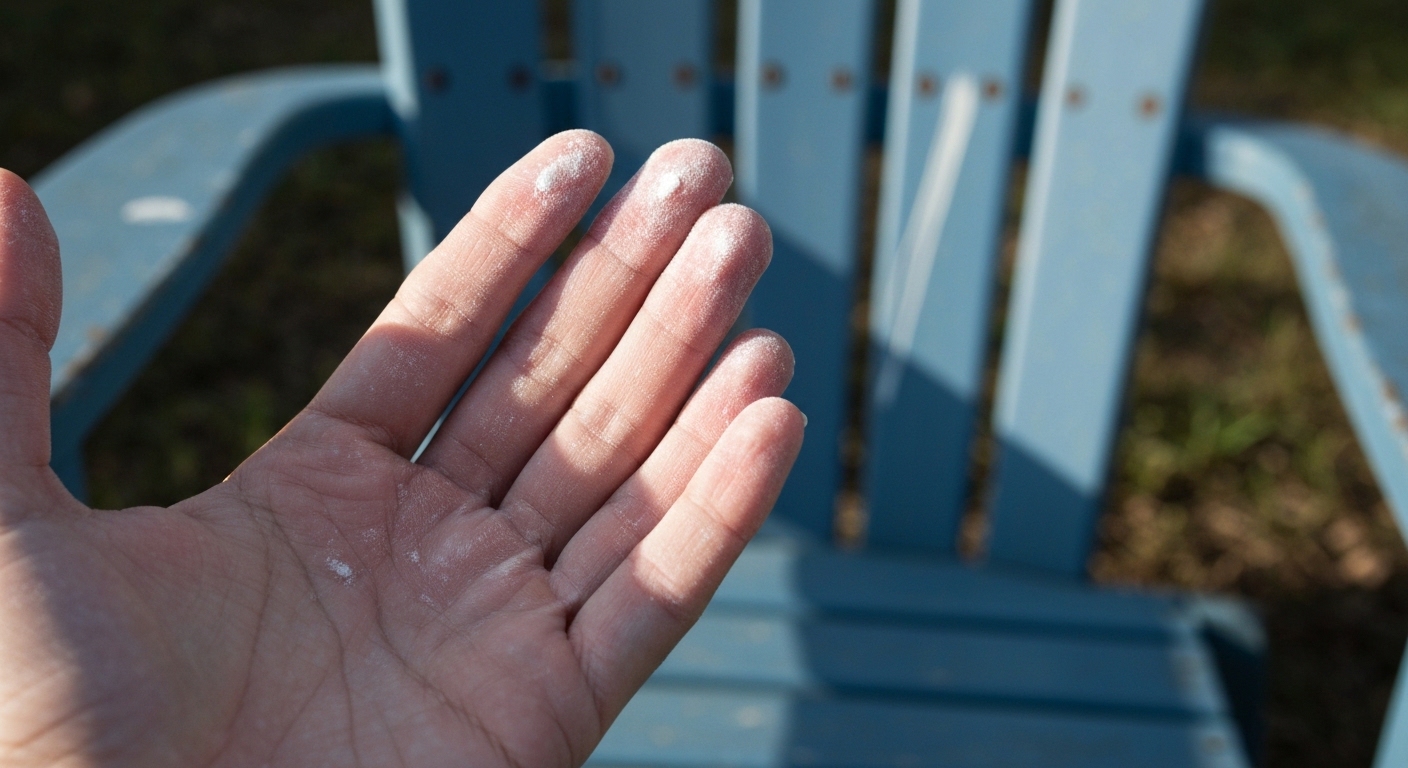
Section titled “What “Chalky” Plastic Actually Means (Photo-oxidation)”Chalking is not dirt, it is polymer chain damage. UV photons generate free radicals in the presence of oxygen, forming hydroperoxides and driving chain scission, which reduces molecular weight and surface cohesion.
That white residue on your hand is oxidized polymer fragments and filler particles becoming unbound as the surface erodes. Once the surface begins shedding, mechanical properties are already trending down, especially impact resistance.
Safety note: chalk often correlates with brittleness
Section titled “Safety note: chalk often correlates with brittleness”A chair can look “restorable” and still be unsafe. When PP embrittles, failures are often sudden, with leg splay and snap events under load, especially in cold weather.
Is Restoration Worth It or Should You Replace?
Section titled “Is Restoration Worth It or Should You Replace?”Use material condition, chalk depth, and age as your screening criteria. The goal is not aesthetic perfection, it is avoiding a cosmetically improved but mechanically compromised seat.
Decision tree (restore vs replace)
Section titled “Decision tree (restore vs replace)”Start with a dry chair at room temperature.
-
Brittleness check (mandatory for chairs): Lean your bodyweight into the seat and flex the backrest. If you hear crackling, see stress whitening at corners, or feel a stiff-then-sudden give, replace.
-
Chalk depth check: Wipe firmly with a dark microfiber cloth. If you get a light dusting, restoration is likely viable. If you get heavy powder and the surface feels like coarse sandpaper, expect limited lifespan unless you paint.
-
Age and exposure: If the chair is over 5 years old and stored in full sun year-round, assume stabilizers are depleted and prioritize paint or replacement. If it is under 3 years old or shaded, trim coatings and wax tend to hold longer.
-
Color limitations: White and light colors cannot be “oiled” back without yellowing, they require cleaning, light abrasion, or paint. Greens can look faded from pigment photodegradation, not just chalking, so coatings may not revive true hue.
Restoration Method Comparison Table (Science, Risk, Longevity)
Section titled “Restoration Method Comparison Table (Science, Risk, Longevity)”| Method | What it does | Expected lifespan outdoors | Cost | Risk | Best use case |
|---|---|---|---|---|---|
| Heat gun | Melts the oxidized micro-layer smooth, temporarily deepens color | 1 to 12 weeks typical, sometimes a season | Low | High, can accelerate embrittlement and warping | Decorative pieces, “flip” jobs, non-load-bearing panels |
| Automotive trim restorer or coating | Re-saturates and coats oxidized surface with polymers and UV blockers | ~3 to 12 months for basic restorers, up to ~1 to 2 years for ceramic-style wipes | Medium | Low to medium, streaking or unevenness on porous chalk | Dark PP parts, armrests, chair backs, textured plastics |
| Plastic-bonding paint | Creates a UV-blocking film and color layer that protects the substrate | 1 to 3+ years with correct prep and thickness | Medium | Medium, peeling if prep is poor, unsafe if plastic is already brittle | When you need a real color reset or pigment is degraded |
| Replacement (parts or full) | Restores structure and surface without relying on degraded polymer | Full new service life | Medium to high | Lowest safety risk | Brittle chairs, cracked wicker strands, severe leg splay |
Why Pressure Washers Strip the UV-Resistant “Skin”
Section titled “Why Pressure Washers Strip the UV-Resistant “Skin””Injection-molded furniture has a relatively dense, smoother outer layer formed against the mold surface, and that layer tends to retain more functional integrity than the porous, oxidized zone underneath. High-pressure washing behaves like micro-abrasion, removing what is left of that protective surface and driving water into microcracks.
A consumer pressure washer is often 1600 to 3200 PSI, and even lower settings can cut into chalked PP because the degraded layer has low cohesive strength, a common issue when restoring faded outdoor plastics damaged by UV exposure as discussed in restoring faded outdoor plastics damaged by UV exposure. A tight 0-degree nozzle concentrates energy enough to etch and “tiger stripe” the surface, while wider 25 to 40-degree fan tips reduce but do not eliminate risk.
Use this checklist to decide.
- Safer: garden hose with spray nozzle, soft car wash brush, mild detergent, oxygen bleach for organics
- Avoid: 0-degree tips, turbo nozzles, blasting edges and corners, holding the wand within 6 to 12 inches, any pressure washing on visibly chalky PP
The Heat Gun Trick: Why It Looks Great, Then Fails
Section titled “The Heat Gun Trick: Why It Looks Great, Then Fails”Heat-gun restoration is a form of thermal reflow, similar to flame polishing; understanding how UV oxidation affects HDPE and resin outdoor furniture helps explain why briefly melting the oxidized asperities allows the surface to smooth, reduces light scattering, and makes color look deeper and glossier.
The durability problem is not cosmetic, it is chemical. Thermal exposure can deplete or volatilize stabilizer residues near the surface and can further oxidize already damaged polymer, raising the probability of brittle cracking later, particularly after freeze cycles.
Use heat only on non-structural items, and treat the result as short-term. If you want the look to last and the chair to remain safe, paint or replace.
The Automotive Restorer Method (Better), With Product Reality
Section titled “The Automotive Restorer Method (Better), With Product Reality”Trim restorers work because oxidized plastic is micro-porous and will accept certain carrier fluids and polymers that change refractive index and fill surface voids. The best products also leave a thin, more UV-resistant film, which is why they outperform generic dressings.
Back-to-Black vs Cerakote vs Solution Finish
Section titled “Back-to-Black vs Cerakote vs Solution Finish”Mothers Back-to-Black and similar dressings tend to be polymer and oil blends that darken quickly but can wash down faster, especially on heavily chalked PP. Expect weeks to a few months outdoors if the surface is porous, longer if the chair is newer and less oxidized.
Cerakote ceramic trim wipes typically leave a harder, more UV-tolerant coating than oily dressings, and they usually resist rain wash-off better. On outdoor furniture, realistic longevity is often 6 to 18 months depending on sun intensity, surface prep, and how much chalk was removed before application.
Solution Finish is pigment-rich and can disguise uneven oxidation more aggressively on black plastics. It can look excellent, but pigment transfer and streaking are more likely if excess is not fully buffed and cured, which matters on chair arms and backs where clothing contact occurs.
Color and substrate limitations
Section titled “Color and substrate limitations”These products are best on black, dark gray, and some dark greens, and they are unreliable on white because any “restoration” effect reads as yellowing or grime. If your green chair is pale due to pigment photodegradation, a restorer can deepen the surface but will not recreate the original chromophore performance.
Application summary (keep it simple)
Section titled “Application summary (keep it simple)”Remove loose chalk first with gentle scrubbing or very light wet abrasion, rinse well, and dry fully. Apply thin, even coats, then buff to remove unbound residue so it does not attract soil.
Painting Plastic: What Krylon Fusion Is Actually Doing
Section titled “Painting Plastic: What Krylon Fusion Is Actually Doing”Polypropylene has low surface energy, so conventional paints form weak interfacial adhesion and peel in sheets. “Bonds to plastic” paints rely on solvent systems and resins that partially swell or dissolve the topmost polymer layer, creating mechanical interlock and better wetting.
Krylon Fusion and similar products can be the most durable cosmetic reset because they create a UV-blocking barrier that slows further oxidation of the substrate. They also solve pigment failure problems, especially for greens that fade from chromophore breakdown.
Common failure modes (and what they mean)
Section titled “Common failure modes (and what they mean)”Peeling usually means surface contamination, insufficient scuffing, or painting over active chalk that continues to shed underneath. Cracking often indicates the paint film was applied too thick, or the substrate is flexing because the chair is already creeping and weakening.
Repaint intervals are typically 1 to 3 years outdoors, depending on film thickness, abrasion, and sun intensity. High-contact areas like armrests may need touch-ups sooner.
When paint is unsafe
Section titled “When paint is unsafe”If the chair fails the brittleness check, painting is a cosmetic bandage over a structural liability. Paint can hide stress whitening and microcrack propagation, which increases the chance someone uses an unsafe chair.
Pigments Matter: Why Green Chairs Go Gray-White
Section titled “Pigments Matter: Why Green Chairs Go Gray-White”Not all fading is the same mechanism. Some colors fade because the polymer chalks, while others fade because the pigment itself photodegrades.
Phthalocyanine greens are generally less UV-stable than carbon black and can lose chromophore integrity under intense sunlight. If the pigment is degraded, no restorer can “bring it back,” because the colorant has chemically changed, and paint becomes the reliable correction.
Wicker and Mold: Clean Without Destroying the Weave
Section titled “Wicker and Mold: Clean Without Destroying the Weave”Synthetic wicker traps moisture and spores, so mold and algae can colonize crevices even when the surface looks dry. Use chemical removal as your primary lever, and avoid aggressive abrasion that can fray strands or expose fresh surface area that soils faster.
Real-World Results: What Actually Lasts
Section titled “Real-World Results: What Actually Lasts”These timelines reflect common outdoor exposure patterns, not lab weathering, and they assume the furniture is left outside in sun and rain.
Case 1: Heat gun on a chalky PP chair (3 months)
Section titled “Case 1: Heat gun on a chalky PP chair (3 months)”At day one the color looks dramatically improved, but the gloss often becomes patchy as oxidation resumes and the surface re-chalks. By three months, most pieces show renewed fading and a higher incidence of crack initiation at thin sections and corners.
Case 2: Basic trim restorer on dark PP arms (1 year)
Section titled “Case 2: Basic trim restorer on dark PP arms (1 year)”After proper de-chalking and drying, polymer dressings can look good for a season on shaded patios. At 6 to 12 months, wash-down and UV exposure typically reduce uniformity, and a second coat restores appearance if the underlying plastic is still mechanically sound.
Case 3: Plastic-bonding paint on a structurally sound chair (2 years)
Section titled “Case 3: Plastic-bonding paint on a structurally sound chair (2 years)”A correctly prepped paint system usually outlasts restorers because it blocks UV and does not depend on re-saturating a damaged surface. At two years, the common issue is abrasion wear on edges and arms, not full-field peeling, unless the original surface prep was inadequate.
Preventing Leg Splay and Collapse (Creep and Heat)
Section titled “Preventing Leg Splay and Collapse (Creep and Heat)”Polypropylene can creep under sustained load, especially when the surface it sits on is much hotter than air temperature. Dark pavement can exceed 60°C (140°F) in summer sun, and the chair’s load-bearing geometry can slowly deform over time.
If legs start splaying, the chair is moving toward a buckling mode and should be retired for safety. Shade, cooler substrates, and avoiding overload are the only practical controls.
Winter Storage: Why Cold Makes Old PP Fail Suddenly
Section titled “Winter Storage: Why Cold Makes Old PP Fail Suddenly”PP becomes significantly less tough as temperatures drop, and damaged, UV-aged PP is especially susceptible to brittle fracture. Impacts that would only scuff a warm chair can crack a cold, weathered chair.
Store resin chairs in a garage or shed when freezing conditions are expected. If they must remain outside, cover them and avoid handling until temperatures rise above freezing.
What Not to Put on Plastic (Teak Oil and Similar)
Section titled “What Not to Put on Plastic (Teak Oil and Similar)”Wood oils are not designed for low-porosity polymers. They sit on the surface, remain tacky, and trap particulates, which accelerates dark soiling and can increase mildew colonization.
If you already applied a drying oil and it turned sticky, removal usually requires a strong degreaser and repeated rinsing, which is time-consuming and can further abrade an already fragile surface.
Protective Top Layer: Wax as a Sacrificial Barrier
Section titled “Protective Top Layer: Wax as a Sacrificial Barrier”A paste wax or marine wax can reduce soil adhesion and slow oxygen and UV contact at the surface. Wax does not reverse oxidation, but it can extend the cosmetic life of a restored surface, especially after light abrasion or paint cure.
Reapply when water beading drops noticeably. Expect at least seasonal maintenance in full sun.
FAQ: Outdoor Plastic Furniture Restoration
Section titled “FAQ: Outdoor Plastic Furniture Restoration”Can you restore chalky plastic chairs without paint?
Section titled “Can you restore chalky plastic chairs without paint?”Sometimes. If the chalking is shallow and the chair is not brittle, light de-chalking plus a trim coating can improve appearance, but deep chalk often returns unless you paint or remove more degraded material.
Is a heat gun safe for plastic patio chairs?
Section titled “Is a heat gun safe for plastic patio chairs?”Not for chairs you intend to sit on long-term. Heat can worsen embrittlement risk and cause warping, and the cosmetic improvement is usually short-lived.
What is the best product to restore black plastic outdoor furniture?
Section titled “What is the best product to restore black plastic outdoor furniture?”Ceramic-style trim wipes typically last longer than oily dressings in rain and sun. Pigment-rich restorers can hide uneven oxidation well, but they need careful buffing to prevent transfer.
Why does pressure washing make plastic look worse?
Section titled “Why does pressure washing make plastic look worse?”It can strip the remaining dense surface layer and expose porous oxidized plastic underneath. It also creates uneven removal patterns that look like stripes and can accelerate re-soiling.
Can I paint polypropylene patio furniture?
Section titled “Can I paint polypropylene patio furniture?”Yes, if the plastic is structurally sound and you use a paint formulated to bond to plastic. Prep controls success, because paint over active chalk will fail early, which is why understanding proper surface cleaning and maintenance—similar to the principles behind caring for shiny plastic and polycarbonate furniture—is essential before you start painting.
Why did my green chair turn gray even after cleaning?
Section titled “Why did my green chair turn gray even after cleaning?”Green pigments can photodegrade in addition to polymer chalking. If pigment breakdown is significant, only paint will restore the original color family.
How do I know if a plastic chair is unsafe?
Section titled “How do I know if a plastic chair is unsafe?”Listen for crackling during flex, look for stress whitening at corners, and watch for leg splay. If it feels stiff and brittle, replace it rather than coating it.
References
Section titled “References”- Krylon Technical Data Sheet. Fusion for Plastic adhesion and solvent system guidance.
- Plastics Engineering. Weathering of polypropylene, photo-oxidation and stabilizer depletion.
- Consumer Reports. Outdoor furniture durability and accelerated aging comparisons.
- Clorox Pro. Sodium hypochlorite guidance for outdoor surface cleaning.