The Acrylic (PMMA) Restoration Guide - Polishing & Maintenance
📑 Table of Contents
PMMA acrylic as a material, why it stays clear, and why it scratches
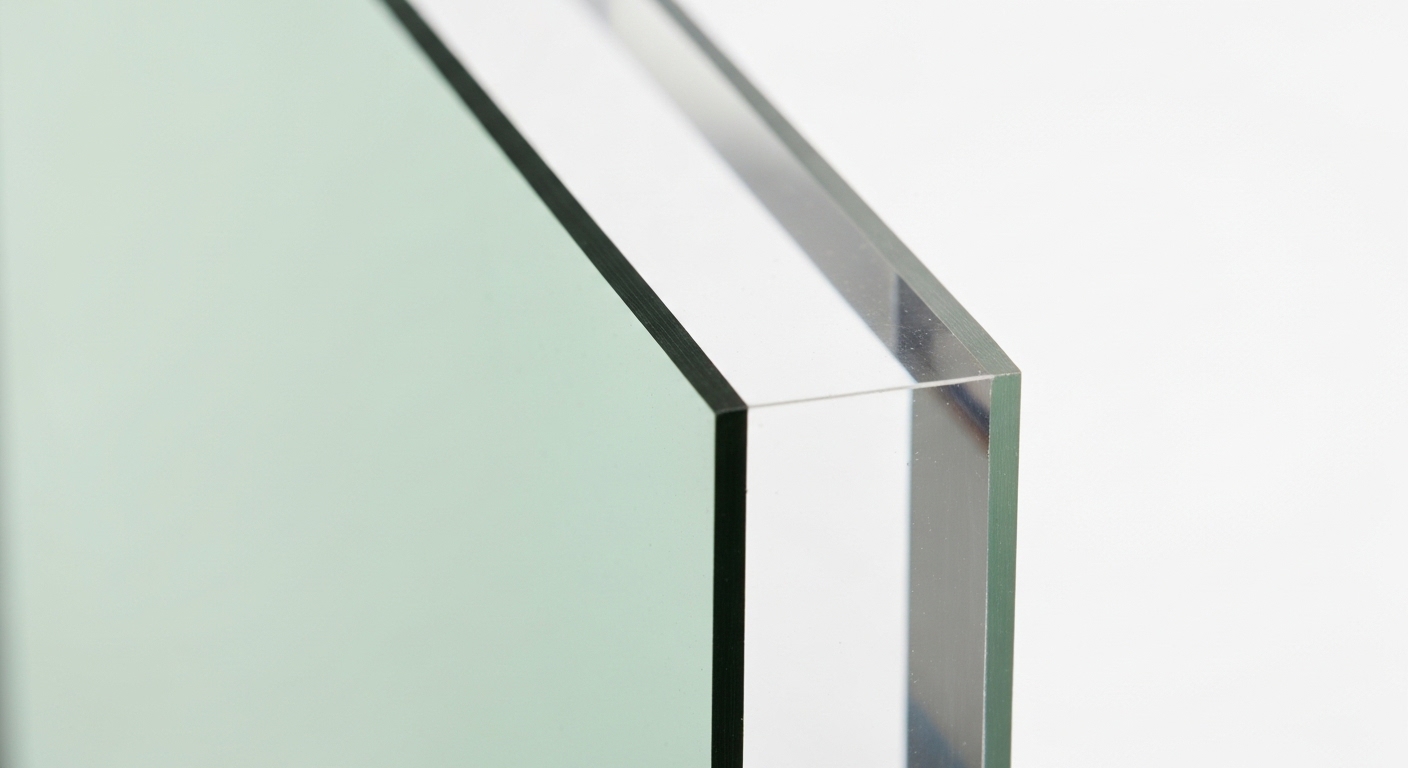
Section titled “PMMA acrylic as a material, why it stays clear, and why it scratches”Polymethyl methacrylate (PMMA), sold as Plexiglas, Lucite, or Perspex, is an optically clear thermoplastic used for display, glazing, and organizers because it can look nearly invisible at thicknesses where glass shows color. High quality water-white PMMA transmits about 92 percent of visible light, while common soda-lime glass is typically lower and shows a green edge tint from iron impurities.
The tradeoff is mechanical and chemical, not optical. PMMA is much softer than glass, so dust plus dry wiping behaves like fine abrasive polishing in the worst way, producing uniform haze over time. PMMA is also sensitive to specific chemicals that can trigger stress cracking, which is not a surface scratch you can polish out.
Acrylic vs other clear plastics (PMMA vs polycarbonate vs PETG)
Section titled “Acrylic vs other clear plastics (PMMA vs polycarbonate vs PETG)”Many products sold as “acrylic” are actually other transparent polymers, or blends, which changes scratch behavior, solvent resistance, and whether restoration is realistic.
| Property (typical consumer sheet goods) | PMMA (Acrylic) | Polycarbonate (PC) | PETG |
|---|---|---|---|
| Scratch resistance (uncoated) | Better than PC, still scratches easily | Poor (scratches readily) | Moderate |
| Impact resistance | Moderate | Excellent | Good |
| Chemical resistance to alcohols | Moderate to poor (stress cracking risk, grade dependent) | Poor (stress cracking common) | Fair |
| Chemical resistance to ammonia solutions | Poor (crazing risk, especially stressed parts) | Poor | Better than PMMA and PC, still test first |
| UV stability (uncoated) | Excellent, best of the three | Fair to poor without UV grades or coatings | Fair |
| Restoration potential (polish and sand) | Excellent, responds predictably | Limited, polishes but scratches return fast, stress cracking risk | Fair, can polish light defects |
| Typical feel in use | Rigid, “glassy” | Tough, slightly “waxy” | Slightly softer, more flexible |
If your clear item is unusually impact-resistant and bends instead of cracking, it may be PC or PETG rather than PMMA. If it yellows quickly in sunlight, it is often not pure PMMA, or it is PMMA without adequate UV package, or it contains recycled regrind that accelerates photo-oxidation.
Acrylic vs glass vs polycarbonate (quick comparison table)
Section titled “Acrylic vs glass vs polycarbonate (quick comparison table)”| Factor | PMMA (Acrylic) | Glass | Polycarbonate |
|---|---|---|---|
| Optical edge color | Clear edge, water-white grades available | Often green edge tint in soda-lime | Clear, can look slightly gray depending on grade |
| Scratch resistance | Low | High | Very low |
| Break behavior | Brittle crack | Brittle shatter | Ductile, tough |
| Can a scratch be removed at home | Yes (polish, wet sand) | Rarely practical | Sometimes, but results are less durable |
| Sensitivity to household cleaners | High | Low | High |
The Golden Rules of Acrylic Care
Section titled “The Golden Rules of Acrylic Care”- Never use ammonia-based glass cleaner on PMMA.
- Avoid alcohol and vinegar on stressed, molded, or thin parts.
- Clean with wet microfiber first, then dry with a second microfiber.
- Polish to remove damage, do not scrub dry to “clean harder.”
- Treat UV exposure as a design variable, choose UV-rated sheet for sunny locations.
Why “Windex” is an acrylic killer (ammonia vs alcohol vs vinegar)
Section titled “Why “Windex” is an acrylic killer (ammonia vs alcohol vs vinegar)”Many glass cleaners rely on ammonia (ammonium hydroxide) and or high-alcohol blends to cut oils and evaporate fast. On glass, that is harmless. On PMMA, ammonia is a well-known stress cracking trigger, especially at molded corners, bent edges, drilled holes, and solvent-cemented joints.
Ammonia does not typically “dissolve” PMMA in the way acetone does. Instead, it can promote environmental stress cracking by lowering the energy barrier for localized chain separation in regions already under residual stress, leading to crazing.
Alcohols (ethanol and isopropanol) are complicated because concentration, contact time, and internal stress dominate outcomes. A brief wipe with dilute alcohol may not visibly damage thick cast sheet, while the same wipe can haze or craze thin extruded parts or molded items that are highly stressed. Vinegar (acetic acid) is not as aggressive a stress cracking agent for PMMA as ammonia, but acidic cleaners are often blended with surfactants and solvents, and prolonged wet contact can still dull the surface or initiate crazing in stressed regions.
Damage triage matters.
Surface residue or film from a cleaner is usually reversible, and you can remove it by washing and polishing. Crazing is internal microfracture, it is permanent, and polishing only changes the surface gloss while the crack network remains.
What to use instead
Section titled “What to use instead”For routine cleaning, use lukewarm water plus a small amount of mild dish soap, then rinse and dry with microfiber. For dust, use an anti-static cleaner designed for plastics (Novus 1 and similar products) applied to the cloth, not sprayed heavily into seams.
Why acrylic looks hazy, the optics of scratches, and why polishing works
Section titled “Why acrylic looks hazy, the optics of scratches, and why polishing works”Clear polymers show every defect because a scratch is a refractive discontinuity. Light that would transmit straight through instead scatters at the groove walls, producing bright lines, or a general milkiness when micro-scratches are dense.
Polishing works on PMMA because the material is optically uniform through its thickness, which is why understanding how to properly maintain and restore acrylic surfaces is important. Removing microns of damaged surface replaces a scratched interface with a new smooth interface, restoring specular reflection and transmission.
Identifying cast vs extruded acrylic (and why it changes durability)
Section titled “Identifying cast vs extruded acrylic (and why it changes durability)”Cast and extruded PMMA are both acrylic, but they differ in molecular weight distribution, residual stress, and machining behavior. Those differences change scratch feel, crazing susceptibility, and how forgiving the material is when exposed to borderline cleaners.
Buyer checklist for cast vs extruded PMMA
Section titled “Buyer checklist for cast vs extruded PMMA”Cast sheet is produced by polymerizing liquid monomer between plates, which tends to yield higher molecular weight and lower oriented stress. Extruded sheet is forced through dies and rollers, which can lock in directionality and residual stress, and is typically softer.
Use this quick screen when shopping.
- Ask for “cell cast” or “cast acrylic sheet” explicitly, not just “acrylic.”
- Favor thicker panels for restoration headroom, thin parts heat-warp and craze sooner.
- Check edges under light, extruded often shows subtle flow lines or striations.
- Drill test (if you have offcut), cast produces chips or flakes, extruded tends to melt and string.
- Be cautious with very low-cost “acrylic” items, many are PS, SAN, PETG, or blends.
Retail reality is messy. Premium display blocks, furniture components, and aquarium panels are commonly cast, while thin brochure holders, bargain frames, and many low-cost organizers are commonly extruded or not PMMA at all.
Chemical etching and aerosols (perfumes, sprays, household mists)
Section titled “Chemical etching and aerosols (perfumes, sprays, household mists)”Aerosols deposit fine droplets of solvents, plasticizers, and fragrances that can partially swell or micro-etch the PMMA surface. The result is a frosty, rough haze that does not wash off because it is topography change, not dirt.
Restoration is a controlled abrasion problem. Start with a fine polish for light etching, then escalate to heavier polish or wet sanding only if needed, because every step removes thickness.
Restoration toolkit (what works, and why)
Section titled “Restoration toolkit (what works, and why)”Plastic polishes, Novus and Polywatch
Section titled “Plastic polishes, Novus and Polywatch”Abrasive plastic polishes use controlled particle size to remove scratch peaks faster than valleys, leveling the surface. Novus remains a common three-step system.
Novus 1 is primarily cleaning and anti-static, with minimal abrasion. Novus 2 removes fine scratches and haze, and Novus 3 is a heavy-cut compound that must be followed by Novus 2 to refine the scratch pattern.
Polywatch is another fine abrasive polish, originally marketed for watch crystals, and it performs similarly to a fine scratch remover. Use it for light scuffs and as a finishing step, but do not expect it to remove scratches you can catch with a fingernail.
Microfiber, water, and anti-static control
Section titled “Microfiber, water, and anti-static control”Dry wiping is the main driver of swirl haze because PMMA is triboelectrically active and attracts dust after friction charging. A damp microfiber reduces static and lifts particles into the pile rather than dragging them.
Anti-static plastic cleaners work by leaving a thin film that helps dissipate charge so dust is less strongly attracted. Apply the product to the cloth to avoid pooling in seams, which can concentrate chemistry at stressed joints.
Scratch diagnosis (what to do based on depth)
Section titled “Scratch diagnosis (what to do based on depth)”Use a simple diagnostic. If you cannot feel the scratch with a fingernail, start with a fine polish and microfiber. If your nail clicks into the groove, polishing alone is slow and often uneven, and you should plan on wet sanding followed by polishing.
Hand restoration workflow for deep scratches (wet sanding)
Section titled “Hand restoration workflow for deep scratches (wet sanding)”PMMA wet sanding is controlled surface leveling. Use wet/dry abrasives with water as a lubricant, keep the surface flooded, and stop as soon as the defect is removed to preserve thickness.
A practical home sequence is 2000 grit to remove the defect, then 3000 grit to refine, then heavy-cut polish, then fine polish to restore optical clarity. During sanding, the area will turn uniformly white, that indicates a consistent scratch field that can be polished back to transparency.
For museum-grade work on large surfaces, Micro-Mesh pads provide tighter scratch uniformity because of the cushioned backing. Typical sequences progress through many steps up to 12000 grit, producing near-optical clarity even before liquid polish.
Sticker adhesive and residue removal (without clouding)
Section titled “Sticker adhesive and residue removal (without clouding)”Adhesives are best removed by softening and lifting, not scrubbing. Avoid acetone and lacquer thinner, they can dissolve PMMA, leaving a permanently pitted region.
Vegetable oil can plasticize many pressure-sensitive adhesives and lift paper fibers, followed by soap and water to remove the oil film. Short-contact WD-40 is often tolerated on PMMA, but wash promptly, and never allow it to wick into cracks or bonded seams on stressed parts.
Mechanical methods can be surprisingly safe. Dabbing with tape lifts residue without dragging grit across the surface, and a plastic razor blade can lift softened adhesive with lower scratch risk than metal.
Repairs, cracks, and why super glue is rarely the right answer
Section titled “Repairs, cracks, and why super glue is rarely the right answer”PMMA is notch-sensitive and can crack from impact or from stress concentration combined with chemical exposure. Repair choice depends on whether the goal is cosmetic alignment or structural integrity.
Cyanoacrylate can bond PMMA, but it often produces blooming, a white frost deposit from curing vapors, especially in enclosed geometries; when this occurs, remediation typically requires careful surface work outlined in a complete acrylic (PMMA) restoration and polishing guide. That blooming is cosmetic damage and is difficult to fully remove from textured or crazed surfaces.
Solvent welding with acrylic cement (Sci-Grip and Weld-On families, often methylene chloride blends) can fuse the polymer chains across the joint, creating a clearer and stronger bond than a surface adhesive. These solvents are hazardous and require ventilation, skin protection, and careful capillary application, and misuse can permanently mar the surface.
The dishwasher danger and heat warping mechanics
Section titled “The dishwasher danger and heat warping mechanics”Heat warping is a stress relaxation problem. PMMA softens well below its glass transition in thin parts, particularly extruded sheet and molded organizers with residual stress.
Dishwasher cycles can expose parts to 140 to 160°F wash water, then hotter localized zones during heated dry. Gravity then distorts softened spans between rack wires, and cooling locks in the new shape.
Hand washing with lukewarm water and mild detergent is the safest option. If you need to reach corners, use a soft detailing brush and rinse thoroughly, then dry with microfiber.
Why acrylic yellows in sunlight (and how to identify UV-rated PMMA)
Section titled “Why acrylic yellows in sunlight (and how to identify UV-rated PMMA)”PMMA is inherently more UV-stable than many transparent plastics because its backbone is relatively resistant to photolysis, and it does not rely on aromatic groups that yellow readily. That said, yellowing still happens in the market for three reasons.
First, the product may not be PMMA, or it may be a blend containing styrenics (PS, SAN), which form chromophores under UV exposure and yellow rapidly. Second, recycled regrind and thermal history can seed oxidation sites that accelerate discoloration. Third, even true PMMA benefits from UV stabilizer packages for harsh exposure, and low-cost sheet may be poorly stabilized.
UV-rated acrylic is usually sold with explicit claims such as outdoor grade, UV filtering, UVT or UVR ratings, or standards tied to glazing applications. If the listing only says “clear plastic” with no polymer identification, assume performance is unknown and plan to keep it out of direct sun.
Once bulk yellowing occurs, it is not a surface film, it is chemical change through the thickness. Polishing does not remove it unless you remove substantial thickness, which is rarely practical.
The 7 most common acrylic care mistakes (and what they do to PMMA)
Section titled “The 7 most common acrylic care mistakes (and what they do to PMMA)”Using ammonia glass cleaner can initiate crazing and irreversible internal cracking; wiping dry dust with paper towels produces micro-scratch haze and increases static attraction; routinely using alcohol on stressed parts can trigger stress cracking and edge whitening; scrubbing with melamine foam or abrasive pads creates uniform optical haze that requires sanding to remove; dishwasher cleaning or hot water soaks relax stress and permanently warp thin spans; letting solvents pool at seams, corners, or bonded joints concentrates chemical attack at the highest stress zones; and storing or cleaning near direct sunlight without UV awareness accelerates yellowing in non‑UV grades or non‑PMMA substitutes—issues that are all addressed in guidance on PMMA care, clouding causes, and safe polishing techniques.
Long-term acrylic maintenance schedule (weekly, monthly, annual)
Section titled “Long-term acrylic maintenance schedule (weekly, monthly, annual)”PMMA can remain optically clear for decades if you minimize scratch initiation and avoid stress-cracking chemistry. The schedule below is designed to reduce total wiping events, because wiping is the primary scratch mechanism.
Weekly routine
Section titled “Weekly routine”Dust with a clean damp microfiber, then dry with a second microfiber. If needed, use a plastic-safe anti-static cleaner applied to the cloth to reduce re-dusting.
Monthly routine
Section titled “Monthly routine”Wash with mild dish soap and lukewarm water, rinse, and dry immediately to prevent mineral spotting. Inspect edges, corners, and bonded seams for early crazing, and treat light haze with a fine plastic polish before it accumulates.
Annual routine
Section titled “Annual routine”Remove contents, deep clean seams and corners with a soft brush, then do a full-surface polish pass with a fine scratch remover to reset clarity. If you see recurring haze in high-contact zones, add sacrificial liners or pads to reduce abrasion, especially where grit can be trapped and dragged.
When acrylic cannot be restored (safety and cost thresholds)
Section titled “When acrylic cannot be restored (safety and cost thresholds)”Not all damage is recoverable with polishing. Replacement is usually the better decision when the material has lost structural integrity, or when removing enough thickness to reach undamaged material would compromise fit, strength, or optical flatness.
Irreversible or replacement-leaning conditions
Section titled “Irreversible or replacement-leaning conditions”Crazing that appears as an internal spiderweb, especially near corners, hinges, or drilled holes, is permanent and can grow under continued stress. Bulk yellowing through the thickness is also permanent for practical purposes, and sanding enough to remove it usually destroys geometry.
Deep fractures, star cracks, or edge splits are safety issues because cracks concentrate stress and can propagate suddenly. If the part is load-bearing, supports glassware, or sits where sharp edges could form, replacement is the responsible option.
A cost threshold also applies. If restoration requires aggressive wet sanding over large areas, hours of labor, and still leaves distortion, the optical and time cost often exceeds replacing the panel with UV-rated cast PMMA.
Edge polishing methods (DIY vs professional)
Section titled “Edge polishing methods (DIY vs professional)”Saw-cut edges look frosty because micro-chipping and tool marks scatter light. You can restore edge clarity mechanically by sanding through progressively finer grits and then buffing with a plastic compound.
Flame polishing can produce a near-perfect edge by briefly melting the surface, but it is easy to overheat, create bubbles, or induce stress that later crazes. For most home users, sanding and buffing is slower but more reproducible.
References
Section titled “References”- Novus Plastic Polish, Technical Data and Application Guidance for PMMA.
- Röhm (PLEXIGLAS), Cleaning and Disinfecting Recommendations.
- Society of Plastics Engineers, solvent resistance and environmental stress cracking resources.
- The Metropolitan Museum of Art, acrylic care practices for displays and glazing.
- TAP Plastics and Sci-Grip, cast vs extruded PMMA property and fabrication notes.