Restoring Sun Damaged Keter/Suncast Sheds - Restoring a $1,000 Shed for $50
📑 Table of Contents
High-Density Polyethylene (HDPE) Shed Care (Shed-Specific Guide)
Section titled “High-Density Polyethylene (HDPE) Shed Care (Shed-Specific Guide)”This guide is specifically for HDPE plastic sheds from brands like Keter, Suncast, and Lifetime, not general plastic items like patio furniture or toys. HDPE is chosen for impact resistance and chemical inertness, but it is softer than PVC and more prone to thermal deformation.
While these sheds are sold as “maintenance-free,” they are only maintenance-free in the sense that they do not rot. They absolutely oxidize in sun, and that chalky layer is the polymer surface breaking down as UV stabilizers deplete and the top microlayer becomes brittle.
Restoring them is not just cosmetic. You are re-sealing a degraded surface so rain, dirt, and biological growth cannot keep chewing into the weakened plastic.
How to Restore a Sun-Damaged Plastic Shed
Section titled “How to Restore a Sun-Damaged Plastic Shed”- Clean the shed gently (no pressure washer), then let it fully dry.
- Assess oxidation and brittleness, especially on the roof and south or west-facing walls.
- Restore color with a penetrating oil restorer (Polytrol) and wipe off excess after dwell time.
- Check for heat sag at the roof ridge, then reinforce from the inside if sagging is present.
- Seal leaking roof seams with a polyurethane or tri-polymer sealant (not silicone).
- Maintain annually (wash, spot-treat oxidation, re-lube hinges, and inspect seams).
Why the Roof Fails First
Section titled “Why the Roof Fails First”The roof takes the brunt of UV exposure because it receives near-perpendicular radiation at midday, and it also bears snow load in winter. Dark roof panels absorb more heat, which accelerates oxidation and softening.
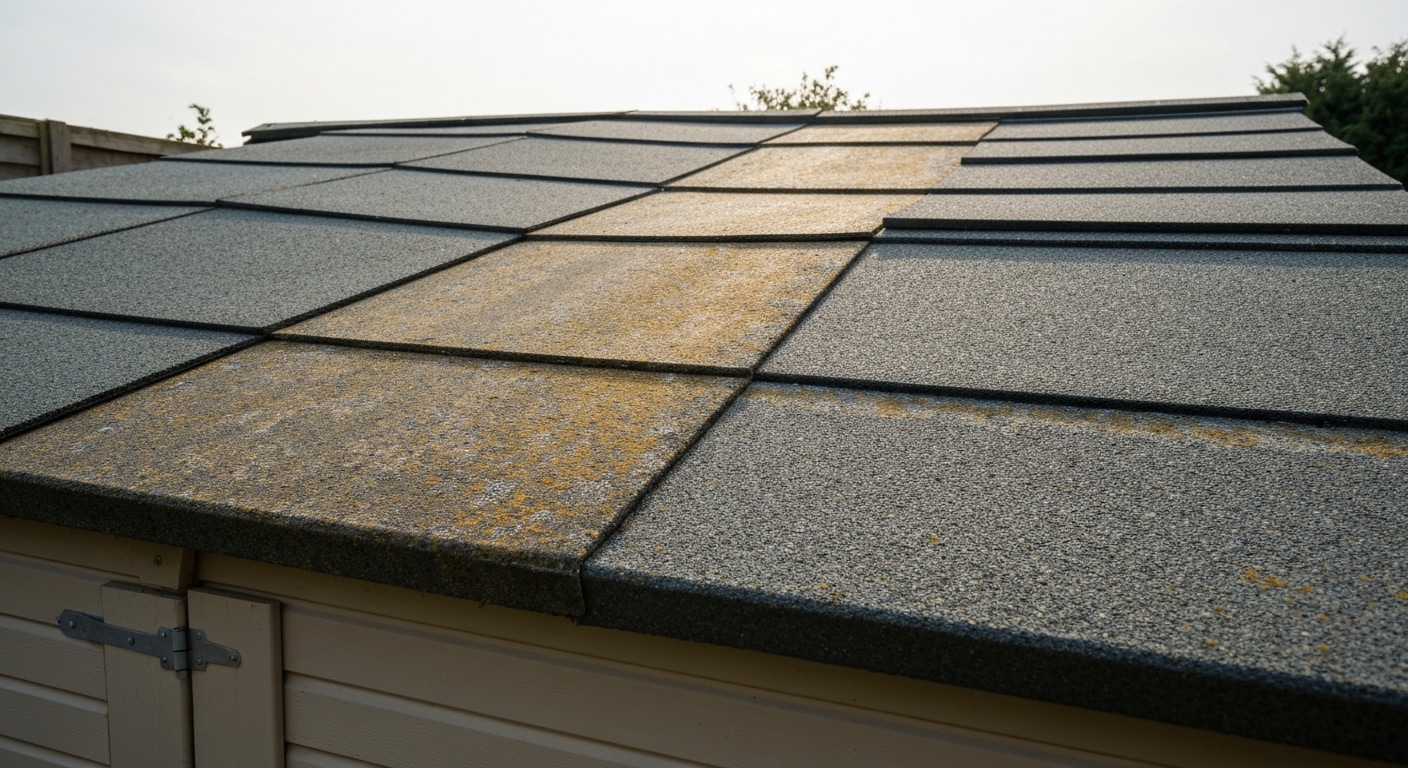
Once the roof plastic becomes chalky, it becomes porous and holds moisture. Moss and lichen can root into the texture, and that combination of water retention and mechanical gripping can worsen leaks and surface loss.
The “Penetrating Oil” Restoration (Polytrol)
Section titled “The “Penetrating Oil” Restoration (Polytrol)”You cannot “polish” a textured plastic shed in any lasting way. What works reliably on weathered HDPE is a penetrating restorative oil, and the most commonly used product for this job is Owatrol Polytrol.
At a polymer level, sun and oxygen create oxidized groups on the HDPE surface, and the outer microlayer becomes rough, chalky, and full of micro-voids. Polytrol works because it wicks into that porous oxidized layer, fills the voids, and “wets out” the pigment again, which brings back depth of color and reduces further water and dirt penetration once it cures—making it particularly effective for restoring outdoor plastic furniture exposed to long-term weathering.
Brush it on liberally, wait about 10 minutes for it to soak in (shorter in hot sun, longer in cooler shade), and then wipe off excess thoroughly. If you leave pooled oil, it can cure tacky and attract dirt, especially on textured faux-wood grain.
When Polytrol fails (and what that tells you)
Section titled “When Polytrol fails (and what that tells you)”Polytrol is not a structural repair, it is a surface restoration. It can fail early when the HDPE is over-oxidized, meaning the surface is no longer just chalky, it is embrittled through enough depth that it flakes, crumbles, or “powders” continuously when rubbed.
If the plastic shatters like thin glass when flexed, or if you can scrape off layers with a fingernail, you are likely beyond the point where an oil can stabilize it for long. In that case, plan on reinforcement, panel replacement, or replacement of the shed, and take UV protection seriously going forward, similar to what you would do for advanced UV damage.
Identifying “Structural Sag” from Heat
Section titled “Identifying “Structural Sag” from Heat”HDPE has a low heat deflection temperature compared to many building plastics, so roof panels can soften in direct sun and slowly take a permanent set. This shows up most in hot climates and on dark roofs, especially where interior air cannot vent.
As a practical threshold, if you routinely see full sun summer days above about 95°F (35°C), roof panels can start to relax if the shed has poor ventilation. If you are in desert sun (110°F or 43°C days) or high-altitude sun, sag becomes much more likely, and snow load in winter can lock in the distortion.
Look at the roof ridge line. If it looks like a swaybacked horse, or if the ridge bows enough that seams separate or gutters form where water sits, the structure is no longer behaving as designed, and issues like these often go hand in hand with problems that call for repairing plastic shed roof cracks.
When reinforcement is no longer safe
Section titled “When reinforcement is no longer safe”Reinforcement makes sense when panels are still tough (they flex but do not crack), and fasteners still bite. If the roof panel edges are cracked, screw bosses are splitting, or the plastic feels brittle and “crispy,” adding bracing can concentrate stress and accelerate failure.
If sagging has pulled seams so far apart that you cannot re-seat them without forcing, or if the roof has a visible crease line from past snow load, replacement parts or a new shed is often the safer call.
Why You Cannot “Paint” a Suncast Shed Easily
Section titled “Why You Cannot “Paint” a Suncast Shed Easily”Homeowners often ask if painting is the shortcut. For HDPE, standard latex or oil paints usually peel because the surface energy is low, similar to a milk jug, and coatings have little to chemically grab onto.
Even “plastic-bonding” spray paints struggle on faux-wood texture because you cannot sand evenly, and raised grain concentrates peeling. Unless you are prepared for an adhesion promoter plus a compatible industrial coating system, oil restoration is usually the better first move for walls and doors.
Restoration Products Compared (Polytrol vs Trim Restorers vs Paints)
Section titled “Restoration Products Compared (Polytrol vs Trim Restorers vs Paints)”The goal is to pick a method that matches your shed’s condition and your tolerance for upkeep. Polytrol is my go-to for textured HDPE walls and doors, roof coatings are best treated as a separate problem when heat is the main issue.
| Product type | Best use on HDPE sheds | Typical longevity | Reapplication interval | Approx. DIY cost (8x10 shed) | Common failure modes |
|---|---|---|---|---|---|
| Penetrating oil restorer (Owatrol Polytrol) | Oxidized, chalky walls, doors, trim, textured panels | 12 to 18 months | 1 to 2 years | $30 to $60 | Uneven cure if over-applied, short life on severely embrittled plastic |
| Automotive “trim restorer” gels | Small smooth trim pieces, spot repairs | 3 to 9 months | 2 to 4 times per year | $15 to $40 | Streaking, greasy feel, washes off, attracts dust |
| Film-forming coatings (general paints) | Not recommended without adhesion system | Variable | Variable | $40 to $200+ | Peeling sheets, blistering, edge lift at texture peaks |
| Elastomeric white roof coating (heat shield) | Roof panels where heat drives sag and UV damage | 2 to 5 years | 3 to 5 years | $40 to $120 | Peeling from poor prep, cracking if applied too thin, dirt pickup |
Fixing “Stripped Screw Holes” in Plastic
Section titled “Fixing “Stripped Screw Holes” in Plastic”As the shed expands and contracts seasonally, self-tapping screws can wiggle loose and strip the softer plastic. Do not jump to a bigger screw, because that can split the boss and start a crack.
Instead, fill the stripped hole with baking soda and thin super glue (cyanoacrylate). Pack in dry baking soda, drip glue to soak it, let it harden, then drill a pilot hole and reinstall the original screw.
The “Expanding Foam” Structural Hack
Section titled “The “Expanding Foam” Structural Hack”If double-wall shed panels feel flimsy or “oil-can” in wind, you can stiffen them with low-expansion foam (Great Stuff Window & Door). Drill small holes on the interior side near the top of the cavity and inject slowly so you do not bulge the panel.
This creates a stiffer sandwich panel, and it can help reduce vibration that loosens fasteners. Use it carefully, because overfilling can permanently distort thin panels.
Cleaning Mildew From the Faux-Wood Grain
Section titled “Cleaning Mildew From the Faux-Wood Grain”The faux-wood texture traps grime and mildew, and aggressive scrubbing can fray the already-oxidized surface. A simple pump sprayer method is easier and gentler.
Mix 30% white vinegar, 10% dish soap, and 60% water. Spray, let dwell for 20 minutes, then rinse with a garden hose, and skip pressure washing because it can drive water through seams and flood the interior.
Restoring the Door Hinge (Plastic Friction)
Section titled “Restoring the Door Hinge (Plastic Friction)”Many plastic sheds use pin-and-socket hinges molded into the door itself. Over time, plastic-on-plastic friction wears the hinge and the door can drag or pop out.
Lubricate the pivots annually with a dry PTFE spray. Avoid grease because it grabs dust, and that grit turns into a grinding paste.
Why Spiderwebs Bond to Plastic Walls
Section titled “Why Spiderwebs Bond to Plastic Walls”HDPE is an electrical insulator, so it builds static charge in wind and dry weather. That static attracts dust, which helps spiderwebs cling and build faster.
Wipe interior walls with a dryer sheet to reduce static. If you prefer a low-waste option, a lightly damp microfiber cloth with a tiny drop of fabric softener works similarly, and you can wash and reuse the cloth.
The Waterproof Sealant for Roof Leaks
Section titled “The Waterproof Sealant for Roof Leaks”Snap-together seams are the weak point on many sheds, especially after sagging starts. Avoid silicone caulk, because it does not adhere well to HDPE long-term.
Use a polyurethane or tri-polymer elastomeric sealant (like Geocel or Sashco Lexel) and apply a bead from the outside along roof seams. These stay flexible through temperature swings and keep gripping better over time.
Replacing Clear Skylight Panels
Section titled “Replacing Clear Skylight Panels”The clear skylight strip is usually polycarbonate, not HDPE, and it often yellows and turns brittle faster than the rest of the shed. You cannot restore a cracked skylight safely.
Buy a twin-wall polycarbonate sheet from a greenhouse supplier, cut to size, and slide it into the roof channels. It is typically much cheaper than ordering manufacturer replacement parts.
Why Ground Leveling Prevents Plastic Cracking
Section titled “Why Ground Leveling Prevents Plastic Cracking”If shed doors stop closing, the shed may be twisted, not broken. Plastic sheds flex, so if one corner sinks even 1 inch, the whole frame racks and the door opening goes out of square.
Set sheds on a properly level base (concrete, pavers, or a compacted gravel pad), then shim low corners with pressure-treated plywood or composite shims. Fixing the base early prevents stress cracks later.
The “Heat Shield” Paint for Roofs
Section titled “The “Heat Shield” Paint for Roofs”If the shed interior is unbearably hot, a white elastomeric roof coating can be a smart add-on, but treat it as a roof-only strategy. These coatings can reduce interior temperatures by roughly 15 to 20 degrees Fahrenheit in strong sun, and they reduce UV load on the roof plastic.
Prep is what determines success. Clean thoroughly, remove chalk and biological growth, rinse well, let it dry completely, then spot-scrape any loose material and wipe dust off before coating.
Expect 2 to 5 years of service life when applied at the manufacturer’s recommended thickness, and less if prep was rushed or if water ponds due to sag. Oil restoration typically looks better on walls, while roof coating is about heat management and slowing further roof degradation.
Restore vs Replace: Cost Breakdown
Section titled “Restore vs Replace: Cost Breakdown”Restoring usually wins when the structure is still sound, because the material cost is low and you avoid disposal and delivery. Replacement can make sense when panels are brittle, cracked through, or the roof structure cannot be stabilized.
| Scenario | Year 1 cost | 5-year cost (typical upkeep) | 10-year cost (typical upkeep) | What you get |
|---|---|---|---|---|
| Restore HDPE shed (Polytrol, sealant, minor hardware) | ~$50 | ~$150 to $250 | ~$250 to $450 | Color restored, seams sealed, longer service life |
| Replace with new 8x10 shed | ~$1,000 to $1,500 | ~$1,000 to $1,500 | ~$1,000 to $1,500 | New panels, new roof, same UV exposure risk |
Short Case Study: $52 Refresh on a 7-Year-Old Suncast
Section titled “Short Case Study: $52 Refresh on a 7-Year-Old Suncast”A homeowner in inland Southern California had a dark roof that had faded almost white, plus minor seam leaks at the ridge. The walls were chalky but still flexible, and the door hinge pins were squeaking and binding.
Day 1 was cleaning with the vinegar and soap mix, then drying overnight. Day 2 was Polytrol on walls and doors ($34), a small tube of tri-polymer sealant for the ridge seam ($10), and dry PTFE spray for hinges ($8).
The shed looked close to factory color again, leaks stopped in the next rain, and the homeowner planned a light recoat schedule every 12 to 18 months for the sunniest sides. The roof was left uncoated that season because it was not sagging yet, but it was added to the annual inspection list.
Maintenance Plan After Restoration
Section titled “Maintenance Plan After Restoration”A restored shed lasts longer when you treat it like an outdoor surface that needs small, regular touch-ups, not a one-and-done project. The roof and seams are the priority because that is where heat, water, and movement meet.
Seasonal checks (spring and fall)
Section titled “Seasonal checks (spring and fall)”Wash the exterior with a gentle cleaner, then inspect roof seams, ridge caps, and corners for gaps or lifted sections. Clear debris from the roof so water cannot pond, and check that doors close squarely, which often signals whether the base is still level.
Annual tasks (once per year)
Section titled “Annual tasks (once per year)”Re-lubricate hinges with dry PTFE, tighten fasteners that have backed out, and repair stripped holes before they elongate further. Spot-treat any new oxidation with a small amount of Polytrol rather than waiting until the entire shed fades again.
Recoat timing
Section titled “Recoat timing”Plan to reapply Polytrol every 1 to 2 years depending on sun exposure, with south and west sides usually needing attention first. If you use a white elastomeric roof coating, follow the manufacturer’s inspection and recoat guidance, and fix ponding water issues before recoating.
Environmental Impact of Restoring Plastic Sheds
Section titled “Environmental Impact of Restoring Plastic Sheds”Keeping an HDPE shed in service avoids sending a bulky item to landfill and reduces demand for new plastic production. A single shed represents significant embodied energy from resin production, molding, packaging, and transport, so extending its life—sometimes with simple surface renewal techniques such as the Polytrol restoration method—is usually the lower-impact choice.
Restoration also helps with microplastic concerns in a practical way. Chalky oxidation is essentially loose polymer fines on the surface, and sealing the surface reduces ongoing shedding into soil and runoff.
Use low-waste habits where you can, like reusable microfiber cloths for wipe-down and careful product dosing so you do not overapply and wipe off excess into the yard. If you scrape loose oxidation, collect the dust and dispose of it in the trash rather than rinsing it into the garden.
Verdict: Restoring a $1,000 Shed for $50
Section titled “Verdict: Restoring a $1,000 Shed for $50”A new 8x10 shed can cost $1,000 or more, so it is worth saving when the panels are still tough and the frame can be stabilized. If the walls are structurally sound but ugly, a can of Owatrol Polytrol can be a very cost-effective reset.
Reinforce sagging roofs early, seal seams with the right chemistry, and keep the base level so the shed is not constantly twisted. If the plastic is brittle and cracking through, treat the damage as terminal and focus on preventing the next shed from reaching that point with better siting, ventilation, and UV management.
References
Section titled “References”- Suncast. “Shed Care and Maintenance.” Manufacturer warranty guidelines.
- Keter. “Assembly and Care Instructions.” Structural leveling requirements.
- Owatrol. “Polytrol Technical Data Sheet.” Application instructions for plastic restoration.
- The Family Handyman. “Fixing Plastic Sheds.” Structural reinforcement hacks.
- Plastics Engineering Handbook. “HDPE Weathering Characteristics.” Scientific data on polymer degradation.