The Silicone Bible - Safety, Toxicity & Cleaning
📑 Table of Contents
Is Silicone a “Plastic”?
Section titled “Is Silicone a “Plastic”?”Silicone is not a plastic in the strict polymer-chemistry sense, even though it often replaces plastic in the kitchen. Most plastics are organic polymers with carbon to carbon backbones, while silicone is an inorganic polymer built on a silicon to oxygen (siloxane) backbone.
That siloxane backbone is the reason silicone behaves like a hybrid material, flexible like rubber but far more thermally stable than typical commodity plastics. Many reputable silicone bakeware products are rated to about 428 to 450°F (220 to 232°C), and some specialty formulations claim up to 500°F, but the real limit is set by formulation quality, fillers, and how the item is used.
Silicone vs Other Bakeware Materials
Section titled “Silicone vs Other Bakeware Materials”Silicone is a strong choice for low to moderate temperature baking where flexibility and release matter. It is not automatically the safest for every use case, because permeability, surface oil uptake, and product quality variation matter more for silicone than for glass or stainless.
| Material | Typical practical heat window (home cooking) | Leaching or migration risk (normal use) | Durability and failure mode | Cleaning reality |
|---|---|---|---|---|
| Silicone (food-grade, reputable) | Up to labeled rating, often 400 to 450°F | Low overall, higher in first uses and in high-fat conditions, potential siloxane oligomer migration | Tearing from cuts, fatigue from repeated flexing, surface oil uptake | Can retain oils, odors, detergent films, benefits from periodic heat reset |
| Glass (borosilicate, tempered varies) | High oven temps, but limited by thermal shock | Very low, essentially inert and non-porous | Breakage, chipping | Easy to degrease, does not absorb odor or soap |
| Ceramic (glazed stoneware) | High oven temps, glaze dependent | Typically low if glaze is intact and compliant, avoid damaged glaze | Chipping and cracking, glaze wear | Smooth glazes clean well, rough clay bodies can retain stains |
| Metal (aluminum, stainless steel, carbon steel) | Very high | Very low for stainless, aluminum is generally safe but reactive with acidic foods | Warping, discoloration, scratching | Strong cleaners work, seasoning can develop on carbon steel |
| PTFE (nonstick coatings) | Best kept below ~450°F, avoid broiling | Low at normal temps, but overheating can degrade PTFE and release fumes | Coating scratches and wears, becomes sticky | Easy release at first, but coating life is finite |
The “Pinch Test” for White Fillers (What It Can and Cannot Tell You)
Section titled “The “Pinch Test” for White Fillers (What It Can and Cannot Tell You)”Not all silicone marketed as “silicone” is predominantly silicone elastomer. Cost cutting often shows up as added particulate fillers or blended elastomers that change mechanical behavior, and in the worst cases, can lower heat stability or increase odor.
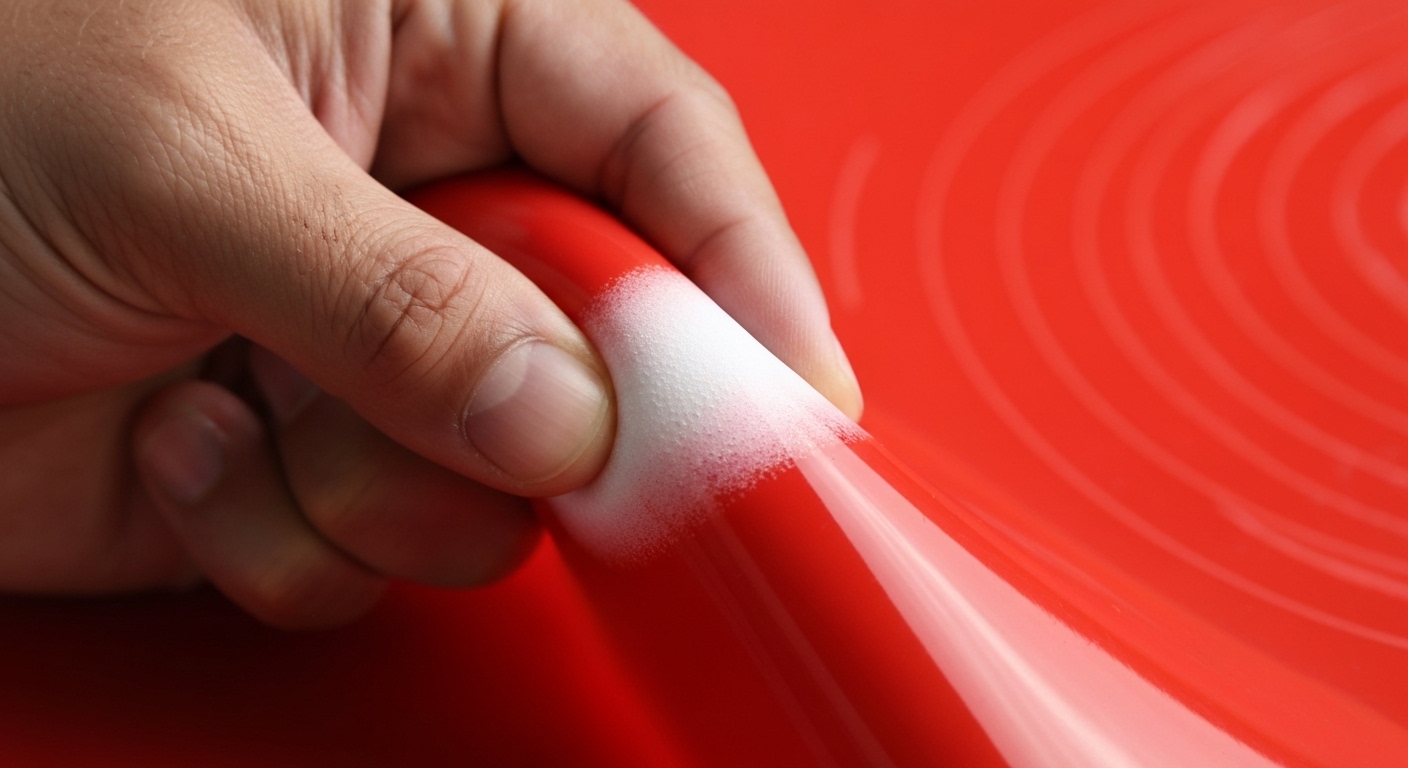
The pinch test is a practical screen for stress whitening, which can indicate high filler content or poor dispersion. It is not a laboratory method and it cannot confirm catalyst type, regulatory compliance, or the presence of all additives.
To perform it, pinch a thin flat section, twist firmly, and observe the strained area. If the stretched region turns white, treat the item as lower quality and keep it away from high heat applications.
Safety: Leaching at 450°F (What Migration Actually Means)
Section titled “Safety: Leaching at 450°F (What Migration Actually Means)”Food-contact safety questions around silicone usually come down to migration, not catastrophic “melting.” The key migrants discussed in the literature are low molecular weight siloxanes (often called siloxane oligomers), which can be present as residuals from manufacturing or formed in small amounts as the material equilibrates under heat.
Migration is strongly influenced by temperature, time, and food type. High-fat foods and fatty food simulants extract hydrophobic compounds more effectively than water-based foods, so cookies, brownies, roasted meats, and oil-rich batters are the more relevant scenarios for worst-case migration testing.
A consistent finding across independent testing is that first use matters most, because loosely bound volatiles and residual oligomers are highest before the first heat cycle and wash. After initial curing and a few uses, migration typically drops because the most mobile fraction has already volatilized or been removed.
Dose and risk are not the same thing. Detecting siloxanes in a fatty simulant does not automatically imply a health hazard, because risk depends on the amount migrated, frequency of exposure, toxicological thresholds, and the specific siloxane species.
What the Science Actually Says (Study Summary)
Section titled “What the Science Actually Says (Study Summary)”Regulators and researchers evaluate silicone using standardized migration methods, typically exposing the material to food simulants under defined time and temperature conditions. Results vary by product quality, curing system, and whether the sample is new or pre-conditioned.
EFSA has repeatedly discussed cyclic and linear siloxanes in relation to food contact materials, emphasizing that migration can occur under certain conditions and that evaluation depends on the specific siloxanes and exposure scenarios. EFSA’s work is not a blanket “silicone is unsafe,” but it does support a practical message, pre-condition new silicone and avoid exceeding labeled heat limits.
The FDA permits certain rubber and silicone-like elastomers for repeated food-contact use under 21 CFR frameworks, with composition constraints and extractables testing expectations. FDA compliance is not a guarantee of premium performance, but it is a meaningful baseline for reputable manufacturers.
Peer-reviewed and government-associated studies, including work often cited from Swiss and academic sources, show that some silicone molds release measurable low molecular weight siloxanes into fatty simulants around baking temperatures, a behavior that helps explain why silicone becomes tacky over time. The strongest, most actionable pattern is that migration is highest on first use and tends to fall after initial curing and washing.
Practical takeaways are straightforward. Buy reputable brands, treat first use as the highest extractables window, keep silicone away from broilers and heating elements, and use glass or metal when you need maximal inertness.
First-Time Use Checklist (Curing, Washing, and Evaluating New Silicone)
Section titled “First-Time Use Checklist (Curing, Washing, and Evaluating New Silicone)”New silicone can carry residual volatiles, processing aids, and warehouse odors that you do not want transferred into food, which is why silicone bakeware becomes oily and how to fix it safely. A simple conditioning routine reduces first-use odor and the small but real first-use migration window.
- Wash with hot water and a small amount of unscented dish soap, then rinse thoroughly.
- Dry fully, then bake empty at 300 to 350°F for 45 to 60 minutes, using good ventilation.
- Cool, wash again, then do a quick odor check, and repeat the bake once if a strong “factory” smell persists.
If the item warps oddly, develops persistent chemical odor, or fails basic mechanical integrity checks, treat that as a quality red flag. High quality silicone should not smell strongly after conditioning, and it should not chalk, crack, or become brittle.
Identifying “Medical Grade” vs “Food Grade” (and Marketing Misuse)
Section titled “Identifying “Medical Grade” vs “Food Grade” (and Marketing Misuse)”“Food grade” is a regulatory and performance baseline for food contact, but the term is often used loosely in marketing. In the US context, legitimate food-contact claims should map to FDA-compliant raw materials, and reputable brands can provide documentation such as compliance statements, test summaries, or third-party certifications.
“Medical grade” is not a single universal consumer standard for bakeware. In regulated medical devices, the phrase implies a defined quality system, biocompatibility testing, and traceability, but many kitchen products borrow the term without meeting medical device requirements.
Platinum-cured silicone refers to a cure system that typically yields a cleaner network with fewer peroxide-related byproducts. It can be an indicator of a higher end formulation, but it is not a magic shield, because fillers, pigments, and overall formulation still determine performance.
For consumers, verification is realistic only to a point. Look for reputable brands that disclose maximum continuous-use temperature, provide compliance documentation on request, and avoid vague “medical grade” claims that come with no paperwork.
Why Silicone Feels “Oily” After Baking
Section titled “Why Silicone Feels “Oily” After Baking”Silicone is oleophilic and somewhat permeable, which is why it releases baked goods well but also why it can hold onto fats. During baking, liquefied oils can diffuse into the near-surface silicone network, especially when heat temporarily increases chain mobility.
As the item cools, those oils can remain trapped near the surface and oxidize or polymerize into a tacky varnish-like film. That sticky layer is not typical food soil, it is chemically altered cooking oil, so normal dish soap often cannot fully remove it.
Cleaning Pillar: What Works, What to Avoid, and When to Escalate
Section titled “Cleaning Pillar: What Works, What to Avoid, and When to Escalate”Silicone is mechanically tough but chemically “grabby” toward oils and fragrances. The best cleaning strategy is staged, start mild to avoid driving perfume and surfactants into the material, then escalate only if the tactile residue remains.
Avoid heavy-duty oven cleaners and highly fragranced degreasers on silicone, because silicone can absorb those organics and then release them slowly into food. If you need a strong approach, heat plus thorough rinsing is usually safer than harsh solvent-like cleaners.
The “High-Heat” Deep Clean (Oven Reset), summarized
Section titled “The “High-Heat” Deep Clean (Oven Reset), summarized”A controlled bake can re-mobilize trapped oils and drive off absorbed volatiles, so they can be washed away after they reach the surface. Use 300 to 350°F with ventilation, keep silicone away from direct heating elements, and follow with a hot wash using an unscented degreasing dish soap.
If you need the detailed, step-by-step protocol, timing variations, and troubleshooting for persistent residue, this pillar should point to a dedicated fix article rather than duplicating the full procedure here.
Removing “Stale Food” Odors, summarized
Section titled “Removing “Stale Food” Odors, summarized”Odors are usually hydrophobic aromatics absorbed into the silicone surface region. Sunlight exposure, a vinegar soak, or a baking soda paste can reduce odor by oxidizing, neutralizing, or adsorbing volatile organics.
If odor persists after conditioning and a heat reset, it is often a sign of either heavy oil uptake over time or a lower quality formulation that holds volatiles more strongly.
Why “Dishwasher Safe” Silicone Absorbs “Soap Taste”
Section titled “Why “Dishwasher Safe” Silicone Absorbs “Soap Taste””Dishwasher safety is primarily thermal, not sensory. Many detergents and rinse aids contain fragrances and surfactants that can sorb into silicone, especially under high temperature spray and long cycles.
If you notice “soap taste,” switch to fragrance-free detergents, avoid rinse aids on loads containing silicone, and prefer handwashing for items that contact water, ice, or delicate flavors. If the taste is already embedded, a controlled heat reset followed by repeated hot rinses is the most reliable non-solvent method.
Real-World Use: When Silicone Is the Wrong Choice
Section titled “Real-World Use: When Silicone Is the Wrong Choice”Silicone is not ideal when you need crisp browning or sharp edges. Its low thermal conductivity and flexible walls reduce heat transfer, so cookies can spread differently and breads can bake paler compared with metal.
Choose glass or metal when temperature is high or heat is uneven, such as pizza stones, broiling zones, or when a pan might contact a heating element. Also avoid silicone for any application involving cutting inside the pan, because micro-cuts become tear initiators and shorten lifespan.
If you are cooking very oily foods at the upper end of the silicone rating, consider glass or stainless for the most inert contact surface. This is less about panic and more about minimizing the conditions that maximize migration, high temperature plus fat plus new material.
Why Silicone “Cracks” Over Time
Section titled “Why Silicone “Cracks” Over Time”Silicone usually fails by mechanical damage rather than thermal collapse in normal baking. Knife cuts, sharp edges, and repeated high-strain flexing create stress concentrators that propagate into tears.
Direct flame is a separate failure mode, because localized temperatures can exceed the polymer’s stability range and convert the surface into brittle silica-like residue. Any silicone that has seen direct burner contact should be discarded for food use.
Cleaning “Pink Mold” from Seals (Gaskets and Rings)
Section titled “Cleaning “Pink Mold” from Seals (Gaskets and Rings)”Pink or black growth on silicone seals is typically microbial colonization supported by residual oils and biofilms. Because silicone is permeable, organisms can anchor into the surface region, which is why quick wiping often fails.
A soak in 3% hydrogen peroxide can help penetrate and oxidize biofilms, and diluted bleach can be appropriate for non-colored parts when used carefully and rinsed thoroughly. If staining and odor persist after disinfection, replacement is often the most reliable safety choice for gaskets.
Removing Baked-on Grease Stains
Section titled “Removing Baked-on Grease Stains”Brown discoloration on silicone mats is usually carbonized oil and is mostly cosmetic. It rarely affects release performance unless it is accompanied by a tacky feel, which indicates polymerized oil buildup rather than mere staining.
If you want to lighten stains, a baking soda paste with an oxidizer like hydrogen peroxide can help, but aggressive abrasion can roughen the surface and make future oil retention worse.
Verdict: Is Silicone the Safest Alternative? (Decision Framework)
Section titled “Verdict: Is Silicone the Safest Alternative? (Decision Framework)”Silicone is often safer than many plastics at baking temperatures because it does not rely on carbon-based backbones that soften, melt, or shed additives as readily under heat. It is also generally safer than overheated PTFE scenarios because silicone does not generate the same acute fume hazards associated with nonstick coating pyrolysis.
For maximum chemical inertness, glass is the reference standard because it is non-porous and has negligible migration under normal cooking. Metal is similarly strong for inertness and heat handling, but performance varies with alloys, coatings, and reactive behavior with acidic foods.
Use silicone when flexibility, release, and moderate oven temperatures are the priority, and when you can control quality by buying reputable brands and conditioning new items. Use glass or metal when heat is extreme, browning matters, or you want the lowest-permeability surface for fatty high-heat cooking.
FAQ (Safety and Cleaning)
Section titled “FAQ (Safety and Cleaning)”Is silicone bakeware safe at 400°F?
Section titled “Is silicone bakeware safe at 400°F?”For reputable, food-contact compliant silicone rated for 400°F or higher, use at 400°F is generally within intended design limits. Migration risk is usually highest during first use and in high-fat foods. Pre-wash, pre-bake empty once, avoid direct contact with heating elements, and do not exceed the labeled temperature.
How do you remove oily residue from silicone?
Section titled “How do you remove oily residue from silicone?”Oily tackiness is usually polymerized fat absorbed into the near-surface silicone, not removable by light soap alone. Use a staged approach:
- Hot wash with unscented detergent, rinse well.
- Heat reset at 300 to 350°F with ventilation, then wash again.
- Repeat once if the surface still feels tacky after cooling.
Is platinum silicone safer than food-grade?
Section titled “Is platinum silicone safer than food-grade?”Platinum-cured silicone often has fewer cure byproducts than peroxide-cured silicone, and it can be a good quality signal. It is not automatically “safer” if the formulation contains fillers, poor pigments, or lacks compliance documentation. The most practical safety markers are reputable brand controls, clear temperature ratings, and conditioning new items before first food contact.
References
Section titled “References”- European Food Safety Authority (EFSA). “Siloxanes in Food Contact Materials.” EFSA Journal. 2016.
- McAlindon, K., et al. “Migration from Silicone Molds into Simulants and Food.” Swiss Federal Office of Public Health.
- Zhang, K., et al. “Thermal Stability of Silicone Bakeware and Migration of Oligomers.” Journal of Agricultural and Food Chemistry.
- FDA. “CFR, Title 21: Rubber articles intended for repeated use.”
- Consumer Reports. “Silicone Bakeware Safety: What We Know.” https://www.consumerreports.org/