Cleaning Cloudy Plastic Pitchers and Jugs - Restoring Clarity
📑 Table of Contents
The Cloudy Pitcher Problem
Section titled “The Cloudy Pitcher Problem”A plastic pitcher or jug can turn cloudy even when it is washed regularly. The haze blocks visibility, traps odors, and makes a perfectly usable container feel worn out.
Most cloudiness falls into a few predictable categories. Once you identify which one you are dealing with, restoration is usually straightforward and food-safe.
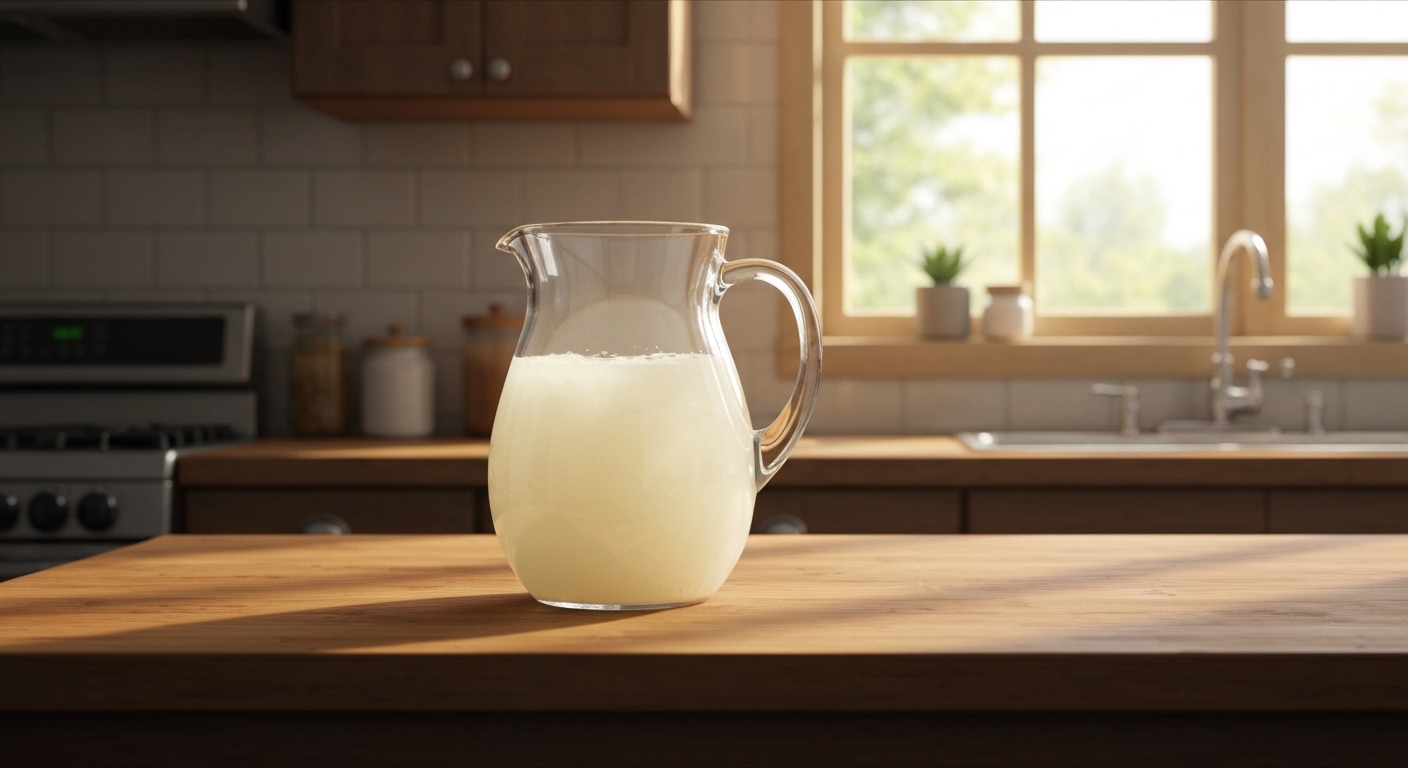
How to Clean a Cloudy Plastic Pitcher (Best Method)
Section titled “How to Clean a Cloudy Plastic Pitcher (Best Method)”- Rinse the pitcher with warm water to remove loose debris.
- Descale by filling with warm water plus 2 tablespoons citric acid per quart, or use a 1:3 vinegar to water mix. Soak for 8 to 12 hours.
- Brush gently with a soft bottle brush, then rinse 2 to 3 times.
- Degrease or de-film if needed by soaking 1 to 4 hours in an oxygen bleach solution mixed per label. Rinse until completely odor-free.
- Dry fully with a clean towel to prevent new mineral spots.
If vinegar fizzes on contact, the haze is mineral scale. If the haze looks the same when wet, scratches are involved. If the surface feels slick or looks yellowed, organic film is present. If you see mottled matte patches, the plastic is etched.
Quick Diagnosis (60-Second Tests)
Section titled “Quick Diagnosis (60-Second Tests)”Start with a feel test. Run clean fingers over the dry surface. Rough or chalky areas usually point to mineral scale, while slick areas suggest organic residue from drinks like tea or milk.
Next, do a vinegar spot test. Dab a few drops of white vinegar on one cloudy area and wait one minute. Faint fizzing or a clearing edge means minerals are part of the problem, even if the reaction is subtle, which is a common first step when fixing a cloudy Keurig water reservoir.
Try the wetting test for scratches. Wet the pitcher and look through it under a light. If the haze disappears while wet and returns when dry, cleaning will likely help. If it stays cloudy when wet, the plastic surface itself is damaged.
Finish with an alcohol wipe. Rub a small area with isopropyl alcohol on a cloth. Yellow or brown transfer on the cloth confirms organic film buildup.
What Causes Plastic Pitcher Cloudiness
Section titled “What Causes Plastic Pitcher Cloudiness”Mineral deposits form when hard water dries on plastic. Calcium and magnesium leave behind a white haze, often concentrated at the waterline where evaporation occurs.
Organic films come from beverages. Tea and coffee leave tannins, juices leave sugars, and dairy leaves protein residue that can cling even after washing.
Micro-scratches scatter light instead of letting it pass through. Ice, stirring utensils, and frequent dishwasher use all contribute over time.
Dishwasher exposure combines heat, alkaline detergent, and forceful spray. This can accelerate scratching and cause chemical etching, which permanently dulls the surface. More detail is covered in this dishwasher safety guide for plastics: Dishwasher.
UV exposure from sunlight slowly degrades plastic, and areas stored near windows can develop permanent haze that cleaning cannot reverse, a problem often discussed in guides on cleaning cloudy plastic blender jars.
Best Method First: Step-by-Step Restoration Protocol
Section titled “Best Method First: Step-by-Step Restoration Protocol”For most cloudy pitchers and jugs, mineral scale plus light organic film is the combination at work. Begin with an acid soak using warm water, not hot, since heat does not improve scale removal and can stress plastic.
Fill the container completely so the waterline ring is submerged. Soak 8 to 12 hours, then gently agitate by swirling or brushing. Rinse thoroughly and inspect while wet and dry to verify improvement.
If cloudiness remains and the surface still feels slick, follow with an oxygen bleach soak mixed exactly to label strength. Soak 1 to 4 hours, then rinse repeatedly until there is no scent left. Towel-dry to prevent fresh spotting.
Cleaning Product Comparison Table
Section titled “Cleaning Product Comparison Table”| Product | Speed | Strength | Best For | Safety Notes |
|---|---|---|---|---|
| White vinegar | Slow to moderate | Mild acid | Light to moderate mineral scale | Food-safe, rinse well to remove odor |
| Citric acid | Moderate | Stronger acid | Heavy scale and waterline rings | Food-safe, avoid over-concentration |
| CLR-type descalers | Fast | Very strong | Severe hard water deposits | Extra rinsing required for food contact |
| Baking soda | Slow | Mild abrasive | Light organic film | Avoid scrubbing hard to prevent scratches |
| Denture tablets | Moderate | Alkaline plus oxidizing | Tea and coffee stains | Rinse until completely odor-free |
| Oxygen bleach | Moderate | Oxidizing | Organic films and odors | Use only oxygen-based, never chlorine |
Narrow-Neck Jugs and Hard-to-Reach Interiors
Section titled “Narrow-Neck Jugs and Hard-to-Reach Interiors”For narrow-neck jugs, soaking still does most of the work. To add gentle agitation, drop in a tablespoon of uncooked rice with the cleaning solution, cap the jug, and shake carefully to scrub the shoulder and bottom.
Choose a soft bottle brush with flexible bristles, not wire cores that can gouge plastic. During soaking, lay the jug on its side partway through to keep the waterline ring fully submerged.
When Cloudiness Is Permanent and What To Do
Section titled “When Cloudiness Is Permanent and What To Do”Some signs mean clarity will not return. Mottled matte patches, rainbow-like stress marks, or a chalky surface that does not improve when wet indicate etching or UV oxidation.
If haze stays unchanged after both acid and oxygen bleach treatments, scratches or chemical damage are likely; at that point, continued cleaning only risks thinning the plastic, and learning more about removing scratches from plastic measuring cups may be a better next step than further washing.
For food safety and visibility, consider reassignment or replacement. Etched pitchers can still serve for non-food tasks like watering plants or mixing cleaning solutions.
Real-World Examples
Section titled “Real-World Examples”A family with very hard water restored a cloudy water jug by soaking overnight in citric acid solution. The white waterline ring disappeared after one cycle, and drying with a towel prevented quick return.
A tea drinker noticed yellow haze and odor in a daily-use pitcher. Vinegar removed some scale, but an oxygen bleach soak eliminated the film completely and restored clarity.
A decade-old dishwasher-only pitcher stayed cloudy even when wet. Diagnosis showed uniform scratch haze, and replacement was the most practical option.
Prevention That Actually Works
Section titled “Prevention That Actually Works”Hand washing with mild soap dramatically slows haze formation. Drying immediately prevents minerals from drying onto the surface.
Rinse pitchers promptly after milk, juice, or tea. Short contact time reduces film buildup and keeps future cleaning simple.
References
Section titled “References”- OXO. Kitchen Product Care Guide.
- American Cleaning Institute. Hard Water Cleaning Solutions.
- Rubbermaid. Food Storage Container Care.
- Consumer Reports. Plastic Container Testing.
- NSF International. Food Contact Surface Sanitation.