Restoring Faded Plastic Shutters - Verdict When to Replace for Curb Appeal
📑 Table of Contents
Why Vinyl PVC Shutters Fade and Turn Chalky
Section titled “Why Vinyl PVC Shutters Fade and Turn Chalky”If your vinyl shutters are over ten years old, fading is almost guaranteed. Deep colors slowly wash out into a pale, dusty finish that looks dirty even after rain. This is not surface grime, it is the plastic itself breaking down under sunlight.
Vinyl shutters are made with PVC that contains titanium dioxide, a white pigment that blocks UV radiation. Over time, sunlight breaks the bonds holding this pigment in place. Once that happens, the pigment rises to the surface as a loose powder.
That powdery residue is what people call chalking. When you wipe the shutter and get white dust on your fingers, you are seeing failed UV protection. The original color still exists underneath, but it is hidden by oxidation.
Sun exposure explains why fading is uneven. South and west facing shutters degrade years earlier than shaded ones. This uneven aging often hurts curb appeal more than uniform fading.
What the Chalk Layer Really Means
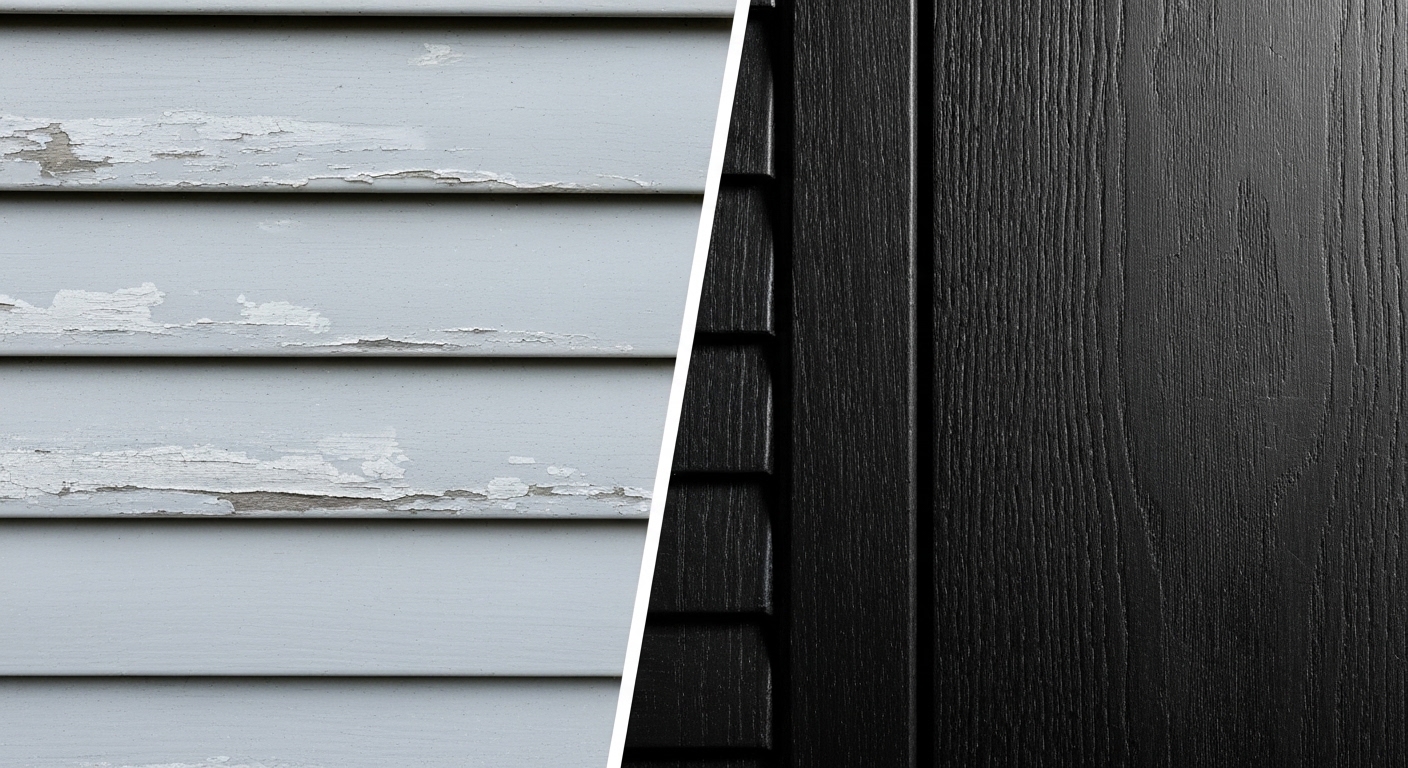
Section titled “What the Chalk Layer Really Means”Chalking is the result of a sacrificial process built into the plastic, where the outer surface breaks down first to protect the inner structure; as a result, the shutter may still be structurally sound even though it looks terrible, which is why many homeowners consider options like restoring faded plastic shutters instead of full replacement.
Once chalking starts, it speeds up. The rough surface traps pollen, pollution, and mildew more easily. This makes shutters look dingy very quickly if they are not cleaned and treated.
From a sustainability standpoint, this is good news. Many shutters that look ruined are still usable and do not need to be thrown away yet. Careful restoration can delay replacement by several years.
Cleaning Without Damaging the Shutters
Section titled “Cleaning Without Damaging the Shutters”Pressure washing feels tempting, but it often causes more harm than good. Vinyl shutters are thin and usually mounted with plastic fasteners that weaken with age. A strong spray can snap those fasteners or force water behind the siding.
Hand cleaning is slower but far safer. Use a soft or medium brush and a cleaner designed to cut oxidation. Gentle scrubbing physically lifts the chalk without stressing the mounting points.
Restoring Color With Penetrating Oils
Section titled “Restoring Color With Penetrating Oils”Restoration oils like Polytrol work differently than shiny spray protectants. They soak into the porous, oxidized surface rather than sitting on top. This makes the color change immediate and much more natural looking.
The oil wets the loose pigment and fills microscopic gaps caused by UV damage. Once light can pass evenly through the surface again, the original color reappears. The finish cures dry and does not stay greasy.
Expect this type of treatment to last one to two years. It is not permanent, but it is low waste and avoids paint buildup. Reapplication is simple once the shutter has been properly cleaned.
Painting Vinyl Shutters Comes With Long Term Costs
Section titled “Painting Vinyl Shutters Comes With Long Term Costs”Painting changes the entire maintenance cycle of a shutter, especially when dealing with vinyl, which expands and contracts far more than painted wood. Many paints cannot flex enough to keep up, a challenge often encountered during projects like restoring oxidized vinyl shutters.
When paint cracks, moisture gets underneath and peeling follows. A peeling shutter looks worse than a faded one and takes far more effort to fix. Once you paint, you are committing to future scraping and repainting.
Checking If a Shutter Is Still Worth Saving
Section titled “Checking If a Shutter Is Still Worth Saving”Before restoring or painting, check the plastic itself. Sun damage eventually makes PVC brittle, not just faded. Brittle shutters are unsafe and should be replaced.
Use these basic checks to judge structural health:
- Press your thumb firmly into a flat section of UV-faded plastic shutters; healthy vinyl flexes and springs back, while brittle vinyl crunches or cracks. 2. Gently pull the bottom edge away from the wall—if the mounting holes crack, the shutter can no longer be secured safely. 3. Look for spreading hairline cracks, missing fasteners, or slats that snap easily, as these are clear end-of-life signs.
If a shutter fails these tests, restoration products will not fix the problem. Replacement is the safer and more durable option.
Dealing With Dark Runoff Stains
Section titled “Dealing With Dark Runoff Stains”Vertical black or gray streaks are often runoff from roofing and gutters. These stains are chemical, not just dirt. Soap alone rarely removes them.
An oxalic acid cleaner can break the bond between the stain and the plastic. Spot treatment before restoration is essential. If you seal stains under oil or paint, they become permanent.
Alternatives From Automotive Trim Care
Section titled “Alternatives From Automotive Trim Care”Automotive plastic restorers can work very well on dark shutters. These products are designed for harsh outdoor exposure and bond to oxidized plastic.
They are especially effective on black and dark gray shutters. While more expensive per ounce, they are easy to find and very durable. Application is controlled and tidy, which helps near siding.
Protecting Restored Shutters From Future UV Damage
Section titled “Protecting Restored Shutters From Future UV Damage”Once color is restored, protection extends the result. Restoration oils improve appearance but do not block all UV radiation. Adding a sacrificial layer helps.
A synthetic spray wax designed for car exteriors works well. Applied once a year, it absorbs sunlight and slowly wears away instead of the plastic beneath.
Why Dark Shutters Age Faster
Section titled “Why Dark Shutters Age Faster”Dark colors absorb far more heat than light ones. On hot days, black shutters can reach temperatures that accelerate plastic breakdown.
This heat drives out plasticizers and speeds oxidation. Dark shutters need earlier inspection and more frequent protection to last as long as light colored ones.
Fixing Minor Warping With Heat
Section titled “Fixing Minor Warping With Heat”Some warped shutters can be improved with controlled heat. Vinyl softens slightly when warmed and can be guided back into shape.
A heat gun used carefully can relax bowed sections. Hold the shutter flat until it cools completely. This will not make it perfect, but it can greatly improve appearance.
Preserving the Faux Wood Grain
Section titled “Preserving the Faux Wood Grain”Many vinyl shutters have molded wood grain. Oxidation fills these grooves and makes shutters look flat and cheap.
During cleaning, use a stiff nylon brush to clear chalk from the texture. Thin coatings and penetrating oils preserve detail. Thick paint fills the grain and permanently removes depth.
If Painting Is the Only Option
Section titled “If Painting Is the Only Option”When painting is unavoidable, use products made for vinyl. These paints contain adhesion promoters and flexible binders.
For best results, spray application beats brushing. Thin coats preserve texture and avoid heavy buildup. Heat reflective colors reduce the risk of warping.
Verdict: Restore or Replace for Best Curb Appeal
Section titled “Verdict: Restore or Replace for Best Curb Appeal”Restoration makes sense when shutters are structurally sound and securely mounted. Cleaning, oil restoration, and UV protection can buy several more good looking years.
Replacement is usually smarter when shutters are cracked, brittle, badly warped, or nearing twenty years old. New shutters are affordable, quick to install, and come with fresh UV protection. From a practical and environmental view, restore when you can, replace when safety and durability are gone.